



NELIWE NGUBANE
MBABANE — Hope can begin with something as small as a seedling, a clean street or a young person deciding to pick up a piece of litter. But for that hope to create lasting change, it must be followed by action.
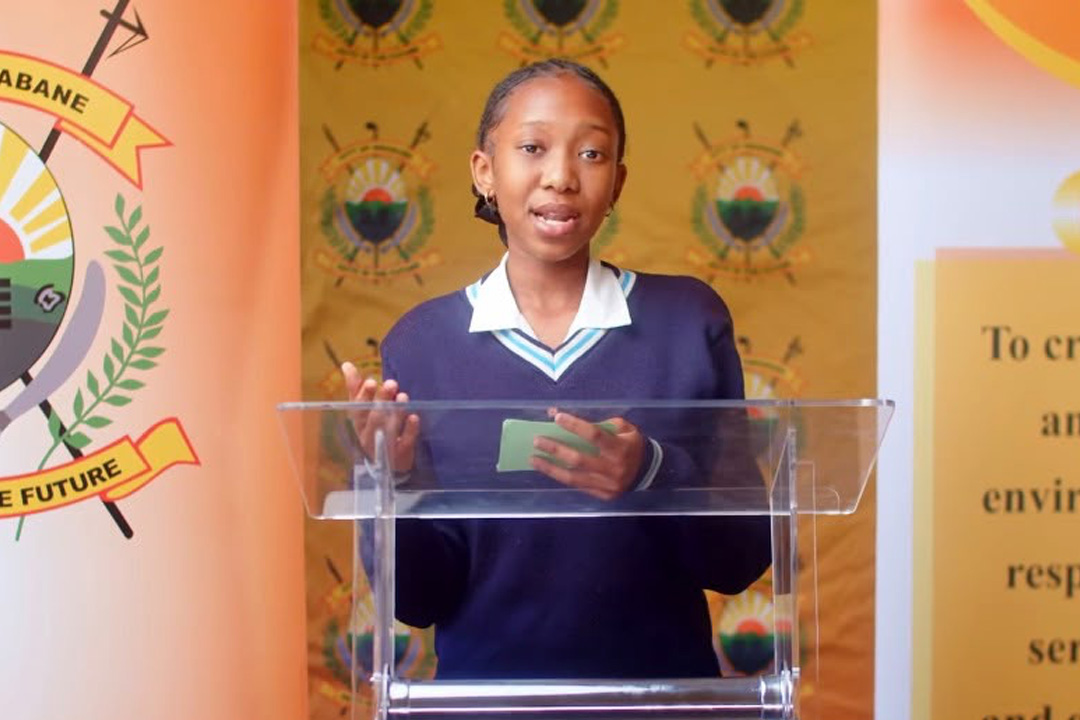
That was the message from Melokuhle Simelane of Baha’i High School as she took the mic for Mic Drop Monday, speaking on “Youth Driven Environmental Conservation.”
Simelane used her platform to highlight the role young people can play in responding to environmental challenges while also challenging communities and institutions to support youth-led solutions.
She identified climate change, pollution, illegal dumping and biodiversity loss among the environmental concerns requiring action.
Her message was directed at both young people and those responsible for making decisions within communities.
For young people, Simelane called for personal responsibility.
She encouraged the youth to reduce waste, protect natural resources and promote sustainable practices rather than waiting for leaders or institutions to solve environmental problems on their behalf.
For institutions, her message was equally direct: create room for young people to participate meaningfully in environmental programmes and decision-making.
Simelane believes young people already demonstrate their willingness to act.
She pointed to tree planting, clean-up campaigns, recycling initiatives and the use of social media for environmental education as examples of how youth are contributing to conservation efforts.
These actions, although sometimes small, can help build a culture of environmental responsibility within communities.
But the learner also recognised that individual action has its limits.
A group of young people can clean a riverbank, for example, but they cannot solve the wider waste-management challenges facing a community without support from relevant institutions.
This is why Simelane called for collaboration rather than placing the entire responsibility on young people.
She wants youth to be seen as partners who can bring ideas, energy and creativity, while municipalities and other institutions provide platforms and systems that can turn those ideas into sustainable programmes.
One of the strongest themes in her speech was hope.
Simelane described hope as the force that encourages young people to act even when the results may not be immediate.
It is what motivates someone to plant a tree knowing they may not be the person who eventually enjoys its shade. It is what inspires young people to give their time to cleaning public spaces and educating others about environmental responsibility.
But she emphasised that hope cannot stand alone.
Hope must be matched with action.
Her message also extended beyond environmental campaigns and events. It called for everyday choices that demonstrate personal responsibility and encourage others to do the same.
Ultimately, Simelane wants future generations to look back and see people who chose to act when environmental challenges became increasingly visible.
Her challenge is therefore one of accountability: what will today’s generation do with the responsibility it has been given?
For the young people listening, her answer is clear.
Care. Participate. Speak up. Take action.
Because protecting the environment is not a responsibility reserved for tomorrow’s leaders.
It is a responsibility that begins today.
#MicDropMonday #YouthVoices #EnvironmentalConservation #YouthDrivenChange #ClimateAction #EnvironmentalAwareness #SustainableFuture #YouthLeadership #BahaIHighSchool #ILoveMbabane
(Courtesy Pic)