



BY NELIWE NGUBANE
MBABANE— The environment does not have the luxury of waiting for the next generation to take charge. While young people are often described as the leaders of tomorrow, a Baha’i High School learner has challenged that familiar idea, arguing that young people must be empowered to take action on environmental challenges today.
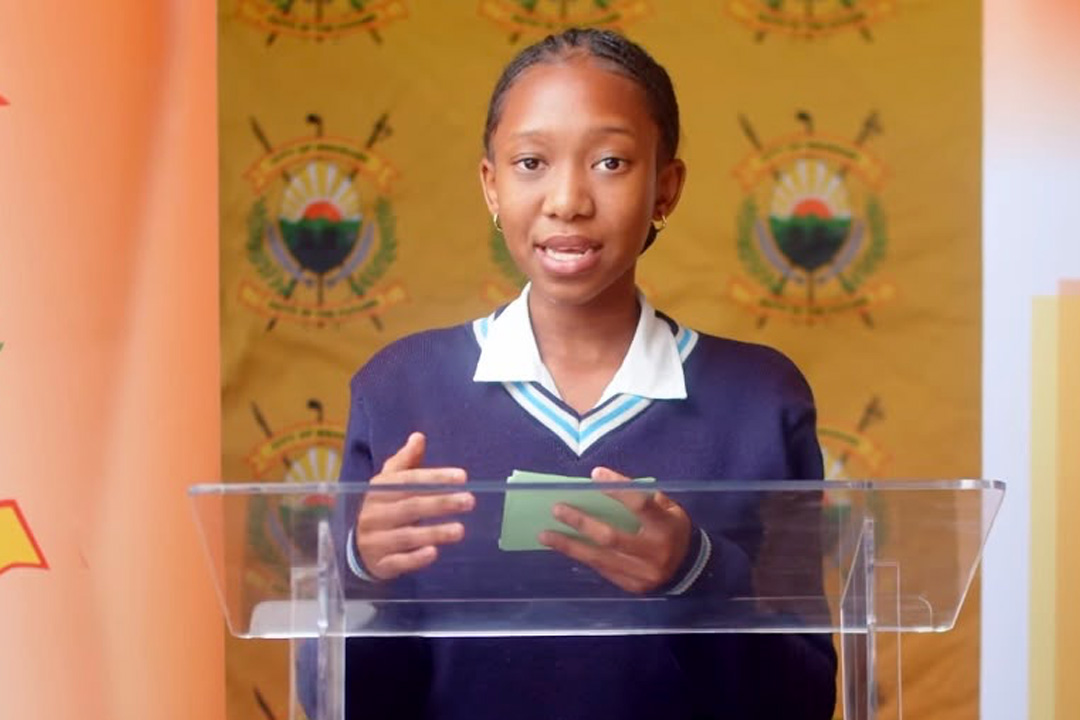
Speaking during Mic Drop Monday, Melokuhle Simelane of Baha’i High School delivered a speech titled “Youth Driven Environmental Conservation”, calling for greater youth participation in protecting the environment and shaping solutions to environmental challenges affecting communities.
Her message was simple but urgent: climate change, pollution, illegal dumping and biodiversity loss are not problems for the future,they are happening now.
Simelane argued that because these challenges are already affecting communities, young people should not be expected to wait until they are older before making a meaningful contribution.

Across communities, young people are already taking action through activities such as tree planting, clean-up campaigns, recycling initiatives and environmental awareness campaigns. Simelane pointed to these efforts as evidence that age does not determine a person’s ability to create an impact.
Instead, she said, impact is driven by passion, action and commitment.
However, the learner stressed that youth participation cannot stop at voluntary community activities.
She challenged institutions and municipal leaders to create meaningful opportunities for young people to contribute to environmental decision-making.
“Young people must not only be participants, but we must be partners,” was at the heart of her message.
According to Simelane, young people can clean streets, rivers and public spaces, raise awareness and encourage sustainable practices, but they cannot independently create the waste-management systems and policies needed to address environmental problems on a larger scale.
This, she said, requires cooperation between young people, municipalities, institutions and other stakeholders.
The call therefore extends beyond simply inviting young people to environmental events. Simelane wants them to have a seat at the table when decisions affecting their communities and environment are being discussed.
She believes young people bring an important quality to environmental conservation, hope.
It is the hope of creating a better future that encourages a student to spend a Saturday cleaning a riverbank or planting a tree whose shade they may not personally enjoy.
But Simelane was equally clear that hope must be followed by action.
She called on young people themselves to take responsibility by reducing waste, protecting natural resources and adopting sustainable practices in their everyday lives.
Her speech ultimately presented environmental conservation as a shared responsibility, with youth participation forming an important part of the solution.
The message to institutions is equally clear: if communities want young people to care about the environment, they must also be willing to listen to them.
For Simelane, the question is no longer whether young people are ready to contribute.
They are.
The question is whether society is ready to give them the opportunity to lead, not someday, not tomorrow, but today.
#MicDropMonday #YouthVoices #YouthDrivenEnvironmentalConservation #EnvironmentalConservation #YouthLeadership #ClimateAction #SustainableFuture #BahaIHighSchool #ILoveMbabane
(Courtesy Pic)


