


- Gender must be considered from the beginning, not as an afterthought
- Eswatini and the gambia pilot gender impact assessment tools
- Minister pushes for measurable action beyond policy commitments
BY NELIWE NGUBANE
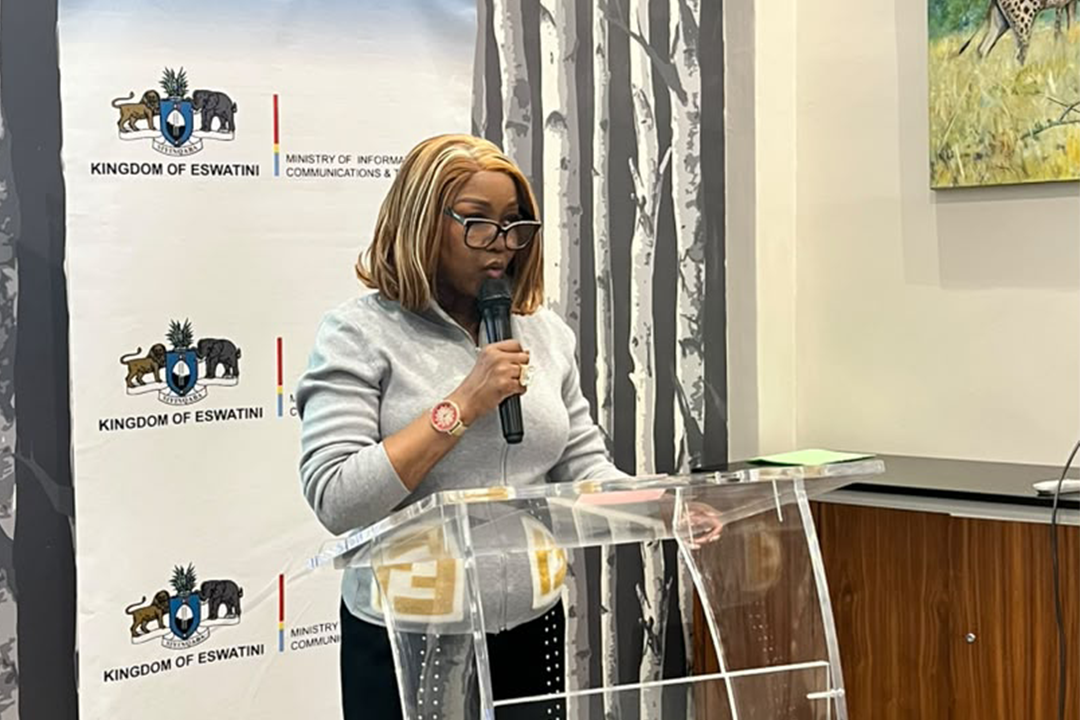
MBABANE — As technology continues to reshape how people learn, work, access financial services and interact with government, Minister of Information, Communications and Technology Senator Savannah Maziya has challenged stakeholders to ensure that women and girls are not left behind in Eswatini’s digital transformation.
Maziya made the call on Wednesday during the official opening of the Gender Impact Assessment Co-Creation Workshop at Hilton Garden Inn, Mbabane, where stakeholders from Eswatini, The Gambia, Smart Africa, NORAD, government ministries and other institutions gathered to develop practical tools for strengthening gender inclusion in digital development.
The Minister said the workshop should be viewed as more than another gathering, describing it as an important moment in Eswatini’s digital transformation journey.
She stressed that as digital technology creates new opportunities in education, employment, financial markets and government services, gender considerations must be incorporated from the beginning rather than being addressed after programmes and systems have already been designed.

“Gender must therefore be considered from the beginning and not as an afterthought,” Maziya said.
The Minister drew from her more than 20 years of involvement in gender-related work, saying her commitment to advocating for women is shaped by her own experiences of discrimination and being left out of important conversations.
She said African women, who make up about half of the continent’s population, particularly young women under the age of 35, must have a seat at the table when decisions affecting their lives and futures are made.
“I will continue to advocate for that, no matter what anyone says,” she said.
Maziya further warned that digital transformation would not be truly inclusive if women and girls remained on the margins.
She highlighted initiatives aimed at equipping women and girls with skills in emerging technologies, including artificial intelligence, cybersecurity, data science, software development and coding.
Among these initiatives is the STEM Future Pioneers mentorship programme, as well as the partnership with the United Arab Emirates through She Powers Africa.
She also revealed that Eswatini was selected in 2026 as the African pilot country for the She Powers Africa Digital Academy, strengthening the country’s efforts to prepare women for participation in the digital economy.
The Gender Impact Assessment Workshop seeks to take the gender conversation beyond policies and commitments by developing tools that can help institutions ask practical questions about who benefits from digital programmes and who may be left behind.
Maziya said the tools should help stakeholders identify barriers, assess impact and determine what needs to be done differently.
“Gender equality cannot remain only a policy commitment,” she said.
Eswatini and The Gambia are serving as pilot countries in the initiative, working with Smart Africa to co-develop, contextualise and pilot gender impact assessment tools that can contribute to a wider African toolkit.
For Maziya, the initiative also presents an opportunity for African countries to learn from one another and strengthen collaboration around gender equality in technology.
She urged participants to bring their experiences, challenges and assumptions to the table while focusing on solutions that can work within their respective institutions and national contexts.
The Minister said Africa has an opportunity to lead in supporting women in science, technology, engineering and mathematics, as well as advancing digital inclusion.
She concluded by calling on participants to “listen, learn, challenge and co-create”, officially declaring the workshop open.
The central message from the Minister was clear: digital progress cannot be considered successful if half of the population is still being left behind.
#GenderEquality #DigitalTransformation #DigitalEswatini #SmartAfrica #Eswatini #WomenInTech #GenderImpactAssessment #STEM #EPN