



BY THEMBA ZWANE
MBABANE – The Eswatini National Petroleum Company (ENPC) has turned to Ghana to gain technical and institutional lessons as the Kingdom continues to develop its petroleum sector.
A three-member ENPC delegation undertook a technical study visit to Ghana, engaging key institutions across the country’s petroleum value chain to learn from its experience in developing and managing the industry.
The visit was reported by Ghanaian and African energy media this week, including Business Post Online and Energy News Africa, placing Eswatini’s petroleum-sector development in the spotlight beyond the country’s borders.
The delegation was led by ENPC Board Member Dumezweni Dlamini and comprised ENPC Chief Executive Officer Nontombi Motsa and General Manager for Strategy and Communications Musa Shongwe.
According to the Ghana National Petroleum Corporation (GNPC), the visit was aimed at sharing Ghana’s experience, strengthening ENPC’s institutional capacity and exploring opportunities for cooperation between the two national oil companies.
The engagement comes as Eswatini works to strengthen the institutional and operational capabilities required to manage its petroleum interests.
During discussions with GNPC, the Eswatini delegation was exposed to Ghana’s experience in building a national oil company and developing the structures around its petroleum industry.
GNPC Chief Executive Kwame Ntow Amoah outlined the corporation’s evolution over more than four decades, including changes in its responsibilities as Ghana’s petroleum sector matured.
He explained the respective roles of Ghana’s Ministry of Energy and Green Transition, the Petroleum Commission and GNPC in policy direction, regulation and commercial participation in the petroleum industry.
The discussions also covered GNPC’s participation in upstream petroleum operations, its role as the National Gas Aggregator and the use of subsidiaries to develop capabilities and create value across different parts of the petroleum value chain.
For ENPC, the experience provides an opportunity to assess how Ghana built its petroleum institutions and identify practices that could be adapted to Eswatini’s own circumstances.
Motsa said the company was keen to learn from Ghana’s experience and the evolution of its petroleum sector, particularly as Eswatini continues to build its petroleum-sector capabilities.
The delegation also received lessons on the importance of developing institutional structures appropriate to the stage of a country’s petroleum-sector development.
GNPC Deputy Chief Executive for Finance, Commercial and Administration Hamis Ussif encouraged ENPC to establish strong institutional foundations before significant exploration and production activities begin.
He also highlighted the growing importance of natural gas to Ghana’s energy sector, including its role in supplying power generation and industry.
Capacity building was another key area of discussion.
GNPC Deputy Chief Executive for Exploration and Production Michael Aryeetey stressed that technical, commercial and institutional capabilities need to be developed alongside an appropriate legal and regulatory environment and a strong local-content framework.
He assured the Eswatini delegation that GNPC was prepared to share its experience and provide technical assistance where required as ENPC develops its institutional and petroleum-sector capabilities.
The study visit also extended beyond GNPC.
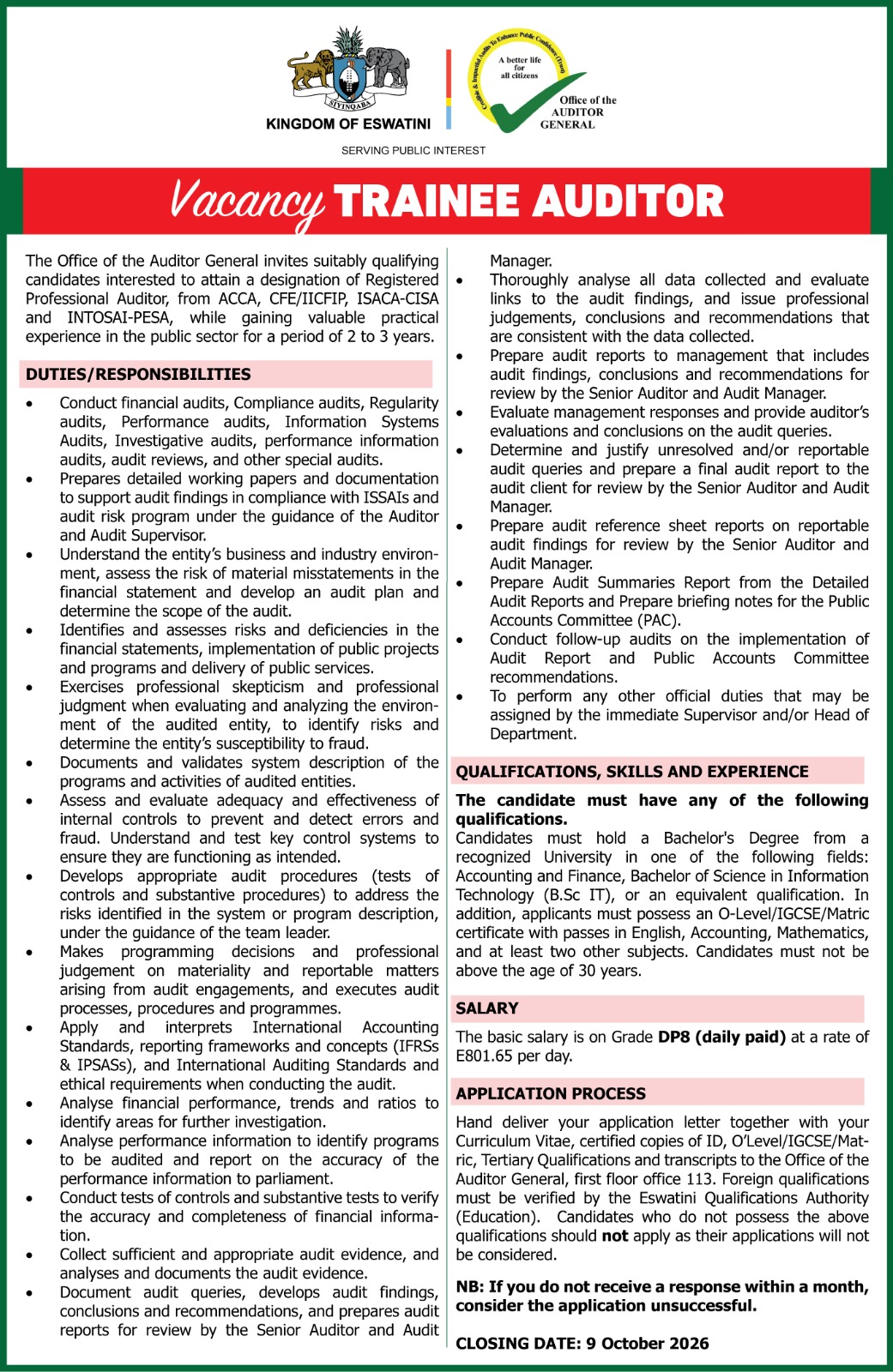
The National Petroleum Authority (NPA) hosted the Eswatini delegation to expose the team to Ghana’s downstream petroleum industry and regulatory systems.
The NPA said the engagement focused on operational efficiency, product quality, safety and effective industry oversight.
The authority’s Director of Quality Assurance, Setsoafia K. Agbenoto, said cooperation among African petroleum institutions was important in addressing common industry challenges, strengthening energy security and building resilient petroleum industries.
The delegation also visited Tema Oil Refinery (TOR) on October 5, where it was taken through refining processes, safety practices and systems supporting the supply of petroleum products to the Ghanaian market.
The visit provided the ENPC team with first-hand exposure to the management and operation of national energy infrastructure, while the two sides exchanged experiences on strengthening energy security.
Dlamini thanked the Ghanaian institutions for their reception and willingness to share knowledge and best practices.
He described the engagement as an opportunity for ENPC to draw on relevant African expertise and identify practices that could be adapted to Eswatini’s circumstances while strengthening relations between the two national oil companies.
ENPC is mandated to contribute to the security of petroleum-product supply in Eswatini through the sourcing, storage and trading of petroleum products.
The Ghana visit therefore places emphasis on more than technical exposure, highlighting the growing importance of African peer-to-peer cooperation in developing energy-sector institutions.
For Eswatini, the experience offers lessons from a country whose petroleum institutions have evolved alongside the development of its industry, while the engagement gives Ghana an opportunity to share expertise and deepen cooperation with another African national oil company.
The study visit underscores the role of knowledge exchange, institutional capacity building and technical cooperation as African countries seek to strengthen energy security and develop sustainable petroleum industries.
#Eswatini #ENPC #Ghana #GNPC #Petroleum #EnergySecurity #OilAndGas #Africa #EnergySector #TechnicalCooperation #KnowledgeSharing #PetroleumIndustry
(Courtesy Pic)