



BY GCWALISILE MHLABANE
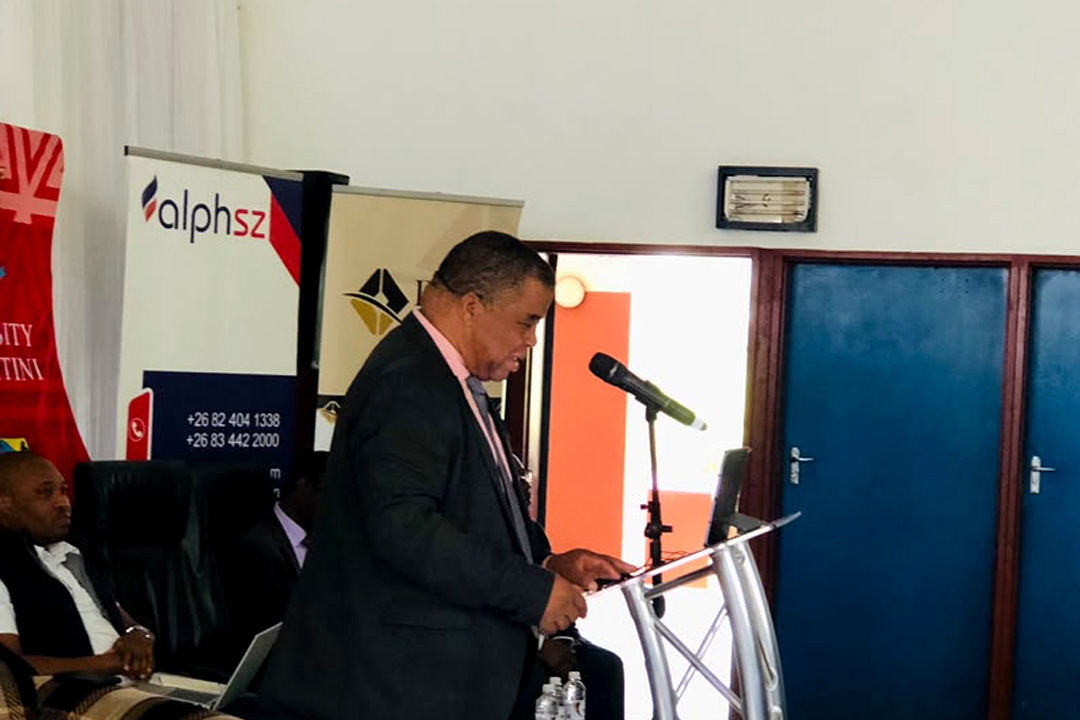
KWALUSENI– University of Eswatini (UNESWA) Vice-Chancellor Professor Justice Thwala has urged students to start building their financial futures early, saying even modest savings can grow into meaningful wealth when managed with discipline.
Prof. Thwala made the call during the Capital Markets Roundtable Indaba held at the UNESWA Faculty of Commerce at Kwaluseni on Wednesday, October 7, 2026.
The engagement, held in partnership with the Financial Services Regulatory Authority (FSRA), formed part of the 10th edition of World Investor Week 2026 under the theme “Invest in Your Future. Protect It Today.”
Using a practical example, Prof. Thwala told students that setting aside E100 a month would amount to E1 200 in a year and E6 000 over five years.

“A saving culture may begin with saving as little as E100 per month,” he said.
He cautioned students against allowing short-term consumption to undermine their ability to build financial security.
“Sadly, we may not realise this saving if we spend it on things such as alcohol,” Prof. Thwala said.
He said the financial habits young people develop now would have long-term consequences for their independence and the country’s financial resilience.
“The habits you build today will determine your financial independence tomorrow and, collectively, will build a more financially secure and self-reliant Eswatini,” he said.
Prof. Thwala also encouraged students to understand responsible investing, including the importance of risk management, patience and market analysis.
He said capital markets play a much broader role than simply providing platforms for buying and selling securities, as they channel savings into productive investments and provide businesses and public entities with capital for expansion, infrastructure and innovation.
“When the Eswatini Capital Market thrives, industries grow, jobs are created, and Eswatini’s economic landscape is fundamentally strengthened,” he said.
The Vice-Chancellor further urged students to consider capital markets as a potential career field, saying the sector requires professionals with strong analytical capabilities, integrity, innovation and an understanding of emerging technologies.
The indaba brought together fourth-year students from Management, Accounting and Marketing, as well as Bachelor of Education in Business Studies students, including those studying through the Institute of Distance Education.
Prof. Thwala challenged students to make the most of their interaction with industry professionals by asking questions, challenging ideas and building networks that could shape their future careers.
Representatives from the Eswatini Stock Exchange, StanLib Eswatini, ENACTUS, AlphSZ Eswatini and FSRA participated in the engagement, exposing students to different aspects of the financial sector.
Prof. Thwala said the collaboration between UNESWA and industry partners was important in bridging the gap between academic learning and the practical realities of the business world.
He said the engagement supported UNESWA’s strategic priorities of strengthening teaching and learning and deepening stakeholder engagement.
The indaba ultimately encouraged students to see financial literacy as more than a personal skill, but as a foundation for responsible participation in the economy.
For young emaSwati, Prof. Thwala’s message was that financial independence can begin with a simple decision to manage money wisely today while preparing to take advantage of opportunities in the capital markets tomorrow.


