



BY GCWALISILE MHLABANE
MANZINI – Eswatini is showing major progress in railway safety, with Eswatini Railway (ESR) reporting a decline in railway incidents during the 2025/26 financial year, as occurrences fell from 100 in 2024/25 to 63, surpassing the company’s target of a 20 per cent reduction.
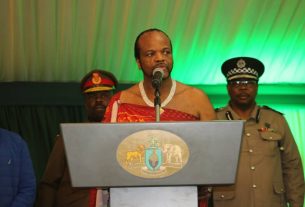
The figures were presented by Sicelo Mashwama, Head of Section for Safety, Health, Environment, Quality (SHEQ) and Security at ESR, during the launch of the annual Railway Safety Week at The George Hotel in Manzini on October 12, 2026.
Despite the improvement, ESR continues to face safety challenges, including people being struck by moving trains, vandalism and theft of railway infrastructure, livestock collisions, encroachment on railway reserves and unsafe behaviour at level crossings.
According to ESR’s performance report, most cases involving people being struck by trains appeared to be linked to substance abuse and mental health concerns, while some incidents remained under police investigation.

Speaking at the launch, Acting Chief Executive Officer of ESR and Director of Corporate Services Emmanuel Simelane stressed that railway safety required the active participation of employees, stakeholders and surrounding communities.
“Safety is a shared responsibility that begins with our daily habits and extends from our operational sites to the wider community,” Simelane said.
He urged the public to adopt responsible practices around railway infrastructure to prevent incidents, protect lives and ensure the safety of railway operations.
Representing the Principal Secretary in the Ministry of Public Works and Transport, Under Secretary Richard Phungwayo called on communities and stakeholders to protect public infrastructure against vandalism and damage, warning that the destruction of public assets undermined national development.
“Safeguarding our national roads, transport networks and public facilities is a collective duty that directly secures Eswatini’s economic future,” Phungwayo said.
He said vandalism and damage to public infrastructure disrupted essential services and drained government resources that could otherwise be channelled towards community development.
Phungwayo urged communities to take an active role in protecting public assets, emphasising that preserving infrastructure was essential to sustaining reliable services and supporting economic growth.
ESR also called for stronger monitoring and enforcement to address the theft of railway materials, with particular attention to compliance among scrap-metal recyclers. The measures are intended to help prevent stolen railway components from entering the scrap-metal market.
Other concerns include livestock straying onto railway lines and encroachment on railway reserves, which can endanger people and animals while disrupting train operations.
The Railway Safety Week programme will commence on October 13, 2026, in Matsapha, where awareness activities will continue to promote safer practices among motorists, pedestrians, livestock owners and communities living near railway lines.
The campaign seeks to reinforce the message that protecting railway infrastructure and preventing accidents require cooperation between ESR, government, law enforcement agencies and the public.
#EswatiniRailway #RailwaySafetyWeek2026 #RailwaySafety #Eswatini #PublicInfrastructure #TransportSafety #ProtectPublicAssets