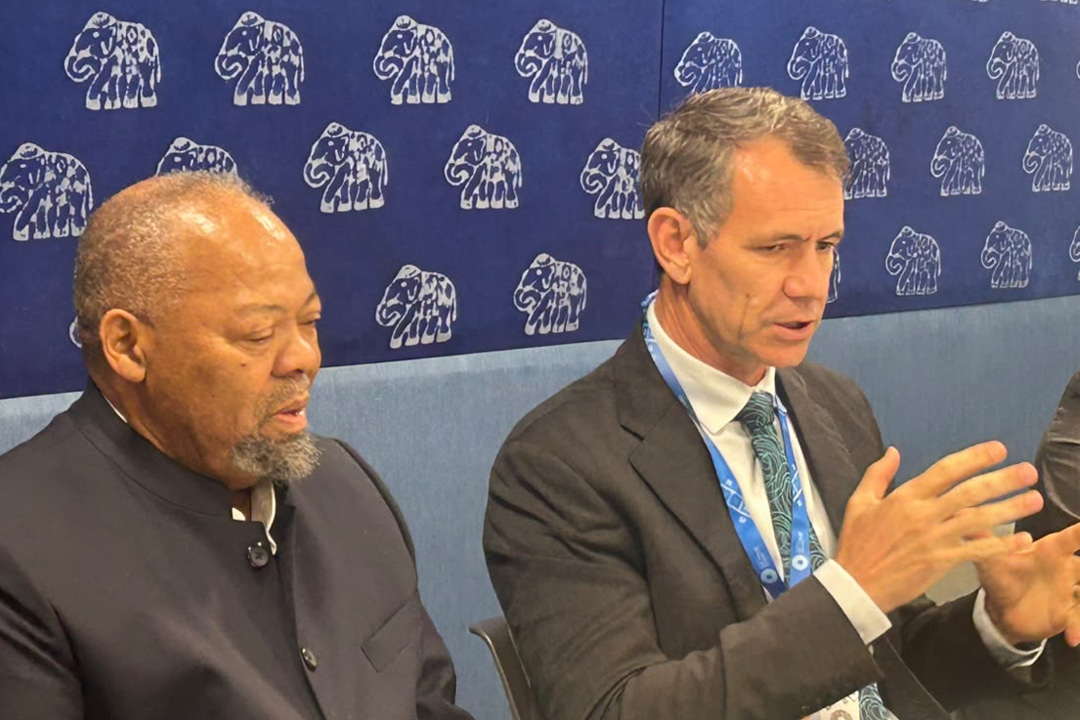




…Government engages international financial institutions on development financing, economic reforms and investment opportunities
BY GCWALISILE MHLABANE
MANZINI– Creating employment opportunities for emaSwati, improving infrastructure and securing affordable development financing are among Eswatini’s priorities as three Cabinet ministers engage international financial institutions during the 2026 Annual Meetings of the International Monetary Fund (IMF) and World Bank Group.
Minister of Economic Planning and Development Dr Thambo Gina is leading the country’s delegation to the meetings, which are scheduled for October 12 to 18, 2026, in Bangkok, Thailand, according to information provided by the ministry.
He is accompanied by Minister of Finance Neal Rijkenberg and Minister of Public Service Mabulala Maseko, together with senior government officials.

The delegation includes Principal Secretary Thabsile Mlangeni, Chief Economist Sifiso Mamba, Anthony Mthunzi, Nombuso Dlamini and Phindile Masango from the Ministry of Economic Planning and Development.
The meetings provide Eswatini with an opportunity to engage the World Bank and other development partners on financial and technical support for programmes intended to address some of the country’s pressing economic challenges.
Among the issues receiving attention are unemployment, particularly among young people, inadequate infrastructure, public financial management and the need to attract more private investment.
One of government’s priorities during the engagements is mobilising concessional financing to support national development projects.
Unlike ordinary commercial borrowing, concessional financing generally offers more favourable repayment conditions, including lower interest rates or longer repayment periods.
Such arrangements could enable government to finance development programmes while managing pressure on public finances.
The discussions also cover measures to strengthen Eswatini’s macro-fiscal position and improve the management of public resources.
Improved public financial management is important in ensuring that funds allocated to development projects are used for their intended purposes and that implementation takes place within planned budgets and timelines.
Government is also seeking technical assistance that could improve the capacity of public institutions to plan, manage and implement projects.
Another major issue on the agenda is employment creation.
Youth unemployment remains one of Eswatini’s economic challenges, placing greater importance on policies that encourage businesses to expand and create employment opportunities.
The delegation’s engagements are expected to address reforms aimed at improving the business environment and attracting investment.
Private sector investment is particularly important because businesses contribute to employment through the establishment of new enterprises, expansion of existing operations and increased demand for goods and services.
An improved investment environment could also provide opportunities for local entrepreneurs and small businesses seeking to enter new markets.
Infrastructure development is another priority being discussed.
Reliable electricity supplies, efficient transport networks and adequate public facilities are among the requirements for supporting business operations and improving economic competitiveness.
For manufacturers, transport operators and other businesses, inadequate infrastructure can increase operating costs and affect productivity.
Investment in infrastructure could therefore help improve access to markets, support industrial activity and create conditions for further private sector expansion.
However, successful implementation will depend on the availability of financing, proper planning and effective management of development projects.
Government is also considering the contribution that urban development can make towards economic growth.
Well-planned towns and urban centres, supported by reliable infrastructure and access to essential services, can provide opportunities for business development and employment.
The engagements with international financial institutions come alongside discussions involving Eswatini and its regional monetary partners.
Minister of Finance Neal Rijkenberg, together with the Principal Secretary and senior officials from the Ministry of Finance and the Central Bank of Eswatini, is attending the second meeting of the Common Monetary Area (CMA) Council in Bangkok.
The CMA comprises Eswatini, Lesotho, Namibia and South Africa.
The council provides a platform for the four countries to discuss monetary and financial matters of common interest.
Eswatini’s participation in the council is intended to complement its engagements with the IMF and World Bank by addressing regional monetary and financial cooperation.
The two engagements place Eswatini in discussions covering both domestic economic development priorities and broader regional financial matters.
For government, a central consideration is how development financing and technical assistance can be translated into projects that produce measurable results.
This includes ensuring that infrastructure projects are completed, public resources are properly managed and economic reforms create conditions for businesses to grow.
Effective coordination between government ministries, implementing agencies and development partners will also be important in limiting project delays and improving accountability.
Although the meetings provide opportunities to discuss financing and cooperation, the information released does not indicate that new funding agreements have already been concluded.
The outcome of the engagements will therefore depend on subsequent discussions, financing arrangements and the implementation of agreed programmes.
Eswatini’s participation in the IMF and World Bank Annual Meetings forms part of government’s continued efforts to secure international cooperation in addressing the country’s economic and development priorities.
The intended benefits include increased investment, improved infrastructure, stronger public financial management and more employment opportunities for emaSwati.
(Courtesy Pic)