


… Finance minister confirms E2.9bn payment due next week
… SACU revenue to boost government cash flow
… Eswatini expects E11.7bn from SACU this financial year
BY MBONGENI NDLELA
MBABANE– Eswatini is expected to receive a major E2.9 billion injection from the Southern African Customs Union (SACU) next week, providing a significant boost to Government revenues as the country enters another quarter of the 2026/27 financial year.

Minister of Finance Neal Rijkenberg confirmed the expected payment on Wednesday evening, September 30, 2026, following an enquiry by Eswatini Positive News on when the country would receive its next SACU revenue share and how much would be paid.
“We will be getting E2.9 billion next week,” Rijkenberg confirmed.
The payment will represent one of the biggest single revenue inflows into Government coffers during the quarter and comes at an important time for the implementation of the national budget, financing of Government programmes and management of the country’s cash flow.
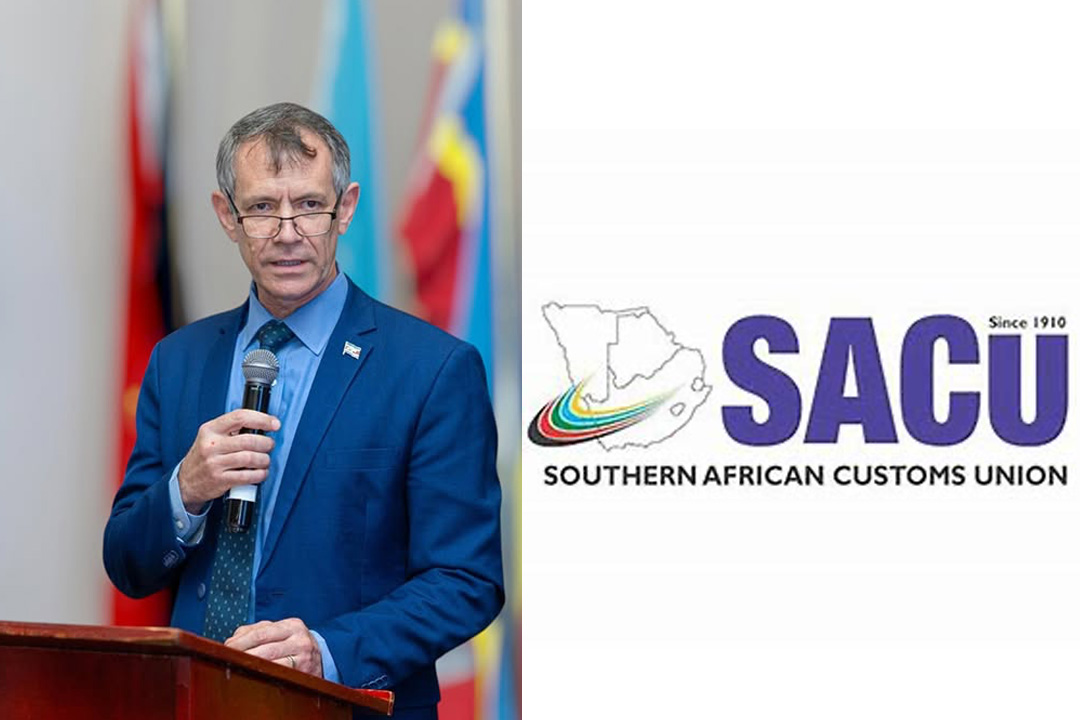
SACU receipts remain an important source of revenue for Eswatini and are paid to member states quarterly under the customs union’s revenue-sharing arrangement.
According to the 2026/27 National Budget, Eswatini expects SACU receipts to increase by 13 per cent during the current financial year, climbing from E10.4 billion to approximately E11.7 billion. The E2.9 billion expected next week is therefore broadly in line with a quarterly portion of the projected annual allocation.
The payment is significant because SACU revenue contributes substantially towards the resources available to Government to finance public expenditure alongside domestic taxes and other revenue sources.
SACU operates a Common Revenue Pool made up of customs, excise and additional duties collected within the common customs area. Revenue is distributed among member countries using an agreed formula and payments are made quarterly.
The customs union comprises Eswatini, Botswana, Lesotho, Namibia and South Africa.
Under the revenue-sharing formula, payments are divided into customs, excise and development components. The customs component is influenced by intra-SACU trade, while the excise component is linked to the size of each member state’s economy. A development component is also incorporated into the formula.
For Eswatini, the expected E2.9 billion transfer will provide an important revenue injection as Government continues implementing its E30 billion-plus national budget and meeting expenditure commitments across ministries and public programmes.
The latest payment also comes during a financial year in which SACU revenues are expected to recover from the decline recorded in the previous year.
Government’s 2025/26 budget had projected SACU receipts of E10.4 billion, down from E13.07 billion in 2024/25. Government at the time supplemented the amount available to the budget with E1 billion from the SACU Stabilisation Fund.
The picture has improved in the 2026/27 financial year, with Government forecasting SACU receipts of E11.7 billion.
At E2.9 billion, next week’s expected payment represents almost a quarter of the projected E11.7 billion annual SACU receipts.
The quarterly nature of the payments means the transfers can have an immediate effect on Government liquidity, particularly because they arrive as large lump-sum inflows rather than being collected gradually throughout the month.
SACU confirms that duties collected across member states are transferred into the Common Revenue Pool and revenue shares approved for member states are subsequently paid quarterly.
The expected payment will therefore add substantial resources to the public purse as Government proceeds with expenditure planned for the third quarter of the financial year.
While SACU receipts remain an important pillar of national revenue, Government has over the years also emphasised strengthening domestic revenue collection to reduce exposure to fluctuations in customs-union receipts.
Such fluctuations can be substantial because SACU allocations are influenced by regional trade, customs and excise collections as well as adjustments between projected and actual collections.
The E2.9 billion expected next week nevertheless provides a sizeable and timely boost to Eswatini’s fiscal resources, while keeping the country broadly on course towards its projected E11.7 billion SACU revenue for the 2026/27 financial year.
(Courtesy Pic)