



BY MBONO MDLULI
MBABANE– Government, through the Ministry of Commerce, Industry and Trade (MCIT), led by the Minister, Hon. Manqoba Khumalo, has reinforced its leadership role in advancing investment, legislative reform and citizen economic empowerment.
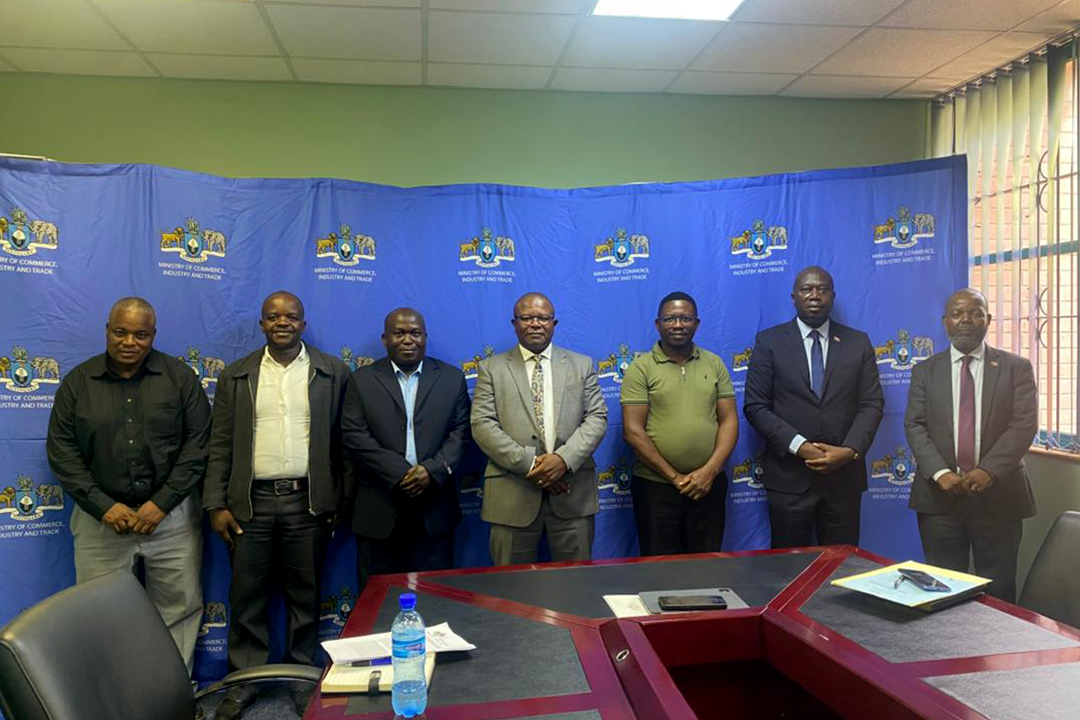
This follows a high-level engagement with the Federation of Eswatini Business Community (FESBEC) and the Eswatini Micro, Small and Medium Enterprises Chamber of Commerce (EMSMECOC).
The engagement formed part of MCIT’s structured stakeholder consultation programme, which seeks to ensure that national policies, laws and flagship programmes translate into measurable economic impact for Emaswati entrepreneurs and the wider private sector. It also reaffirmed the Ministry’s coordinating role in aligning institutions, legislation and partnerships behind Eswatini’s economic transformation agenda.
Addressing the meeting, Hon. Khumalo said engagements with chambers of commerce remain a critical platform for keeping stakeholders informed on legislative reforms, investment promotion initiatives and flagship trade and industrialisation programmes that are reshaping the country’s business and investment climate.

“Our objective is to ensure that policy, law and implementation move together in a coordinated and impactful manner,” the Minister said. He stressed that MCIT is committed to building a competitive, inclusive and investor-ready economy anchored on sound legislation, efficient regulatory systems and strong institutional partnerships.
The Minister provided a detailed briefing on MCIT’s ongoing legislative reform programme. Key reforms include the review of the Liquor Licensing Act and the Trading Licences Act, the implementation of the Citizens Economic Empowerment Act and its Regulations, the Companies Bill of 2024 and the Special Economic Zones (SEZ) Act. These reforms are aimed at modernising Eswatini’s regulatory environment, improving the ease of doing business, promoting industrial growth and strengthening citizen participation across key sectors of the economy.
On investment promotion, Hon. Khumalo highlighted progress under the Eswatini Investment Promotion Authority (EIPA). He revealed that several investment projects endorsed by regional institutions such as the African Continental Free Trade Area (AfCFTA) and Afreximbank have resulted in announced projects valued at E37 billion.
“EIPA continues to work closely with investors to support project implementation, resolve bottlenecks and ensure timely execution,” the Minister said. “Our focus is to move these projects from announcement stage to full operationalisation, where they can deliver jobs, industrial output and sustainable economic growth.”
He further informed stakeholders that preparations for the second edition of the Eswatini Investment Conference (EIC) are underway. Although planning is still at an early stage, the organising committee has been strengthened to include additional government departments, potential venues have been assessed, and a draft concept paper outlining the conference theme, objectives and strategic focus is being finalised for Cabinet submission.
Turning to trade promotion, the Minister described the Eswatini International Trade Fair (EITF) as one of MCIT’s flagship platforms for business development, trade promotion and investment visibility. He noted that the Fair has evolved beyond a traditional exhibition into a week-long programme of curated business seminars hosted across two dedicated seminar spaces.
During EITF 2025, a total of 15 business seminars were held, attracting approximately 1 200 participants, while the Exporters Awards recorded the highest attendance to date at around 900 participants. The Fair also recorded a 27 percent increase in local companies interested in sponsorship and partnerships, with media houses playing a critical role in driving the marketing campaign. Overall attendance exceeded 70 000 visitors over the 10-day period.
However, Hon. Khumalo acknowledged infrastructure challenges, noting that facility capacity has not expanded at the same pace as growing demand. He said this issue would need to be addressed as the Fair continues to grow.
International participation at EITF 2025 included a new exhibitor from Turkey, alongside exhibitors from South Africa, Zimbabwe, Taiwan and Lesotho, reinforcing the Fair’s regional and international footprint. EITF 2026 is anticipated to take place between 28 August and 7 September 2026 and will be preceded by at least two regional trade shows. Additional sponsorship opportunities will be opened across lifestyle, wellness, food and regional trade showcase programmes.
The Minister also outlined developments under the proposed Investment Policy, which aims to create a coherent and harmonised investment environment in Eswatini. The policy is anchored on a government-led investment focus, where priority sectors are identified through industrial policy and supported by targeted incentives and de-risking mechanisms. It prioritises investor protection, regulatory transparency, ease of profit repatriation, full foreign ownership rights, and improved access to land and utilities.
Institutional reforms form a central pillar of the policy, with EIPA set to be transformed into a more agile and well-capacitated agency able to proactively remove investment bottlenecks. Measures to reduce the cost of doing business, improve access to serviced business premises and shorten timelines for utility connections are also included.
Importantly, Hon. Khumalo emphasised that MSME participation is a core pillar of the investment agenda. “We are strengthening MSME participation through innovation hubs, incubators and targeted support mechanisms, because citizen economic empowerment must be visible across the entire investment value chain,” he said.
The meeting also received progress reports from stakeholders. FESBEC reported that since assuming office in 2025, it has conducted extensive nationwide consultations to better understand business challenges related to regulation, access to finance, market opportunities and policy implementation gaps. The Ministry welcomed this consultative approach, noting that it strengthens evidence-based policy implementation.
The MSME Chamber of Commerce expressed appreciation for the engagement and reaffirmed its role as an inclusive institution supporting all Liswati entrepreneurs. It highlighted challenges such as early taxation, blacklisting and tax clearance requirements, introduced the MSME Clinic Pilot Project, and announced plans to establish a cooperative to improve savings mobilisation and access to finance.
Concluding the engagement, Hon. Khumalo reaffirmed MCIT’s leadership in driving economic transformation. “Our responsibility as the Ministry is to ensure that laws, policies, institutions and partnerships operate as one integrated system,” he said. “Only then can we translate policy intention into real economic empowerment and sustainable development for the people of Eswatini.”
(Courtesy Pic)