


BY MFANUFIKILE KHATHWANE
MBABANE – The Government of Eswatini, through the Ministry of Public Works and Transport, has intensified a nationwide programme to rehabilitate and maintain government residential houses, as part of efforts to safeguard public assets and improve living conditions for civil servants.
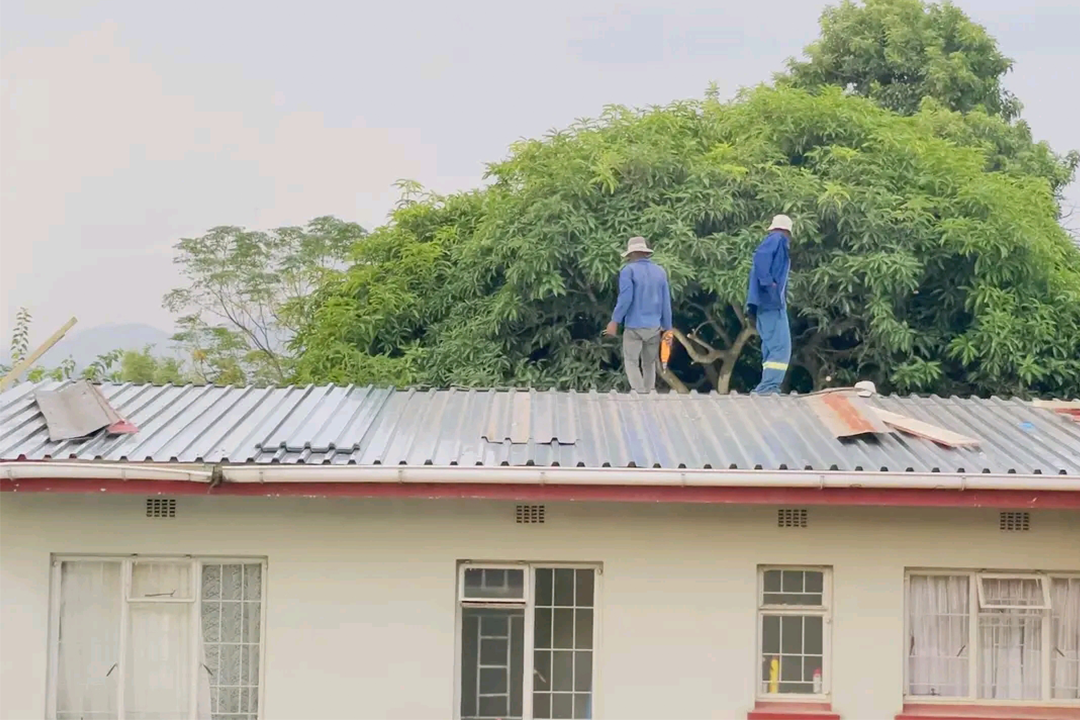
The latest phase of the initiative, carried out on May 4, 2026, saw residential houses in Manzini successfully re-roofed, marking a significant milestone in restoring the safety and habitability of government accommodation.
Authorities say the exercise forms part of a broader, systematic maintenance programme aimed at preserving public infrastructure, improving living standards, and preventing further deterioration of state-owned properties.
The Buildings Department has reaffirmed its commitment to ensuring that government infrastructure is maintained to acceptable standards, with ongoing inspections and repairs being rolled out across the country.

ABANDONED HOUSES SPARK CONCERN
The urgency of the programme is underscored by a growing number of abandoned government houses that have, in some areas, deteriorated into unsafe structures and centres of anti-social behaviour.
In communities such as Mafucula under Mhlume Inkhundla, abandoned houses once occupied by agricultural officers have reportedly been misused by pupils who bunk classes and engage in misconduct.
In Hlathikhulu, similar structures have been linked to criminal activity, with residents alleging that thieves use them as hideouts and storage spaces for stolen goods.
Urban centres including Mbabane and Manzini have also experienced challenges, with some neglected buildings contributing to vandalism, illegal dumping, and broader urban decay.
These cases reflect the extent of the problem that the Government is now seeking to address through its intensified maintenance and rehabilitation programme.
SECURITY RISKS RAISED
Some of the vacant structures have been stripped of roofing, plumbing, and electrical materials due to lack of security, while others have been used for illegal activities such as drug consumption, further raising safety and health concerns within communities.
Security concerns surrounding these properties have also been raised by parliamentarians, including Somntongo Member of Parliament Sandile Nxumalo and Honourable Thandeka Mavuso, who highlighted the dangers posed by abandoned government houses.
Legislators noted that such structures have become hideouts for criminals, storage points for stolen goods, and centres for drug-related activities, posing a serious threat to community safety.
REPURPOSING STATE ASSETS
In response to such challenges, government has also begun exploring ways to repurpose some of the abandoned properties to better serve the public. One such example includes plans to rehabilitate a long-vacant official residence at Waterford Hill and convert it into a halfway house for vulnerable children and victims of gender-based violence.
CIVIL SERVANT HOUSING UNDER SCRUTINY
Concerns have also been raised about the condition of housing for civil servants, including security forces and teachers, with reports indicating that some government quarters are in a dilapidated state and no longer suitable for occupation.
These conditions have, in some instances, contributed to properties being left vacant, making them more susceptible to vandalism and misuse.
In response to these concerns, Prime Minister Russell Dlamini acknowledged in December 2025 that improving housing and addressing shared accommodation for security forces is now a high government priority.
Government has since indicated that improving housing conditions remains a priority, with measures such as rehabilitation of existing units and the introduction of housing allowances aimed at addressing accommodation challenges for public servants.
COMMITMENT TO RESTORE INFRASTRUCTURE
Despite the scale of the problem, the ongoing works in Manzini and other areas signal a renewed commitment by Government to restore the value, safety, and functionality of its housing stock.
The intensified programme is expected to not only preserve national assets but also reduce crime, improve community safety, and ensure that government infrastructure continues to serve its intended purpose.
As the programme gains momentum, stakeholders say sustained maintenance, accountability, and timely intervention will be critical in ensuring that government properties do not fall back into neglect, but instead remain assets that support national development and service delivery.
#Eswatini #PublicWorks #Housing #Infrastructure #ServiceDelivery #CommunitySafety #Development