



BY GCWALISILE MHLABANE
SIDVOKODVO- Eswatini is turning to its own water resources to strengthen energy security, with the Lower Maguduza Hydropower Project emerging as a key investment in the Kingdom’s drive to expand domestic renewable electricity generation.
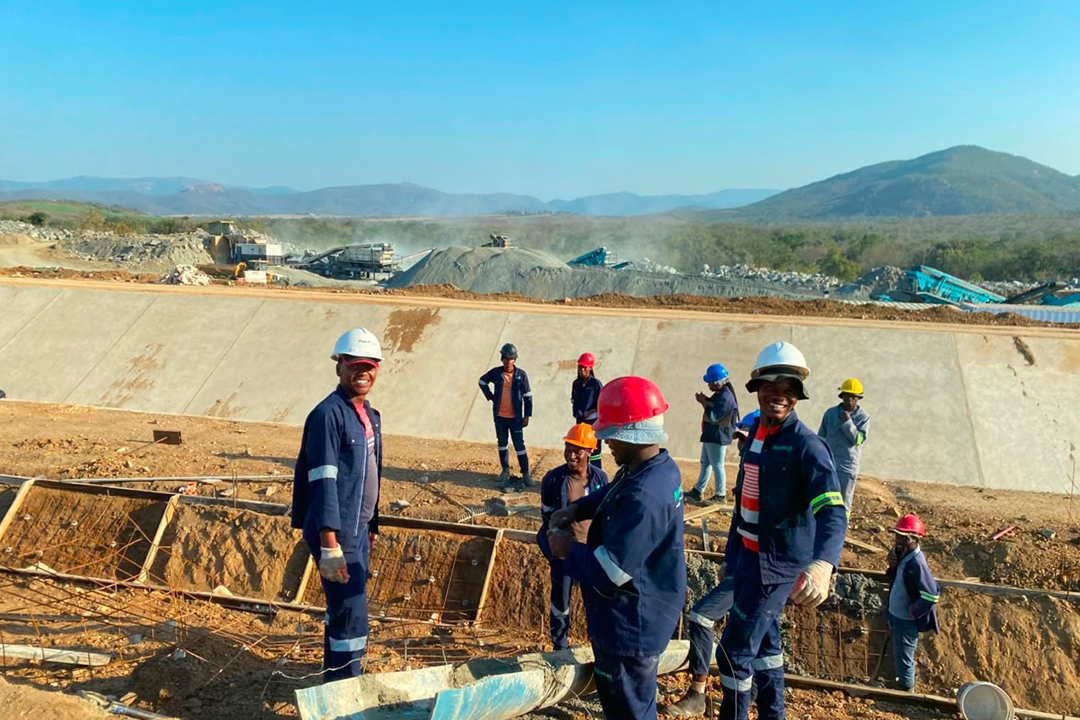
This was highlighted on Monday, August 24, 2026, when Minister of Natural Resources and Energy HRH Prince Lonkhokhela toured the Eswatini Electricity Company’s (EEC) Lower Maguduza Hydropower Project at Sidvokodvo.
The tour provided Government with an opportunity to assess progress on infrastructure aimed at strengthening the country’s domestic electricity supply while reducing its vulnerability to supply constraints and dependence on imported power.
For Eswatini, the project represents more than an investment in electricity generation. It is part of a broader effort to build a stronger energy foundation for businesses, industries, agriculture and households while making better use of the Kingdom’s indigenous resources.

Speaking during the tour, Prince Lonkhokhela said hydropower remains a vital component of Eswatini’s renewable energy future.
“Hydropower remains an important component of our country’s renewable energy portfolio, and projects such as Lower Maguduza demonstrate the potential to harness our water resources for the benefit of the nation,” he said.
The Minister commended EEC, contractors and the project team for the progress made, stressing that safety, quality and long-term sustainability must remain central to the development.
He urged the project team to maintain momentum towards completion while ensuring that quality is not compromised in the pursuit of project timelines.
Prince Lonkhokhela said investments such as Lower Maguduza were critical to strengthening the country’s ability to generate electricity locally.
“Projects of this nature are particularly important because they increase our ability to generate electricity locally and, consequently, strengthen national energy security,” he said.
The benefits of stronger domestic electricity generation extend well beyond the energy sector.
For agriculture, reliable electricity is a critical production input, supporting irrigation, water pumping, cold storage, agro-processing, milling and other commercial operations.
A stronger local electricity supply could therefore create greater opportunities for farmers and agribusinesses to expand production, add value to agricultural products locally and strengthen their participation in commercial agriculture.
The Lower Maguduza project forms part of a broader Government approach that combines new renewable energy generation with the rehabilitation and optimisation of existing infrastructure.
Prince Lonkhokhela said Government would continue supporting investments that increase domestic generation capacity and build a more resilient electricity system.
“Government will continue to support initiatives that contribute towards increasing domestic generation and reducing the country’s vulnerability to electricity supply constraints,” he said.
The Minister’s tour comes as Government and EEC pursue interventions aimed at improving the efficiency of the country’s electricity infrastructure while unlocking additional renewable generation capacity.
Together with the Ferreira Canal refurbishment, the Lower Maguduza project demonstrates the value of investing in Eswatini’s own natural resources and maximising every opportunity to generate electricity locally.
The project is therefore not simply about adding power to the national grid. It is about powering economic activity, supporting agriculture, strengthening businesses and laying the foundation for a more secure and sustainable energy future.
For Eswatini, the message is clear: the Kingdom’s water resources can do more than sustain communities and agriculture — they can drive turbines, strengthen energy security and help power the nation’s economic ambitions.
#EswatiniPositiveNews #EEC #LowerMaguduza #Hydropower #RenewableEnergy #EnergySecurity #Eswatini #EconomicGrowth
(Courtesy Pic)