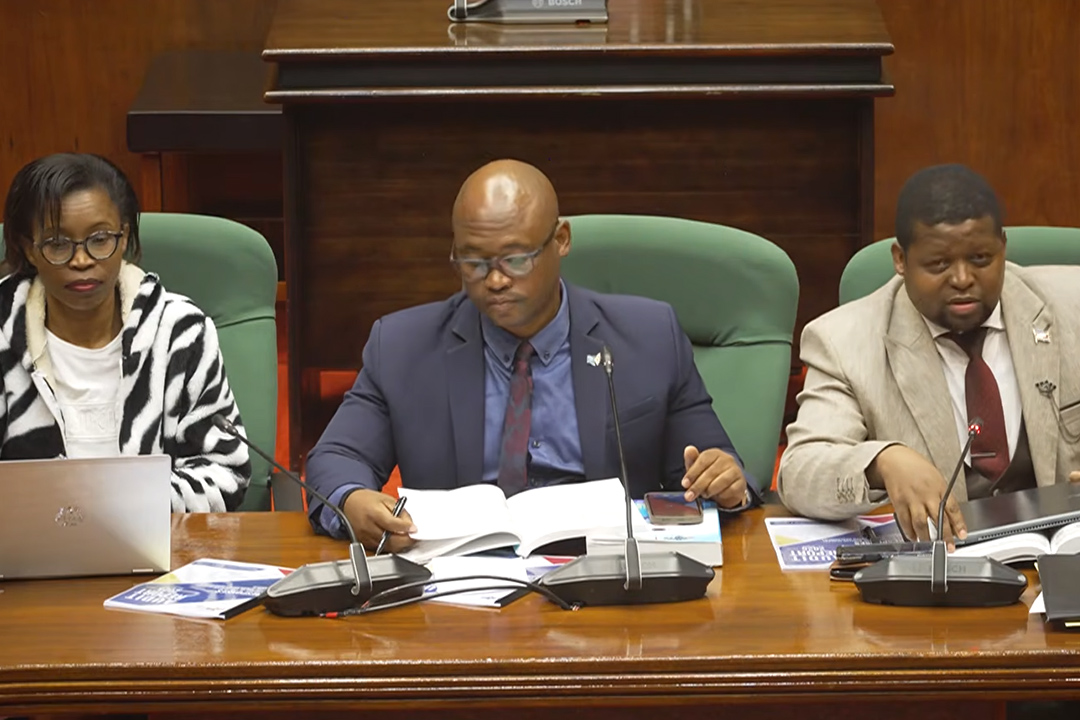




…Zwane also raises concerns over senior officials who delegate accountability to junior officers
BY MBONO MDLULI
LOBAMBA– The Public Accounts Committee (PAC) has raised concerns over the absence of representatives from the Public Service Pensions Fund (PSPF) during a session involving the Ministry of Public Service.
The matter was highlighted on Friday, June 5, 2026, when the Ministry of Public Service appeared before the PAC in the House of Assembly to respond to issues raised by the Office of the Auditor General.
PAC Deputy Chairperson Manzi Vincent Zwane, who was chairing the proceedings, noted the absence of PSPF officials during the introductory stage of the proceedings, where both committee members and ministry officials introduced themselves.

After the introductions, Zwane pointed out that he had not heard anyone representing the Public Service Pensions Fund, which falls under the Ministry of Public Service.
Ministry Explains Delay
Responding to the concern, Acting Principal Secretary (PS) Cebile Nhlabatsi, who appeared as the ministry’s Controlling Officer, apologised on behalf of the PSPF.
She informed the committee that representatives from the pension fund were on their way to Parliament and had not yet arrived at the time the session commenced.
The explanation was accepted, but the issue prompted a broader discussion about attendance and accountability among senior government officials.
Concern over Senior Officials Missing Sessions
Zwane observed that some senior officials and directors from various ministries and departments frequently fail to attend PAC sessions, opting instead to send junior officers to represent them.
He expressed concern that while junior officers often undertake the technical work and answer questions during parliamentary oversight sessions, senior officials tend to appear only when opportunities arise that carry benefits or visibility.
“In many instances, the people who do the actual work and attend these sessions are the junior officers. Yet when there are opportunities such as official trips, they are often left behind while others benefit,” said Zwane.
He argued that such practices were unfair to junior staff members who shoulder much of the responsibility during parliamentary engagements.
Call for Fair Recognition
The PAC Deputy Chairperson said he had observed that some of the officers who regularly assist committees and provide technical information were rarely included in official delegations or activities that came with professional opportunities.
He suggested that institutions should ensure that hardworking junior officers also receive recognition and opportunities for professional growth.
According to Zwane, accountability should not be delegated entirely to subordinates while senior officials remain absent from important oversight processes.
Praise for Public Service PS
Despite his concerns, Zwane commended Ministry of Public Service Principal Secretary Mthunzi Shabangu for formally communicating his inability to attend the session due to other national commitments.
He said Shabangu had shown respect for Parliament by notifying the committee in advance and ensuring that the ministry was represented by Acting PS Cebile Nhlabatsi.
“I appreciate the fact that the Principal Secretary communicated his absence and ensured that the ministry was properly represented. That demonstrates respect for Parliament,” Zwane said.
Parliament Expects Communication
Zwane contrasted Shabangu’s conduct with that of some officials who fail to communicate their absence from parliamentary proceedings.
He said Parliament expected institutions to inform the relevant authorities whenever senior officials were unable to attend oversight sessions.
Failure to do so, he noted, undermines accountability and the working relationship between Government institutions and Parliament.
The PAC’s comments underscored the importance of attendance, transparency and accountability during parliamentary oversight processes, which play a critical role in ensuring that public institutions properly account for their activities and use of public resources.
(Courtesy Pic)