


BY SIFISO NHLABATSI
MBABANE- The Southern African Development Community (SADC) Secretariat has pledged full support to Eswatini as it assumes a key leadership role in the regional bloc’s peace and security structures, with Executive Secretary Elias Magosi expressing confidence in the country’s ability to advance regional stability.
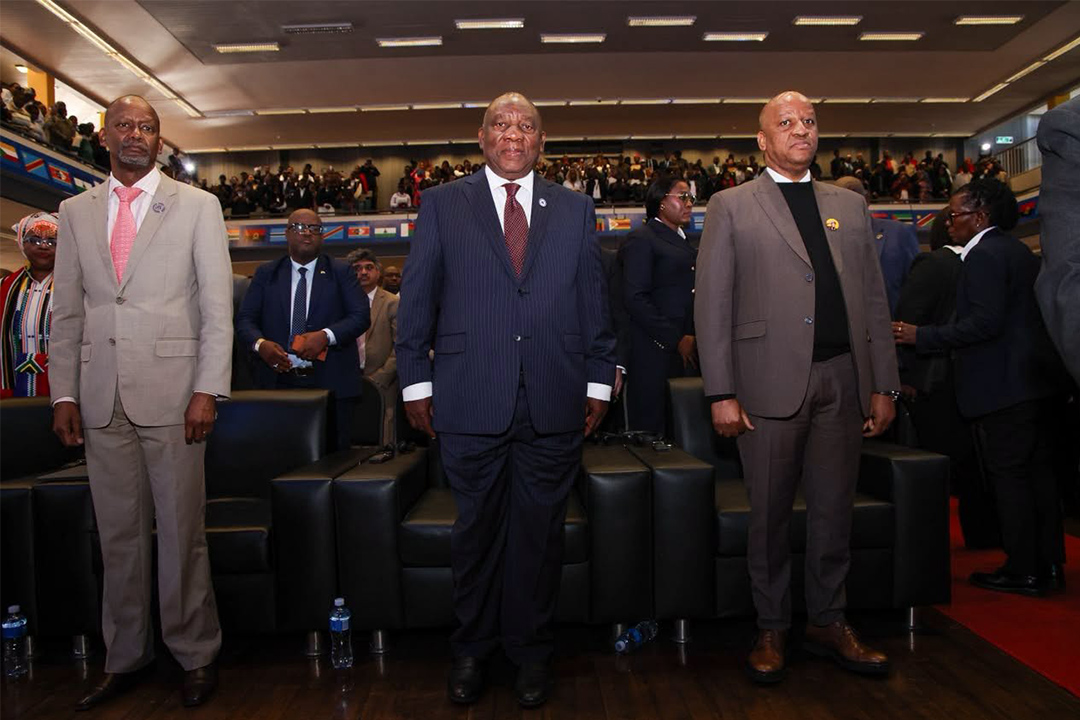
Magosi made the commitment on Saturday, 15 August 2026, in Durban, South Africa, during the SADC Ministerial Committee of the Organ on Politics, Defence and Security Cooperation meeting held ahead of the Organ Troika Summit scheduled for Sunday.
The meeting marks an important transition for Eswatini, with Foreign Affairs and International Cooperation Minister Senator Pholile Shakantu taking over as the incoming Chairperson of the Ministerial Committee of the Organ.
In welcoming Shakantu to the leadership position, Magosi assured her of the Secretariat’s support as she assumes responsibility for steering the committee’s work on some of the region’s most pressing political and security matters.

“To the Incoming Chairperson of the Ministerial Committee of the Organ, Honourable Senator Pholile Shakantu, Minister of Foreign Affairs and International Cooperation of the Kingdom of Eswatini, I extend our warm congratulations and best wishes as you take on this vital role,” Magosi said.
He said the SADC Secretariat would provide its full support to Shakantu as she leads efforts to promote peace and security across the region during her tenure.
“We assure you of our support as you navigate the promotion of peace and security across the region and assure you of our full support as you lead the Committee’s efforts in the coming year,” Magosi said.
The endorsement places Eswatini at the centre of SADC’s regional peace and security agenda at a time when the bloc continues to contend with political transitions, security threats and instability in some Member States.
Magosi said he was confident that Shakantu’s leadership would build on the committee’s achievements and advance SADC’s objective of creating a peaceful, secure, stable and prosperous region.
The Ministerial Committee of the Organ is responsible for advancing SADC’s political, defence and security cooperation, making Eswatini’s incoming leadership particularly significant as the region responds to developments in countries including Madagascar, Mozambique and the Democratic Republic of Congo.
Magosi said the regional environment had become increasingly complex and unpredictable, requiring greater vigilance, unity and solidarity among Member States.
Despite these global and regional uncertainties, he said SADC remained largely peaceful and stable, although political and security developments in parts of the region continued to require collective attention.
The incoming Eswatini leadership will therefore inherit a regional agenda heavily focused on conflict prevention, mediation, democratic governance and the strengthening of political dialogue.
Madagascar is among the key issues expected to remain on the agenda.
Magosi said political changes in Madagascar, including leadership shifts and the establishment of a transitional authority in September 2025, had presented a significant challenge to the country and the wider region.
SADC responded by convening an Extraordinary Organ Troika Summit, deploying a Fact-Finding Mission and facilitating dialogue and confidence-building initiatives through the Panel of Elders and the Mediation Reference Group.
The bloc has also approved measures aimed at strengthening its presence and engagement in Madagascar, including the proposed establishment of a SADC Liaison Office in Antananarivo.
According to Magosi, the Ministerial Committee recently recommended extending the mandate of the Panel of Elders, a move intended to sustain dialogue and support democratic consolidation in Madagascar.
The committee has further approved the nomination of former Botswana President Dr Mokgweetsi Eric Keabetswe Masisi and former Mozambican President Dr Joaquim Alberto Chissano to join the Panel of Elders.
Their experience is expected to strengthen SADC’s preventive diplomacy and mediation capacity.
The developments will form part of the broader responsibilities confronting Shakantu as she assumes the chairmanship.
Mozambique will also remain an important component of the regional peace and security agenda.
Magosi commended progress made in Mozambique following the 2024 General Elections, particularly efforts towards national unity through the Inclusive National Dialogue process.
While sporadic attacks continue in Cabo Delgado and surrounding areas, he said the overall security situation had shown signs of improvement, contributing to the return of displaced communities and renewed prospects for reconstruction and socio-economic development.
Magosi stressed that the relative peace enjoyed by much of the SADC region should not be taken for granted.
He attributed regional stability to continued efforts by the Organ and Member States to strengthen political relations, promote dialogue and prevent conflicts from escalating.
The SADC Executive Secretary said peace and security remained fundamental to achieving regional integration and sustainable development.
“As we deliberate today, let us reaffirm our commitment to jointly strengthen regional peace and security, uphold democratic principles, and position SADC as a symbol of stability, cooperation, and shared prosperity,” he said.
#SADC #Eswatini #PholileShakantu #SADCOrgan #PeaceAndSecurity #RegionalIntegration #SouthernAfrica #Diplomacy #RegionalStability #SADC2026
(Courtesy Pic)