



BY THEMBA ZWANE
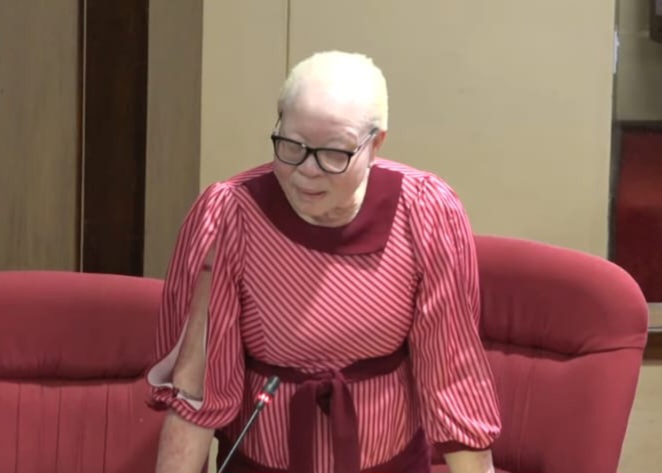
LOBAMBA – Senator Dr Stukie Motsa has cited Section 152 of the Employment Act, 1980 (Act No. 5 of 1980), in support of government’s proposed E2.4 billion housing loan, saying the financing will help address inadequate accommodation and long-distance travel among civil servants.
Motsa was speaking in the House of Senate on Thursday, October 8, 2026, during debate on the Development Bank of Southern Africa (National Housing and Infrastructure Programme) Loan Bill, 2026.
The Bill seeks to facilitate government’s pursuit of a E2.4 billion loan from the Development Bank of Southern Africa (DBSA) to fund public housing and infrastructure development.
Motsa said the proposed borrowing would be supported by the Eswatini National Housing Board (ENHB), which would contribute towards repayment of the loan.

“Thank you for the Bill. With this debt, the Eswatini National Housing Board will assist in its repayment. Government will get the loan and Eswatini National Housing Board will contribute pay,” she said.
She said the housing programme was particularly important for civil servants, arguing that adequate accommodation would help reduce the burden of employees travelling long distances between their homes and workplaces.
“With the proposed Loan Bill, it is good that civil servants will get adequate housing. Shelter is very important,” Motsa said.
According to the senator, the construction of new houses could help address both the shortage of adequate accommodation and the distances some civil servants have to travel to work.
He argued that long journeys could have consequences for productivity, saying civil servants who travel long distances to their workplaces may arrive at work less productive.
“New houses will address issue of long distance travel to work for civil servants and the issue of adequate housing. Civil servants traveling long distances to work end up being unproductive at work,” she said.
Motsa further linked the proposed housing investment to an existing statutory obligation under Eswatini’s employment legislation.
Section 152 of the Employment Act, 1980 (Act No. 5 of 1980) is specifically titled “Housing”. It provides that where an employee is employed in circumstances where, because of distance, it is impracticable for the employee to return to their home or normal place of residence at the end of the working day, the employer must arrange for the employee to be housed in the prescribed manner.
Motsa said securing the proposed loan would therefore enable government to extend housing provision in line with the principle contained in the legislation.
“By securing the loan, government will by extension adhering to the Employment Act in Section 152 which stipulate that it is the employer’s responsibility to provide housing if there is need,” she said.
The Employment Act is formally cited as the Employment Act, 1980, No. 5 of 1980, an Act enacted to consolidate the law relating to employment and introduce provisions aimed at improving the status of employees in Eswatini, formerly Swaziland. The legislation was adopted on September 26, 1980.
The housing provision is further reflected in regulations made under the Act. The Employment Regulations provide that where an employer is required to provide housing under Section 152, such housing may consist of either a permanent or temporary dwelling, subject to the applicable provisions.
Motsa said the proposed housing programme would have a broad impact, with a significant number of people expected to benefit from the investment.
“A whole lot of people will benefit as earlier explained by Minister of Housing and Urban Development Appolo Maphalala,” she said.
He also emphasised the importance of housing beyond its function as accommodation, describing it as a fundamental need.
“Housing is a basic human right and need,” Motsa said.
The senator’s intervention adds parliamentary support to government’s proposed E2.4 billion financing arrangement, with the debate placing emphasis on the potential of the programme to improve access to housing while addressing practical challenges faced by civil servants who live far from their workplaces.
The proposed loan would therefore serve not only as a financing mechanism for public housing but, according to Motsa, as an avenue through which government could respond to housing needs and its obligations in circumstances covered by Section 152 of the Employment Act.
The Bill follows government’s efforts to expand housing and infrastructure provision through financing from the DBSA, with the Eswatini National Housing Board expected to play a role in the implementation and repayment arrangements.
Motsa’s support, however, was framed around the practical benefits he expects the programme to deliver: more adequate housing for civil servants, reduced long-distance commuting and improved conditions that could contribute to workplace productivity.
#Eswatini #HousingLoan #E2Point4Billion #StukieMotsa #EmploymentAct #Section152 #DBSA #PublicHousing #CivilServants #NationalHousing #HousingDevelopment #InfrastructureDevelopment #EswatiniNationalHousingBoard