


BY GCWALISILE MHLABANE
MANZINI – Vegetables long associated with home gardens and family meals are making their way into Eswatini’s formal supermarket shelves, opening a new commercial opportunity for local farmers.
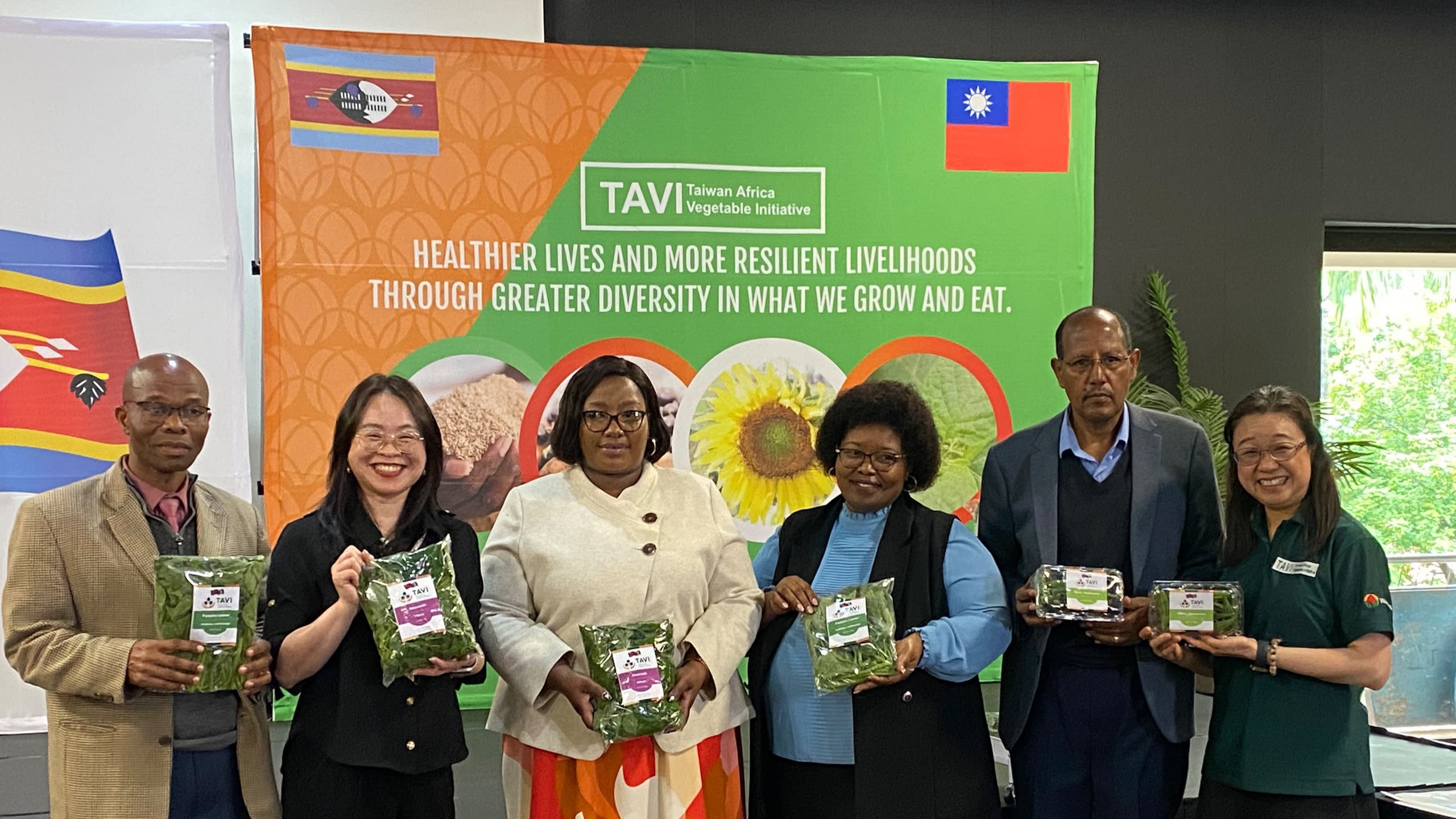
Through the Taiwan-Africa Vegetable Initiative (TAVI), 10 retail outlets across the country have been selected to promote locally produced imbuya, umbhidvo wetintsanga and mandwandwe, marking a fresh attempt to turn traditional vegetables into viable commercial products.
The initiative, launched on August 18, 2026, forms part of Phase II of TAVI and is aimed at creating a sustainable market for traditional vegetables while helping farmers move beyond household production.
Taiwan Representative Sofia Cheng said the programme was changing the way traditional vegetables are viewed by placing greater emphasis on their economic value.

“Traditional vegetables can be commercialized. They do not only address food and nutrition security for vulnerable populations, but they can also economically empower our farmers,” Cheng said.
The participating outlets are Super Spar branches in Manzini, Mbabane, Matsapha and Nhlangano; Boxer Stores in Manzini, Mbabane, Pigg’s Peak and Siteki; Thubelihle Fruit & Veg in Nhlangano; and Savemor in Mpaka.
For shoppers, the development means familiar traditional vegetables will now be sold in commercial packaging.
The products include amaranth, commonly known as imbuya, pumpkin leaves or umbhidvo wetintsanga, and okra, known locally as mandwandwe.
FROM HOME GARDENS TO SUPERMARKET SHELVES
The initiative goes beyond placing vegetables on shelves.
Food tastings and recipe materials will form part of the campaign in an effort to expose consumers to different ways of preparing the vegetables.
Cheng said shoppers would receive recipe leaflets with their purchases, while feedback from consumers would be collected and used to help project partners understand the market better.
“We expected the activity would connect local commercial farmers directly with urban consumers and introduce high-quality, locally produced vegetables to modern retail markets,” she said.
The supermarket rollout follows almost six years of TAVI work in Eswatini.
During that period, the initiative has largely focused on the role of traditional vegetables in improving food and nutrition security.
However, experience gained in Eswatini and other markets has prompted a broader focus on commercial opportunities for farmers.
Over the past two years, the project has expanded into training farmers in commercial vegetable and seed production.
BUILDING A COMPLETE MARKET
A Multi-Stakeholder Platform has also been established to bring together farmers, logistics providers, commercial markets and other players needed to move the vegetables from farms to consumers.
The hospitality sector has also been brought into the programme, while international experts have visited Eswatini to share knowledge on production and commercialisation.
For farmers, entering formal retail markets comes with new demands.
They will be expected to supply vegetables in reliable quantities and at a consistent quality, while packaging, labelling, logistics and distribution will also become important if the products are to compete effectively on supermarket shelves.
This represents a major shift for crops which, in many communities, have traditionally been grown mainly for household use or sold informally.
Consumers, meanwhile, will see familiar vegetables presented in a more formal retail setting.
The arrangement also gives farmers access to a potential customer base beyond direct household and informal-market sales.
‘PARTNER FOR PROSPERITY’
Cheng said Taiwan’s support for the initiative formed part of its longstanding partnership with Eswatini.
“Taiwan keeps our promises as a partner for prosperity,” she said.
She said the initiative was intended to produce practical benefits for farmers, consumers and local businesses.
Traditional vegetables are also being promoted for their place in healthier diets and their potential contribution to a stronger local food system.
Cheng said the vegetables represented both cultural heritage and economic opportunity, while also providing essential micronutrients.
SHOPPERS TO HELP SHAPE MARKET
The 10 participating supermarkets will also serve as testing points for consumer demand.
Feedback will be collected on packaging, presentation, taste and demand, providing information that could help determine how the market develops and whether the programme could eventually be expanded to more retail outlets.
For farmers, the initiative could create a new commercial outlet for crops that have largely remained outside mainstream retail.
For consumers, it brings traditional vegetables into everyday supermarket shopping.
The broader test is whether stronger links between farmers, retailers, transporters and other players in the value chain can turn traditional crops into sustainable commercial opportunities.
TAVI is being implemented through collaboration between Taiwan, the Ministry of Agriculture, the Ministry of Education and Training, the World Vegetable Center, farmers, retailers and other partner organisations.
The supermarket rollout is therefore not only about promoting vegetables. It is an attempt to build a functioning market around traditional produce, from growing and packaging to transport, retail and consumer demand.
(Courtesy Pic)