


…MPs question expenditure irregularities and accounting classifications
BY MBONO MDLULI
LOBAMBA– The Public Accounts Committee (PAC) has demanded an explanation from the Ministry of Economic Planning and Development regarding an overspending of more than E700 000 on Common Technical Assistance (CTA) charges.
The matter arose on Wednesday, June 3, 2026, when the ministry appeared before the PAC in the House of Assembly to respond to issues raised by the Office of the Auditor General (OAG).
Representing Auditor General Timothy Matsebula, Mphumelelo Matimelane informed the committee that the ministry incurred unauthorised expenditure on CTA charges during the period under review.

According to Matimelane, the ministry had been allocated over E555 000 for CTA expenditure but ultimately spent over E702 000, resulting in an over-expenditure of about E147 000.
Ministry Attributes Overspending To Technical Accounting Issues
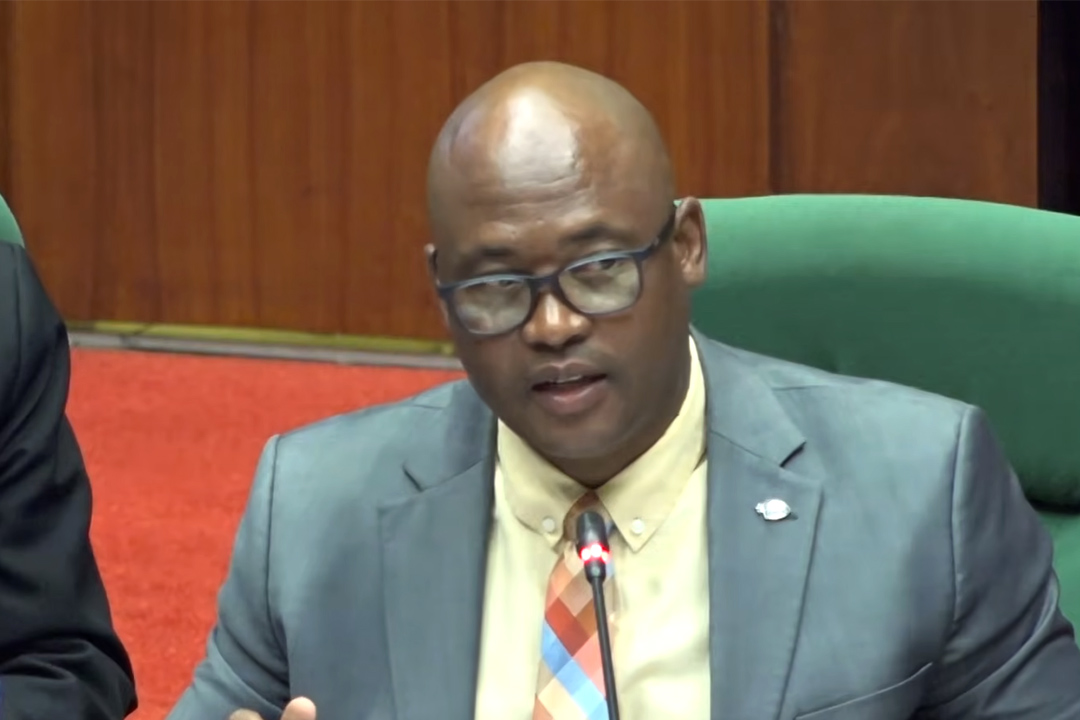
Responding to the concerns, Principal Secretary (PS) Thabisile Mlangeni acknowledged the Auditor General’s findings and attributed the overspending to accounting and classification challenges associated with project implementation.
Mlangeni explained that some activities undertaken by the Central Statistical Office (CSO), particularly surveys and related projects, often require expenditure to be charged against recurrent budgets despite funds being available under capital projects.
She said this creates accounting complications that can result in apparent over-expenditure in certain budget lines.
“The Auditor General is correct. The issue arises when we are implementing projects and find that some costs need to be charged to the recurrent budget under CTA, even though funds are available within capital projects. It is a technical matter that requires correction with the Office of the Accountant General,” she said.
The PS added that the implementation of the Integrated Financial Management Information System (IFMIS) is expected to help address such challenges in future.
Temporary Enumerators Contribute To Challenges
Mlangeni further explained that the ministry frequently hires temporary enumerators for surveys and data collection exercises conducted by the CSO.
She said difficulties often arise when processing payments for these workers, forcing adjustments between capital and recurrent budget allocations.
According to the ministry, these adjustments contribute to the accounting irregularities repeatedly highlighted by auditors.
Pinky Dlamini from the Office of the Accountant General told the committee that she was still investigating whether correspondence from the ministry regarding the matter had been received.
PAC Deputy Chairperson Manzi Vincent Zwane, who chaired the proceedings, urged the Office of the Accountant General to ensure that the ministry’s communication was properly received and attended to.
Overtime Payments Incorrectly Classified
The PAC session also examined concerns relating to the classification of overtime payments.
The Auditor General’s Office reported that overtime payments had been recorded under salaries rather than being classified separately, resulting in the concealment of overtime expenditure.
The ministry acknowledged the error.
Mlangeni confirmed that the observation was valid and assured the committee that corrective measures would be taken.
“We accept the observation and will ensure that overtime payments are classified correctly going forward,” she said.
Auditor General Raises Concerns Over Capital Project Under-Expenditure
The committee also examined under-expenditure on several capital projects implemented by the ministry.
The Auditor General noted that the ministry had received funding for four projects but recorded under-expenditure levels exceeding the acceptable threshold of 10 per cent.
Among the projects highlighted was the proposed new Parliament Building Project.
The Auditor General reported that E13.38 million had been allocated for the project, but only about E6 million was spent, resulting in an under-expenditure of approximately 54 per cent.
Another project, the Implementation of Development Strategies initiative, received E2.45 million, of which E2.16 million was spent, resulting in under-expenditure of 11.9 per cent.
Matimelane explained that under-expenditure above 10 per cent raises concerns about project implementation and service delivery because it may indicate that planned activities are not being carried out as intended.
Ministry Confirms Findings
Responding to the findings, Mlangeni confirmed that the Auditor General’s observations were accurate.
She reiterated that the challenges affecting project implementation were largely linked to funding arrangements and administrative processes that delayed progress on some initiatives.
The PAC is expected to continue scrutinising the ministry’s financial management practices as it seeks to ensure accountability, proper expenditure controls and value for money in the use of public funds.
(Courtesy Pic)