


- 10-week course tackles cybercrime, AI, human trafficking and modern policing challenges
BY PHUMELELE GAMEDZE
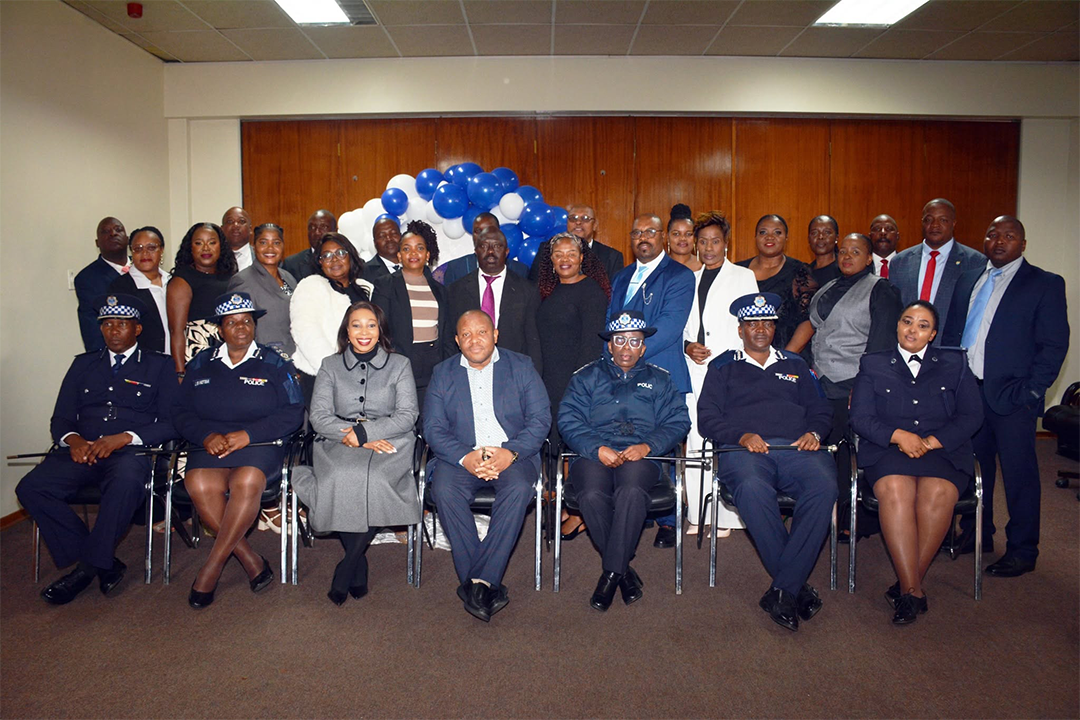
MBABANE – Communities across Eswatini are set to benefit from stronger police leadership after the Royal Eswatini Police Service (REPS) equipped 22 first-line supervisors with advanced leadership and modern policing skills aimed at improving professionalism, accountability and service delivery at station level.
The officers graduated from the Junior Supervisory Skills Development Course 02/2026 following an intensive 10-week training programme in Matsapha. The graduation ceremony was held on Wednesday at the S&B Conference Room.
While the occasion marked a major personal achievement for the 22 graduates, the impact of the training is expected to extend well beyond their certificates.
As first-line supervisors, the officers occupy one of the most important positions within the Police Service because they directly guide and supervise officers who interact with members of the public every day.

Their decisions, leadership style and ability to manage officers effectively can therefore have a direct influence on the quality of policing experienced by communities.
The comprehensive training covered Leadership and Management, Criminal Law, Human Rights, Information and Communication Technology (ICT), Intelligence-Led Policing and Team Building.
Importantly, the officers were also exposed to some of the rapidly changing threats confronting modern law enforcement, including cybercrime, Artificial Intelligence (AI), human trafficking, money laundering and environmental protection.
The inclusion of these subjects highlights how policing is evolving beyond traditional crime-fighting methods.
Criminal activity is increasingly taking advantage of technology, sophisticated financial systems and cross-border networks, placing greater responsibility on police officers to continuously improve their knowledge and investigative skills.
For communities, better-trained supervisors could translate into officers who are better guided, more professional in their interactions with the public and more capable of responding to both traditional and emerging forms of crime.
Guest Speaker and businessman Muzi Dlamini of MA Properties applauded REPS for investing in the development of its officers, describing strong leadership as an important ingredient in productive workplaces and national development.
He reminded the graduates that leadership was not merely about holding a senior position, but about setting standards that others could follow.
“A healthy, positive workplace produces results. As first-line supervisors, you set the tone. Serve with integrity and your communities will trust you,” Dlamini said.
He encouraged the officers to demonstrate professionalism, integrity and loyalty while maintaining compassion in their daily interaction with colleagues and members of the public.
That message placed community trust at the centre of the officers’ new responsibilities.
For a police supervisor, the decisions made behind the walls of a station can ultimately determine how effectively officers respond to victims of crime, handle complaints, maintain discipline and build relationships with residents.
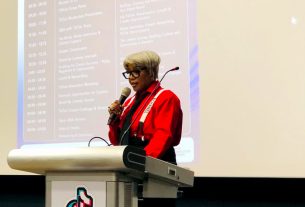
Deputy National Commissioner Simangele Motsa, speaking on behalf of the National Commissioner of Police, said the 10-week programme had been deliberately designed to prepare supervisors for an increasingly complex security environment.
She said first-line supervisors were particularly important because they were responsible for turning the organisation’s policies and strategies into everyday action.
“REPS is transforming. This transformation begins with capacitating our first-line supervisors because it is at this level that policy becomes action, discipline is nurtured and public confidence is either built or broken,” Motsa said.
She stressed that modern policing could no longer rely only on traditional experience, saying research, technology and continuous learning had become essential tools for officers.
“Research, technology and continuous learning are no longer optional. They are essential for effective policing in 2026 and beyond,” she said.
Her remarks underscored the growing demand for police officers who are not only physically prepared for the job, but technologically informed, adaptable and capable of making sound decisions in rapidly changing situations.
Speaking on behalf of the graduating officers, 6682 Sergeant Mzwandile Nkambule said the programme had transformed their understanding of what it meant to supervise others.
He said they had learnt that supervision was not simply about issuing instructions, but involved leading by example, mentoring colleagues, communicating effectively and accepting responsibility for the performance of their teams.
“As we return to our stations, we will put into practice what we have learned and contribute meaningfully to the objectives of the Police Service,” Nkambule said.
The graduation was attended by Deputy National Commissioner Simangele Motsa; Deputy National Commissioner and Matsapha Police Academy Commandant Bonsile Masuku; Senior Assistant Commissioner Bonginkosi Dlamini; and senior management from the Faculty of Management and Leadership.
For REPS, the graduation represents an investment not only in the careers of the 22 officers but also in the communities they will return to serve.
Strong supervision at station level can contribute towards improved discipline, faster and more professional responses to members of the public, better decision-making among junior officers and stronger public confidence in the Police Service.
The real test now begins away from the classroom.
As the 22 supervisors return to their respective police stations, they carry with them the responsibility of turning 10 weeks of training into better leadership, stronger teams and a more responsive Police Service.
For ordinary EmaSwati walking into a police station seeking assistance, reporting a crime or asking for protection, that transformation could ultimately be measured in something simple but important — how well they are served.