


BY TANDZILE DLAMINI
MBABANE — Eswatini has officially launched the development process for its Long-Term Low Emission Development Strategy (LT-LEDS), a major national initiative that sets the country on a long-term path toward climate-resilient growth and sustainable prosperity.
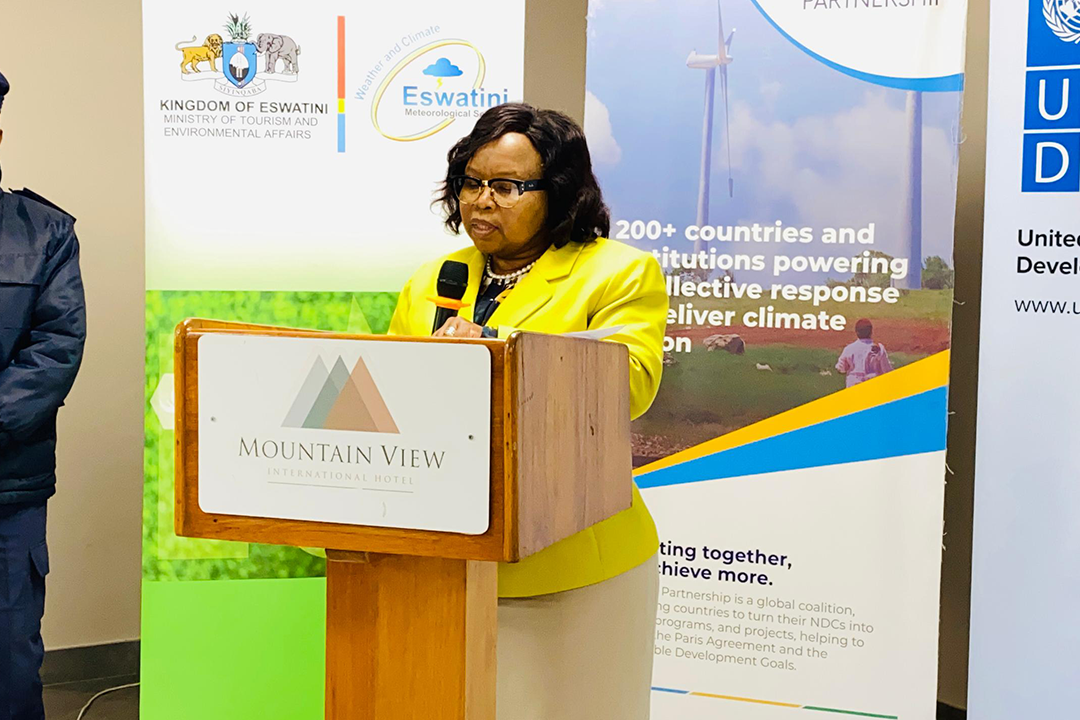
The LT-LEDS was formally launched at the Mountain View Hotel during the National Stakeholder Inception and Consultation Workshop. The minister leading the process said the strategy will guide Eswatini’s development through Vision 2050, defining the country’s trajectory for the next two and a half decades. “This is not just planning for the next five years, but we are looking toward Vision 2050,” the minister said, emphasizing the long-term nature of the strategy.
The minister said that Article 4, paragraph 19 of the Paris Agreement invites nations to formulate low-emission strategies, and noted that these strategies are “the bedrock of the climate architecture” aimed at reaching net-zero emissions by mid-century. She stressed that for Eswatini, the LT-LEDS is “not merely an international obligation; it is a national necessity,” as the country faces growing climate risks alongside its development goals.
The minister described the timing of the LT-LEDS work as “quite impeccable,” noting that Eswatini finalized its Third Nationally Determined Contribution (NDC 3.0) last year. She said the LT-LEDS will serve as a clear, robust national long-term vision to ensure near-term policy instruments remain coherent and prevent the risk of stranded assets. “While NDCs focus on our immediate, five-year targets, the LT-LEDS provides the long-term ‘north star’,” she said.

A key message of the workshop was the government’s commitment to a Just Transition, ensuring that the shift toward low-carbon development does not leave any Swati behind. “As we aim to lower our greenhouse gas emissions, we cannot afford to leave any liSwati behind,” the minister said.
She emphasized that the government’s focus remains on “economic recovery and green growth,” “creating sustainable livelihoods and addressing unemployment,” and “tackling poverty and inequality while transforming our energy, agriculture, and infrastructure sectors.” She said the LT-LEDS should outline how Eswatini will pursue economic recovery and sustainable livelihoods while “progressively phasing out net greenhouse gas emissions through a transition that is just and inclusive.”
The minister urged stakeholders to work collaboratively during the two-day workshop, saying: “Over the next two days, you as the technical experts from the different sectors will be the architects of this strategy and vision.” She added that a “whole-of-society” approach is essential to developing a strategy that is inclusive and reflective of the country’s needs.
The minister said Eswatini can ensure that its pathway to net-zero “is not just a document on a shelf, but a practical roadmap that creates jobs, protects our environment, and secures a sustainable future for all emaSwati” if stakeholders work together.
The minister also thanked the United Nations Development Programme (UNDP) Climate Promise for its support, describing it as “unwavering” and emphasizing the partnership’s value in supporting the country.
“To the available stakeholders, your expertise over the next two days will determine how we manage our water, how we grow our food, and how we power our industries for generations to come,” the minister said.
In officially opening the workshop, the minister declared: “It is now my singular honor and privilege to declare this National Stakeholder Inception and Consultation Workshop officially open.”
The LT-LEDS process is now underway, marking a decisive step toward building a resilient, inclusive, and low-carbon future for all emaSwati.