



BY MBONO MDLULI
MBABANE – Eswatini is intensifying efforts to strengthen tobacco control legislation and clamp down on rising tobacco use following high-level discussions between the Ministry of Health and the Secretariat of the World Health Organisation Framework Convention on Tobacco Control (WHO FCTC).
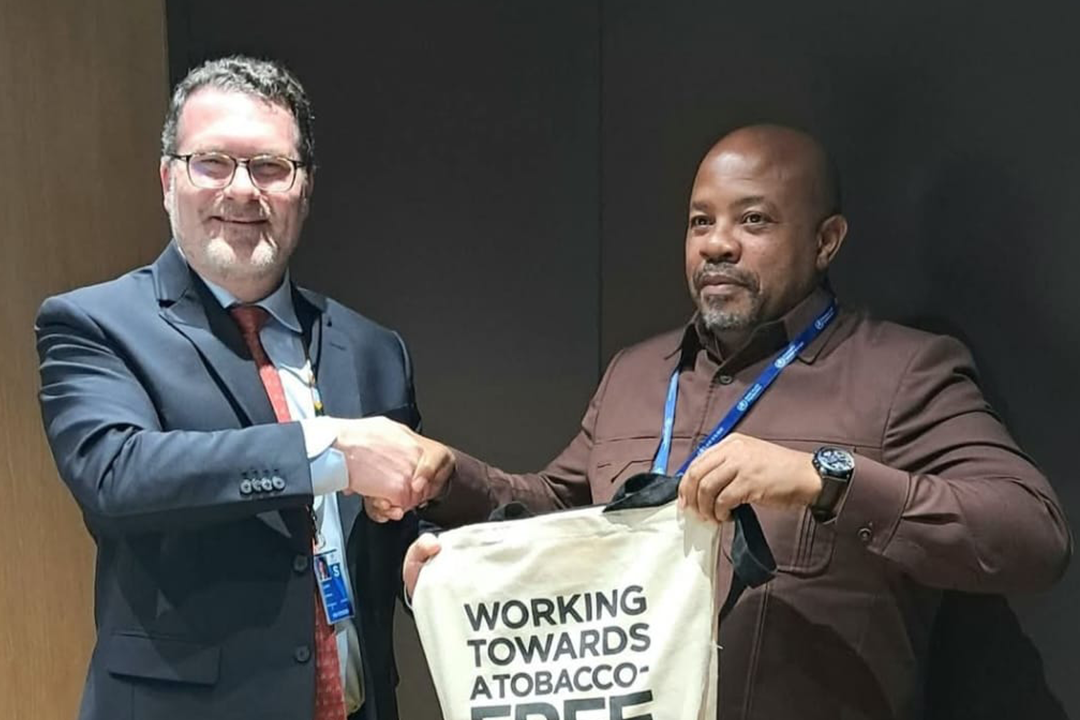
Minister of Health Mduduzi Matsebula held a bilateral meeting with the WHO FCTC Secretariat during the 79th World Health Assembly (WHA79), where discussions focused on strengthening legislation, enforcement measures and regulation of tobacco products and related substances.
The WHO delegation was led by Acting Head of Secretariat Andrew Black.
WHO Calls for Stronger Multi-Sectoral Response

During the meeting, the WHO FCTC Secretariat acknowledged the progress Eswatini has made in combating tobacco use, particularly efforts targeting illicit tobacco products.
However, the Secretariat stressed the importance of adopting a broader multi-sectoral approach involving:
- the Ministry of Health,
- the Ministry of Finance,
- government agencies,
- law enforcement authorities,
- and other stakeholders.
The meeting also highlighted rising tobacco smoking rates as a growing public health concern requiring urgent intervention.
According to the WHO, coordinated national action remains critical in reducing tobacco consumption and limiting the long-term health and economic burden associated with smoking-related illnesses.
Government Moving to Amend Tobacco Law
Minister Matsebula said government was already taking steps to align Eswatini’s tobacco legislation with international standards under the WHO Framework Convention on Tobacco Control.
He revealed that government had drafted amendments to the Tobacco Products Control Act, with plans to table the Bill before Parliament within the next one to two months.
“As you are aware, we already have come up with a Bill that will ensure that the Tobacco Products Control Act is amended to align with the Framework,” Matsebula said.
The minister added that Eswatini had already introduced a levy on tobacco products as part of efforts to discourage tobacco consumption.
Youth Smoking and Advertising Under Spotlight
Matsebula also pointed to ongoing measures aimed at restricting tobacco advertising and strengthening public awareness campaigns, particularly among young people.
“We have also dealt with advertising of tobacco products, and we are pushing sensitisation on smoking through health promotion interventions, particularly targeting the youth,” he said.
Health authorities globally have increasingly expressed concern over growing tobacco and nicotine use among young people, particularly through newer nicotine delivery products and vaping devices.
Eswatini Seeks Support on Novel Nicotine Products
A major concern raised by the minister was the challenge of regulating emerging tobacco and nicotine products, including newer alternatives such as vaping products and nicotine pouches.
Matsebula requested both technical and financial support from the WHO FCTC Secretariat to strengthen Eswatini’s capacity to regulate and control these products effectively.
Public health experts warn that novel nicotine products continue to present complex regulatory challenges worldwide due to evolving technologies, marketing strategies and limited long-term health data.
Tobacco Remains Major Global Health Threat
According to the World Health Organisation, tobacco use remains one of the leading preventable causes of death globally, contributing to millions of deaths every year through cancers, cardiovascular diseases and respiratory illnesses.
Countries that are signatories to the WHO Framework Convention on Tobacco Control are encouraged to implement stronger tobacco taxation, advertising restrictions, public smoking regulations and health awareness campaigns.
Eswatini’s renewed engagement with the WHO FCTC forms part of broader international efforts to reduce tobacco-related harm and improve public health outcomes.