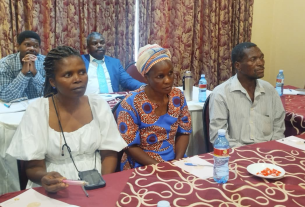



- Stakeholders discuss alignment of ward boundaries and enumeration areas
BY MBONO MDLULI
MBABANE – The Central Statistical Office (CSO), under the Ministry of Economic Planning and Development, hosted a consultative meeting aimed at aligning city and town ward boundaries with Enumeration Areas (EAs) in preparation for the 2027 Population and Housing Census (PHC).
According to information from the Ministry of Economic Planning and Development, the meeting, which took place on Wednesday, May 27, 2026, brought together various municipal stakeholders as part of ongoing preparations for the national census exercise, which plays a critical role in shaping development planning and public policy in Eswatini.
Officially opening the engagement, Acting Director Hanson Dlamini welcomed stakeholders and thanked them for honouring the invitation to participate in what he described as an important national initiative.
Dlamini said the consultative engagement marked a significant milestone for the Central Statistical Office as preparations for the 2027 Population and Housing Census continue gathering momentum.

CSO stresses importance of reliable national data
The Acting Director reiterated the mandate of the Central Statistical Office in producing accurate, reliable and timely data to support planning, policy formulation and national development.
He emphasised that collaboration with municipalities and local authorities was essential in ensuring that census information accurately reflects demographic and spatial realities across the country.
Dlamini also expressed optimism that the exercise would strengthen coordination between the CSO and municipalities in areas related to mapping, data management and statistical planning.
Census data vital for planning and development
During the presentations, Sibusiso Shabangu highlighted the importance of Population and Housing Census data in supporting evidence-based decision-making.
Shabangu explained that census information is widely used in national planning, research, electoral planning, housing standards and subnational analysis.
He further noted that census data also serves as an important sampling frame for future national surveys and development studies.
The presentation underscored the importance of maintaining updated and accurate ward and boundary information to improve the quality of data collected during the 2027 census exercise.
Municipalities urged to share spatial information
Municipal stakeholders were encouraged to collaborate closely with the CSO by providing essential spatial and mapping information.
Among the requested information were cadastral data, ward boundary shapefiles, municipal boundary files and updated records relating to structures and properties within municipalities.
Officials explained that access to updated spatial information would strengthen ward-level population data, improve local insights and support more accurate street and structure mapping processes.
The collaboration is also expected to enhance the availability of improved sampling frames for future surveys and statistical exercises conducted by the Central Statistical Office.
Stakeholders actively participate in discussions
The meeting was characterised by active participation from stakeholders, who engaged in discussions, asked questions and shared valuable experiences and technical insights.
Participants expressed commitment towards strengthening data systems and supporting the successful implementation of the 2027 Population and Housing Census.
Officials indicated that continued collaboration between the Central Statistical Office and municipalities would be crucial in ensuring accurate demographic information that can guide development priorities and improve service delivery across the country.
The consultative meeting forms part of broader national preparations aimed at ensuring the successful implementation of the 2027 census, which is expected to provide critical information for government planning, economic development and social programmes in Eswatini.