



BY TANDZILE DLAMINI
MBABANE– Education Minister Owen Nxumalo says programmes that extend learning opportunities to marginalised communities are helping reshape Eswatini’s future by ensuring that no one is excluded from the digital age.
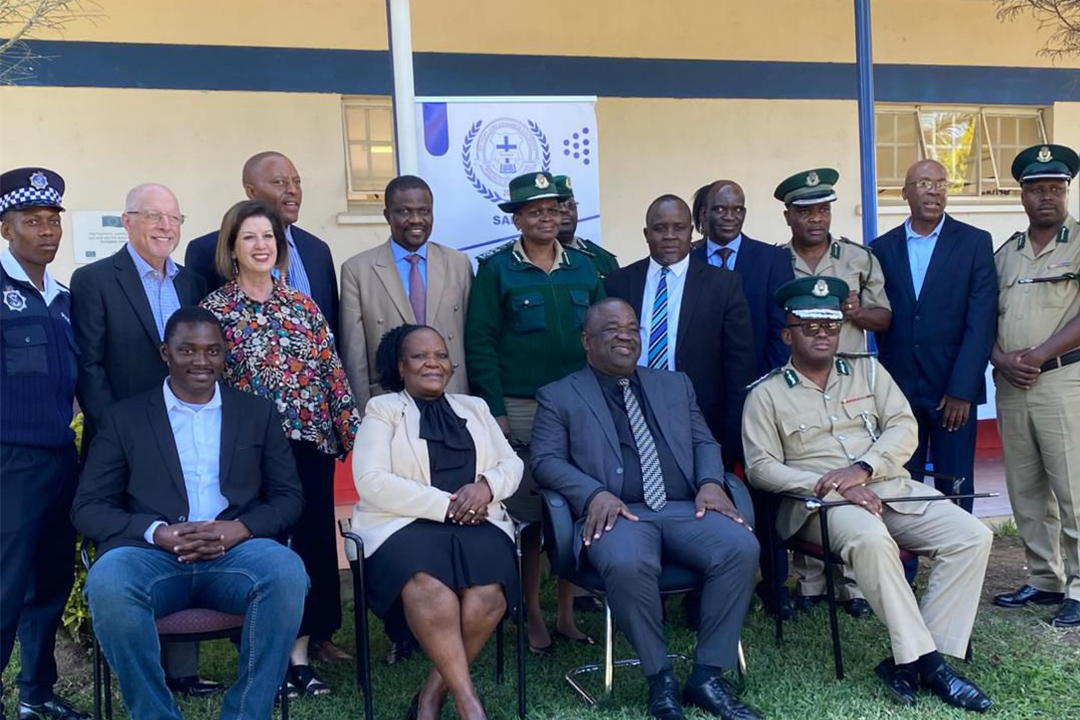
Speaking during the Beyond the Walls Fourth Cohort Certificate Handover Ceremony at the SANU Learning Centre on 28 May 2026, Nxumalo described the initiative as a reflection of the transformation taking place within the country’s education sector.
“Education in Eswatini has undergone a profound transformation. From chalkboards to digital platforms, from isolated classrooms to global networks, learning today transcends boundaries,” said Nxumalo.
The minister said Beyond the Walls was proving that education could reach even the most overlooked members of society, including inmates within correctional facilities and underserved communities. “This initiative has brought digital tools to correctional centres and opportunities for incarcerated women to reimagine their futures,” he said.
Nxumalo acknowledged the partnership between Beyond the Walls, Southern Africa Nazarene University (SANU), the US Embassy in Eswatini and His Majesty’s Correctional Services (HMCS), saying collaborative efforts were critical in expanding access to education and digital literacy.
He, however, raised concern over shrinking donor funding, noting that organisations such as Beyond the Walls often operate through personal sacrifice and commitment. “Organisations like Beyond the Walls often operate from their own pockets, driven by passion and commitment rather than financial security,” he said.
Nxumalo urged government, the private sector and civil society to support initiatives that promote rehabilitation, digital inclusion and lifelong learning. Beyond the Walls representative, Sabelo Mlangeni, said the programme was established in 2019 with a mission to bridge Eswatini’s widening digital divide and reach communities that are often excluded from technological advancement.
“The digital divide in Eswatini remains wide, and our work is dedicated to bridging that gap,” said Mlangeni. He referenced findings from the 2024 Digital Readiness Assessment Report conducted by the United Nations Development Programme in partnership with the Ministry of ICT, which revealed significant gaps in digital competencies despite widespread mobile phone usage.
“As of 2025, only about 57.6 percent of Eswatini’s population uses the internet, and PC literacy remains low, especially in rural areas where nearly 75 percent of citizens live,” he said. Mlangeni said the programme’s impact could be seen in the lives of learners who had completed the eight month training journey despite difficult circumstances.
“That is our pride and joy. We strive to offer the best service to our learners, and they can attest to the impact this program has had on their lives,” he said. SANU also reaffirmed its commitment to inclusive education and skills development, saying the partnership with Beyond the Walls aligned with its vision of providing transformative education across all sectors of society.
The university encouraged graduates to pursue lifelong learning and embrace digital skills in an era increasingly shaped by artificial intelligence and emerging technologies. Representing the Commissioner General of HMCS, Deputy Commissioner General Bonagani Khumalo applauded the decision taken in 2019 to introduce the programme within correctional facilities despite security concerns.
Khumalo also acknowledged the challenges brought by the COVID 19 pandemic shortly after the first cohort graduated, but said the partnership between HMCS and Beyond the Walls had continued to support rehabilitation efforts.
He said His Majesty King Mswati III had consistently urged correctional services to produce visible rehabilitation outcomes, where former inmates contribute positively to society. The ceremony celebrated graduates from the fourth cohort, with speakers describing the certificates as symbols of resilience, dignity and renewed opportunity.
(Courtesy Pic)