



BY THEMBA ZWANE
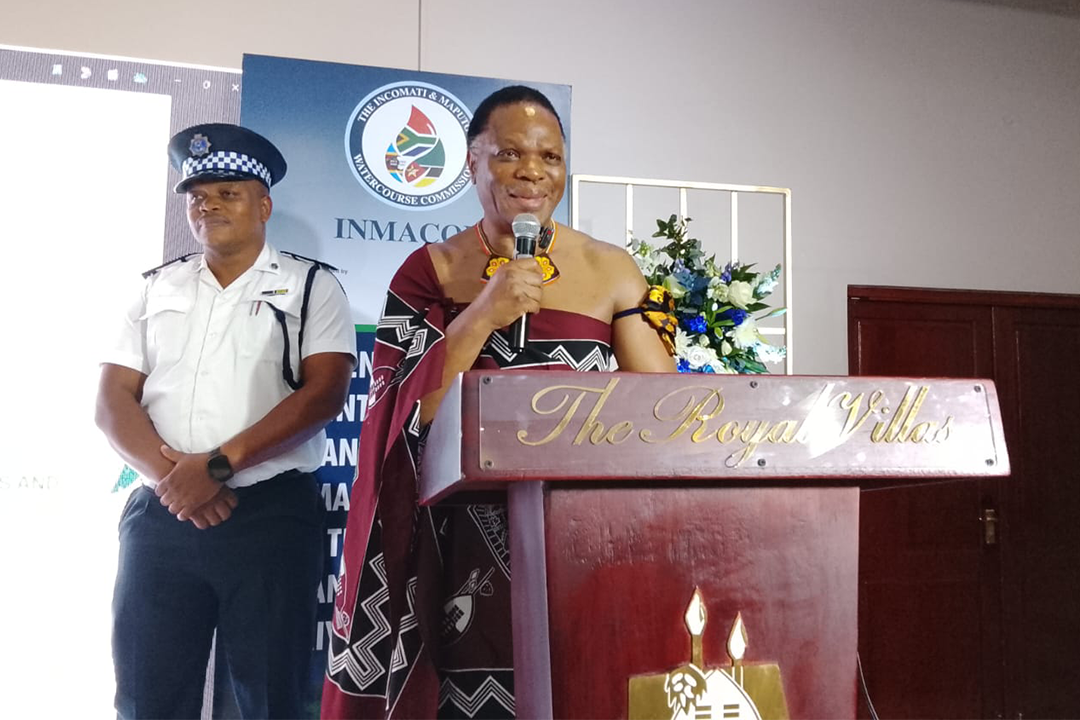
EZULWINI – The Incomati and Maputo GEF 8 project, launched by government with South Africa and Mozambique at Royal Villas aligns with the 2026 African Union (AU) theme.
This is according to Minister of Natural Resources and Energy, Prince Lonkhokhela, which he disclosed during the official launch of the 72 months duration initiative funded to a tune of over E3.76 billion.
The minister said the project marked a pivotal milestone in the water sector. He said they were gathered not just to launch a new strategic initiative, but to catalyse real, lasting systemic change.
Through the backing of the Global Environment Facility (GEF-8), he said, they were officially setting in motion “Strengthening Integrated Transboundary Management of the Incomati and Maputo River Basins.”
He said the launch represented shared commitment to address extreme climate vulnerability, water allocation tensions, and ecosystem degradation across the Kingdom of Eswatini, the Republic of South Africa, and the Republic of Mozambique.
“This launch came at an opportune time, whereby the 2026 theme of the African Union, “Assuring Sustainable Water Availability and Safe Sanitation Systems to Achieve the Goals of Agenda 2063” is mainly focused on water and sanitation,” he said.
The Context: Why GEF-8 Matters
He said the GEF-8 funding cycle was established with one clear, urgent mandate: to tackle the triple planetary crisis of climate change, biodiversity loss, and pollution before negative trajectories get irreversibly locked in.
“Our world requires “systems change” rather than isolated interventions. That is why “Strengthening Integrated Transboundary Management of the Incomati and Maputo River Basins” is designed, not in a vacuum, but as an integrated approach. We are here to align economic development with environmental stewardship, recognising that humans and a healthy biosphere are interdependent.”
He noted, “Strengthening Integrated Transboundary Management of the Incomati and Maputo River Basins,” was a strategic initiative designed to implement an innovative “source-to-sea” water management approach. Executed collaboratively by the United Nations Development Programme (UNDP), the Global Water Partnership Southern Africa (GWP-SA), and the Incomati and Maputo Watercourse Commission (INMACOM), the project will address extreme climate vulnerability, water allocation tensions, and ecosystem degradation across the Kingdom of Eswatini, the Republic of South Africa, and the Republic of Mozambique.
He said over the next 6 years, the project will focus on the following core components:
• Component 1: Strengthening regional governance and transboundary institutional frameworks;
• Component 2: Establishing a science-based management approach through a Transboundary Diagnostic Analysis (TDA);
• Component 3: Strategic planning and joint long-term investment via Strategic Action Plans (SAPs) and National Action Plans (NAPs);
• Component 4: Implementing on-the-ground sustainable livelihood demonstration and pilot projects; and
• Component 5: Advancing regional knowledge management, communication sharing, and learning exchanges.
“This project will strengthen the link between water resource management and broader ecosystem and biodiversity frameworks. There will be engagements with the Lubombo Transfrontier Conservation Area (TFCA) in order to advance institutional collaboration, align water governance, conservation planning, and climate resilience interventions across the basins,” he said.
The minister added that the activities to be undertaken in this project will be complemented by knowledge management, stakeholder engagement, and regional learning; including participation in continental dialogues and technical exchanges on river health and transboundary water management.
A Call for Collective Action
He said the Incomati and Maputo River Basins innovative “source-to-sea” management approach cannot be achieved through governments funding alone. The GEF-8 strategy relies heavily on multi-stakeholder partnerships.
“To our implementing partners and government agencies: Let us ensure transparency, efficiency, and a unified drive towards our shared goals.”
Prince Lonkhokhela then mentioned that the challenges they faced were steep. However, the tools, the science, and the funding were in their hands. He urged that they use this project to forge a legacy of resilience, one that ensures that their water resources thrive for use by generations to come.
He said he looked forward to working hand-in-hand with every stakeholder to make “Strengthening Integrated Transboundary Management of the Incomati and Maputo River Basins” a resounding success.
#Incomati #MaputoBasin #Eswatini #Mozambique #SouthAfrica #NaturalResources #Government