


BY MFANUFIKILE KHATHWANE
MBABANE- The Republic of China (Taiwan) has marked the 37th anniversary of the June 4 Tiananmen Square crackdown by renewing calls for China to confront the events of 1989, acknowledge the truth, and pave the way for reconciliation and dialogue.
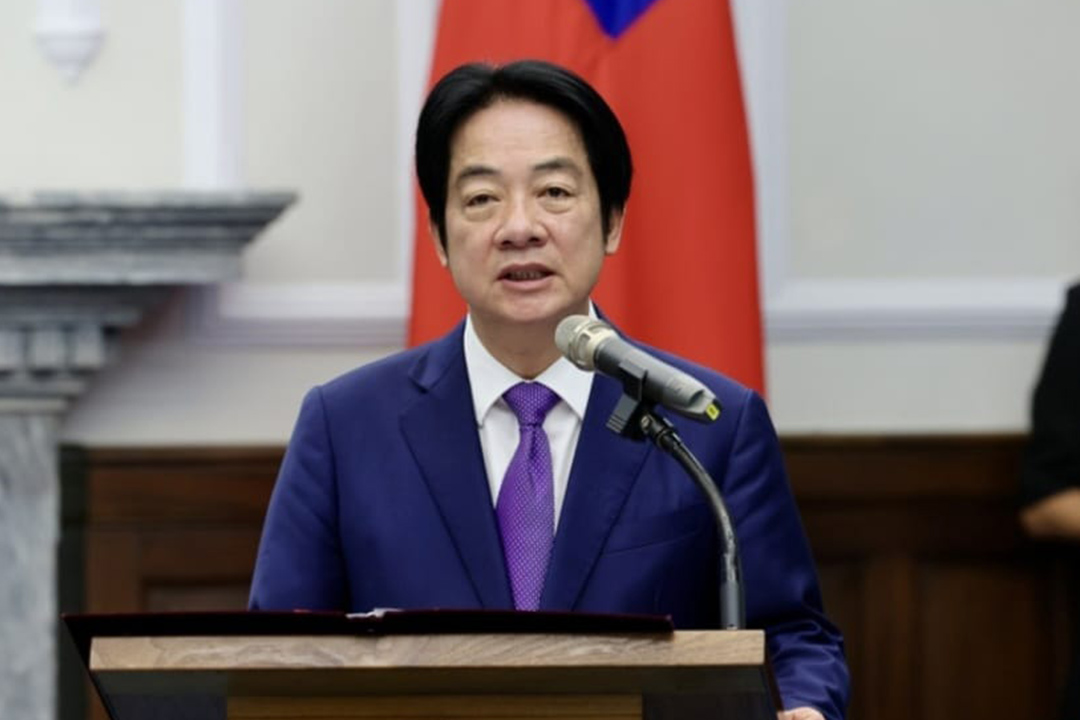
In a statement commemorating the anniversary, Taiwan President Lai Ching-te recalled how thousands of young people seeking greater political freedoms and democratic reforms were killed when troops and tanks were deployed against protesters in and around Beijing’s Tiananmen Square.
He said a truly great nation should embrace diverse voices and protect its citizens’ right to dream and express themselves freely rather than relying on military force and repression.
“When the truth remains sealed, memory is the force that resists forgetting,” Lai said.

The Taiwanese leader pledged that Taiwan would continue standing alongside people across the world who pursue freedom, democracy and human rights.
A TRAGEDY THAT CONTINUES TO RESONATE
The June 4, 1989 crackdown remains one of the most sensitive topics in China. While public discussion of the events is heavily restricted on the mainland, Taiwan continues to commemorate those who lost their lives and advocates for historical accountability.
Premier Cho Jung-tai also paid tribute to the victims, reminding people to “never forget June 4” and describing the defence of democracy, freedom and human rights as a shared responsibility.
The anniversary serves as a reminder of the continuing global debate over political freedoms, human rights and the right of people to participate in shaping their future.
TAIWAN’S STRUGGLE FOR INTERNATIONAL RECOGNITION
Taiwan’s call for freedom and democratic values comes against the backdrop of its own diplomatic challenges on the international stage.
Although the Republic of China (Taiwan) was a founding member of the United Nations and once held a permanent seat on the UN Security Council, its position changed dramatically in 1971 when the UN General Assembly adopted Resolution 2758.
The resolution recognised the People’s Republic of China in Beijing as the only legitimate representative of China at the United Nations and removed Taiwan’s representatives from the organisation.
Today, Taiwan is excluded from the UN system and many specialised international agencies, including the World Health Organization (WHO) and the International Civil Aviation Organization (ICAO).
Taiwan and its allies argue that Resolution 2758 settled the question of which government would occupy China’s seat at the United Nations but did not explicitly determine Taiwan’s sovereignty or address the rights of Taiwan’s 23 million people to international representation.
Despite repeated calls for greater participation, Taiwan remains unable to join the United Nations because China, as a permanent member of the Security Council, holds veto power over new membership applications.
KING MSWATI III: A CONSISTENT VOICE FOR TAIWAN
For Eswatini, the anniversary carries added significance because the Kingdom remains Taiwan’s only diplomatic ally in Africa.
His Majesty King Mswati III has emerged as one of Taiwan’s strongest and most consistent advocates on the global stage, regularly calling for the island’s inclusion in the United Nations system.
For more than 16 years, the King has used his addresses at the UN General Assembly to argue that excluding Taiwan contradicts the organisation’s commitment to inclusivity and development.
The King has repeatedly emphasised the UN principle of “leaving no one behind,” arguing that denying Taiwan’s 23 million people participation in international institutions runs contrary to the organisation’s founding values.
Eswatini has also maintained that Resolution 2758 is often misinterpreted and does not explicitly grant Beijing sovereignty over Taiwan or deny Taiwanese citizens meaningful representation in international affairs.
STANDING FIRM DESPITE PRESSURE
Eswatini’s support for Taiwan is particularly notable because every other African country maintains diplomatic relations with Beijing under the One-China policy.
Despite diplomatic and economic pressure to sever ties with Taipei, Eswatini has consistently reaffirmed its relationship with Taiwan.
King Mswati III has frequently described the relationship between the two countries as being like family, highlighting decades of cooperation in healthcare, agriculture, education, infrastructure development and economic growth.
As Taiwan commemorated the Tiananmen anniversary, support also came from Europe. Czech Senate President Miloš Vystrčil described Taiwan as an inspiration and urged democratic nations to remain united against authoritarian pressure.
“Don’t give up. Protect your freedom and democracy. You are not alone,” he said.
FREEDOM, MEMORY AND DEMOCRACY
As Taiwan reflected on one of the darkest chapters in modern Chinese history, its leaders argued that preserving memory remains essential in the pursuit of truth and justice.
For Taiwan and its allies, including Eswatini, the anniversary is not only about remembering the victims of 1989 but also about defending democratic values, protecting human rights and ensuring that future generations never forget the price paid by those who sought freedom.
The continued partnership between Eswatini and Taiwan underscores a shared belief that every people should have a voice in the international community and that the pursuit of democracy, dignity and freedom should never be silenced.
#Taiwan#Eswatini#TiananmenSquare#HumanRights#UnitedNations#UNGA#Resolution2758#TaiwanUN#TaiwanInclusion
(Courtesy Pic)