


BY MFANUFIKILE KHATHWANE
MBABANE – The Government of Eswatini has issued a strong warning against the smuggling of pig carcasses into Eswatini, saying the illegal practice threatens the country’s rapidly growing pork industry, food security, public health and the livelihoods of local farmers.
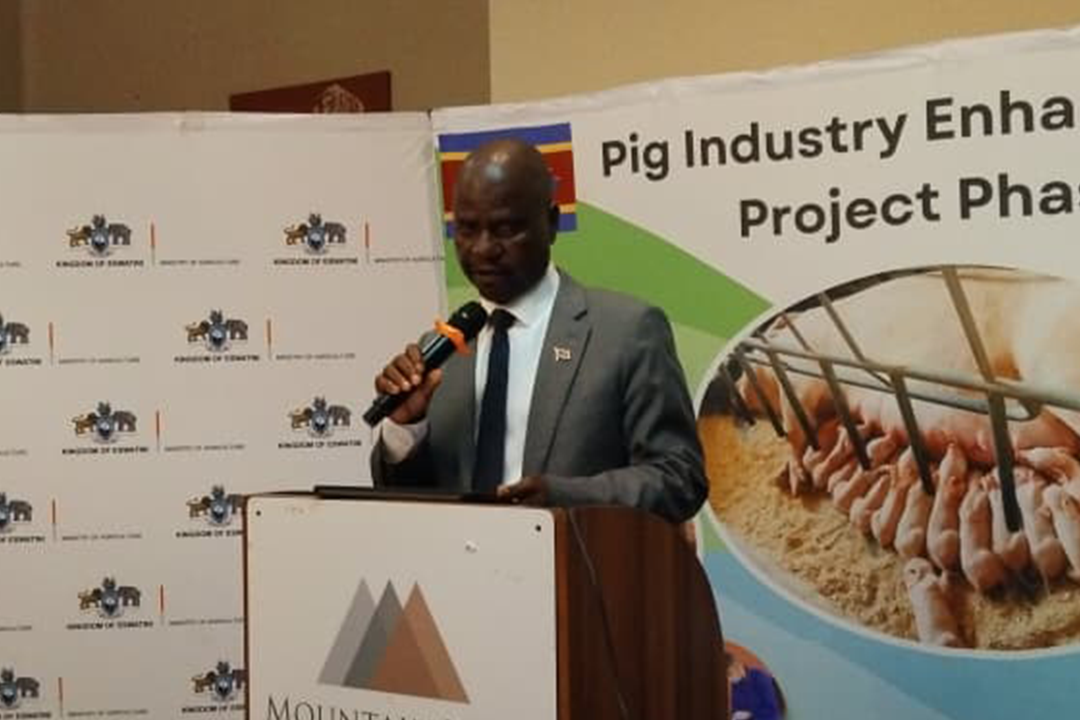
The Minister issued the strong warning on June 26, 2026, during the official handover of the Pig Industry Enhancement Project Phase II (PIEP II), where Government officially took over the project from the Republic of China (Taiwan) following its successful implementation from 2021 to 2025.
Speaking at the event, Minister of Agriculture Mandla Tshawuka said Government had received reports that some individuals were illegally bringing pig carcasses into the country.
“I have heard that there are people smuggling pig carcasses into the country. This must come to a stop,” said the Minister.

He urged members of the public to play their part in protecting the livestock industry by reporting anyone involved in pig carcass smuggling to the relevant authorities.
The Minister said Eswatini had invested heavily in developing the pig industry, resulting in increased local pork production, improved breeding through artificial insemination, stronger biosecurity systems and expanded opportunities for farmers. He warned that allowing illegal meat imports to continue could reverse these gains and expose the country to devastating animal diseases.
His remarks reinforce Government’s long-standing zero-tolerance policy on the smuggling of pig carcasses and live pigs. Authorities have repeatedly warned that illegal meat imports bypass regulated abattoirs and veterinary inspections, posing serious risks to public health while undermining efforts to protect the country’s livestock sector from diseases such as Foot and Mouth Disease (FMD).
The Ministry has previously raised concern after authorities seized 3.4 tonnes of illegally imported meat valued at more than E200 000, warning that such activities threaten national disease control efforts and unfairly compete with locally produced pork.
To curb the illegal trade, Government has intensified border surveillance in collaboration with the Royal Eswatini Police Service and the National Disaster Management Agency (NDMA), particularly at known porous entry points such as Sondlane and Oshoek. Authorities are also reviewing legislation to impose stiffer penalties on offenders, while tightening livestock movement controls and ensuring animals intended for slaughter are processed only through authorised abattoirs under official permits.
The Ministry has further strengthened measures to prevent the spread of Foot and Mouth Disease by establishing disease control zones and “firebreak injection belts” to stop infections from spreading into disease-free areas.
The warning comes as Government celebrates major achievements under the Pig Industry Enhancement Project Phase II, which has helped increase local pork production, improve pig genetics, train nearly 2,000 farmers, strengthen slaughter hygiene, introduce a pig traceability system and boost the country’s capacity to meet domestic demand for pork.
Minister Tshawuka said protecting these achievements requires the collective efforts of Government, farmers and the public, stressing that ending pig carcass smuggling is essential to safeguarding Eswatini’s growing pork industry and ensuring consumers continue to enjoy safe, high-quality locally produced pork.
#PigIndustry #AgricultureEswatini #FoodSecurity #AnimalHealth #FMDControl #PIEP2 #MandlaTshawuka #LivestockDevelopment #EswatiniNews #AntiSmugglingCampaign