



BY PHUMELELE GAMEDZE
MBABANE– Rural communities across Eswatini are set to play a crucial role in shaping the future of the country’s agricultural sector as the Smallholder Agriculture Productivity Enhancement and Marketing Project (SAPEMP) Baseline Survey gets underway in selected chiefdoms.
The survey, conducted by the Eswatini Economic Policy Analysis and Research Centre (ESEPARC) in collaboration with the Eswatini Water and Agricultural Development Enterprise (EWADE), will collect benchmark information from selected households to measure the project’s progress and long term impact. Supported by the International Fund for Agricultural Development (IFAD), the exercise marks the first step in ensuring that agricultural investments respond directly to the needs of rural communities.
According to ESEPARC, trained enumerators will visit selected homesteads across the country’s four regions to gather information that will help establish a reliable baseline for monitoring improvements in agricultural productivity, household incomes, market participation and climate resilience over the life of the project. Enumerators will be identifiable through SAPEMP branded reflective bibs, official name tags and electronic tablets used for data collection.
The survey is more than a data collection exercise. It is designed to ensure that future interventions are based on real community needs, allowing Government and development partners to measure whether investments are improving the lives of farmers and their families.

SAPEMP is one of Eswatini’s most ambitious rural development programmes, with financing of approximately E851 million (US$45.5 million) from IFAD, the Green Climate Fund, the Government of Eswatini and other partners. The initiative seeks to build a resilient, market driven agricultural sector by increasing productivity, strengthening market access, improving financial inclusion and enhancing farmers’ ability to adapt to climate change.
The programme is expected to directly benefit around 19,600 smallholder farming households, representing approximately 117 700 people nationwide. A strong emphasis has been placed on empowering women, creating opportunities for young people and supporting vulnerable groups through climate smart agriculture, improved irrigation, business development and stronger market linkages.
For many rural families, the initiative represents an opportunity to transition from subsistence farming to more profitable, market-oriented agriculture. By connecting farmers to structured markets, expanding access to finance and strengthening agricultural value chains, SAPEMP aims to increase household incomes while contributing to national food security and economic growth.
EWADE has described SAPEMP as a transformative programme that builds on the success of previous agricultural initiatives while introducing innovative climate-smart farming practices and stronger institutional support. The project also seeks to generate employment opportunities, particularly for rural youth, while promoting sustainable use of natural resources and improving resilience against increasingly frequent droughts and extreme weather events.
As enumerators begin visiting selected homesteads, residents are encouraged to participate openly and provide accurate information. Their contribution will help shape policies and programmes that have the potential to transform rural livelihoods, strengthen food systems and ensure that future agricultural investments deliver measurable benefits to communities across Eswatini.
#SAPEMP #EswatiniAgriculture #RuralDevelopment #FoodSecurity
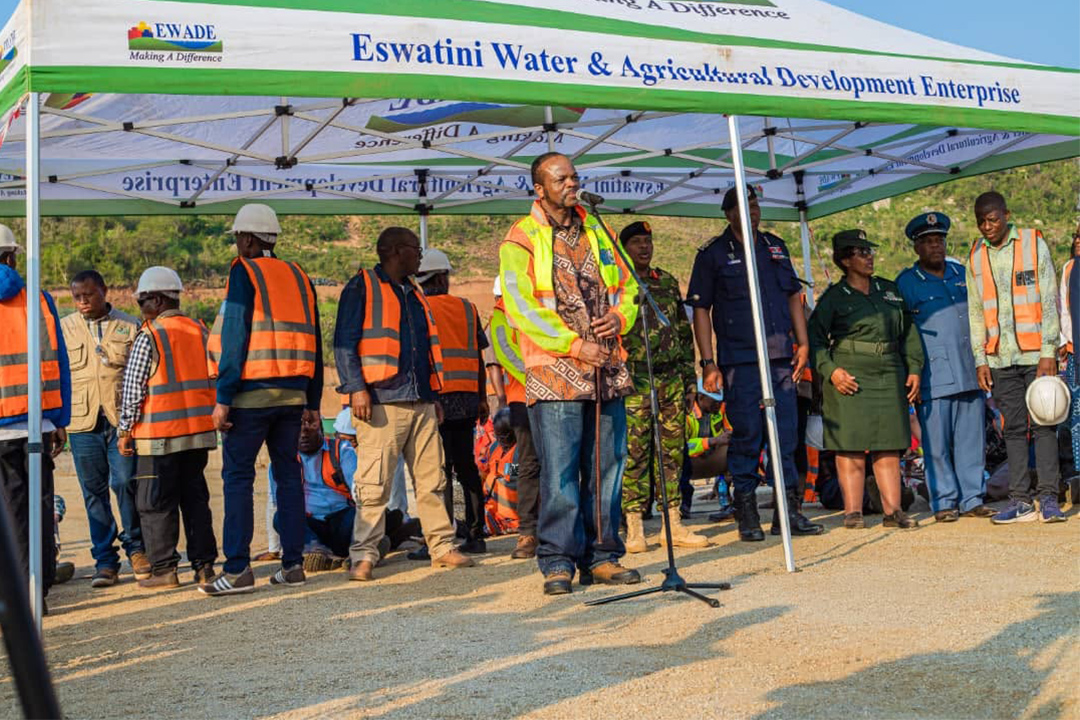
(Courtesy Pic)