



BY GCWALISILE MHLABANE
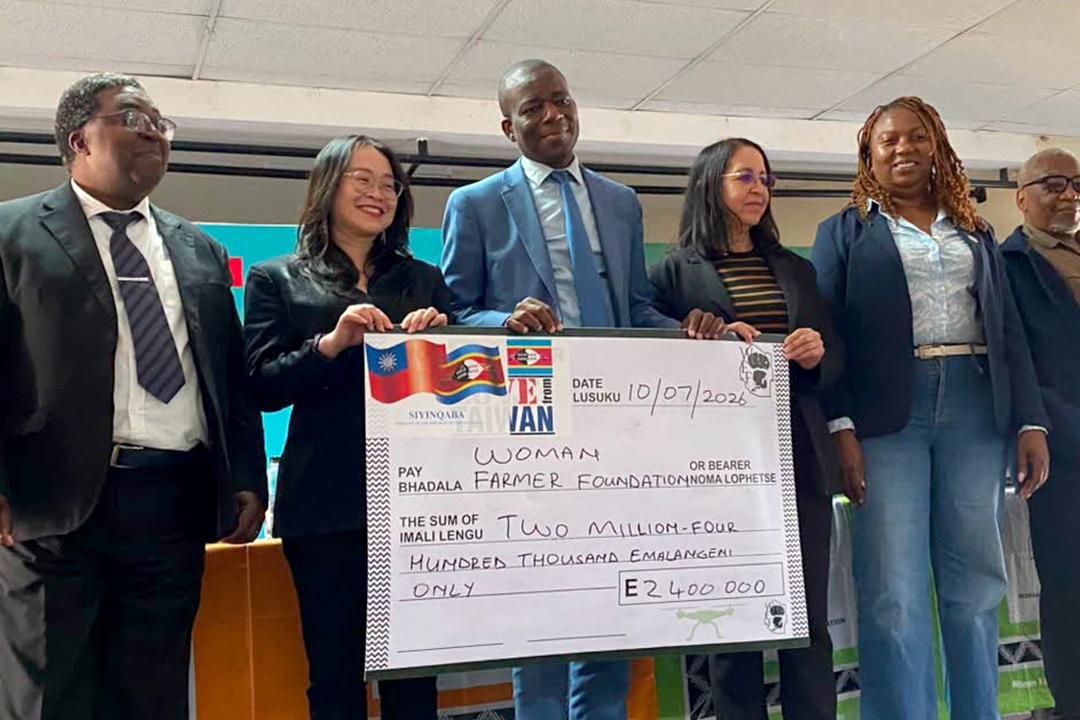
SIDVOKODVO– As climate change continues to challenge food production across the region, Eswatini is responding by investing in its young people. Through a new partnership with the Republic of China (Taiwan), Government has launched a US$146,000 (approximately E2.4 million) climate-smart agriculture programme that will equip 200 young emaSwati with practical farming and agribusiness skills to help build a more food-secure and resilient nation.
The Innovative Climate Smart Youth Tunnel Production Training Programme was officially launched on Friday, July 10, 2026, in Sidvokodvo, Manzini Region. The initiative is being implemented through a partnership between the Ministry of Agriculture, the Ministry of Education and Training, the Woman Farmer Foundation and the Republic of China (Taiwan).
The programme seeks to empower young people with practical skills in tunnel farming, irrigation systems, climate-smart crop production, agribusiness management, entrepreneurship and financial literacy, while creating sustainable employment opportunities and strengthening Eswatini’s agricultural sector.
The launch was officiated by Minister of Sports, Culture and Youth Affairs Bongani Nzima, while Principal Secretary in the Ministry of Agriculture Sydney Simelane represented Agriculture Minister Mandla Tshawuka. Also present were Taiwan Ambassador Jeremy Liang, the Principal Secretary in the Ministry of Education and Training, Members of Parliament, traditional leaders, development partners, financial institutions and the 200 beneficiaries.

Officially launching the programme, Nzima said Government was deliberately positioning young people at the centre of Eswatini’s agricultural transformation.
He said agriculture had evolved into a modern, technology-driven industry capable of creating businesses, employment and wealth, urging young people to view farming as a viable career rather than a last resort.
“The future of Eswatini lies in the hands of young people who are prepared to innovate, embrace technology and seize opportunities. Agriculture is no longer about survival; it is about entrepreneurship, wealth creation and transforming communities,” said Nzima.
The Minister applauded the Ministry of Agriculture, Taiwan and the Woman Farmer Foundation for investing in practical programmes that deliver lasting impact.
He challenged participants to make the most of the opportunity, saying Government expected the programme to produce employers instead of job seekers.
“This programme should produce employers instead of job seekers. It should produce innovators who inspire future generations. The future belongs to young people who are prepared to embrace climate-smart agriculture and modern technology.”
Nzima added that Government remained committed to creating opportunities that enable young people to participate meaningfully in national development while contributing to food security and economic growth.
Speaking on behalf of Agriculture Minister Mandla Tshawuka, Principal Secretary Sydney Simelane said climate change had become one of the greatest threats facing agriculture in Eswatini.
He said prolonged droughts, erratic rainfall, rising temperatures and extreme weather events continued to reduce agricultural productivity, making climate-smart farming an urgent necessity.
“Climate change is no longer a distant threat. It is our daily reality. Farmers across Eswatini continue to experience devastating losses caused by changing weather patterns,” Simelane said.
He explained that tunnel farming provides an effective solution by enabling year-round crop production while conserving water and protecting crops from harsh climatic conditions.
Simelane also commended the Woman Farmer Foundation for responding to youth unemployment and climate change by equipping young people with practical agricultural skills capable of transforming lives.
He revealed that the programme has recorded remarkable growth since its inception. The first intake produced 86 graduates in 2024, followed by more than 160 graduates in 2025, while this year’s intake has expanded to 200 participants.
Taiwan Ambassador Jeremy Liang reaffirmed his country’s commitment to supporting Eswatini’s agricultural transformation through innovation and knowledge sharing, announcing Taiwan’s US$146 000 (approximately E2.4 million) contribution.
“Our objective is to help Eswatini strengthen climate resilience, improve food security and create employment opportunities through smart agriculture,” he said.
Woman Farmer Foundation founder Sonia Palva said: “Our vision is to develop entrepreneurs who will build successful businesses, create jobs and transform rural communities.”
Throughout the programme, participants will receive intensive practical training in tunnel farming, irrigation systems, climate-smart crop production, agribusiness management, entrepreneurship, financial literacy and sustainable farming practices.
The initiative is expected to strengthen Eswatini’s food security while producing a new generation of climate-smart farmers equipped to establish commercially viable enterprises, create employment and contribute meaningfully to the country’s agricultural and economic development.
#EswatiniPositiveNews #Eswatini #Taiwan #ClimateSmartAgriculture #YouthEmpowerment #Agriculture #TunnelFarming #Agribusiness #FoodSecurity #ClimateAction #YouthInAgriculture #TVET #SmartFarming #EconomicGrowth #JobCreation #WomanFarmerFoundation
(Courtesy Pic)