



… the Kingdom’s poverty rate down to 53.5 percent from 58.9 percent
BY GCWALISILE MHLABANE
MBABANE– Eswatini has taken another important step in improving the welfare of its people, with the national poverty rate declining from 58.9 percent in 2016/17 to 53.5 percent in 2023/24, according to preliminary findings from the latest Eswatini Household Income and Expenditure Survey (EHIES) 2023/24.
The latest figures indicate that thousands more emaSwati are living above the national poverty line compared to seven years ago, reflecting steady socio-economic progress despite global economic challenges that have affected many developing nations.
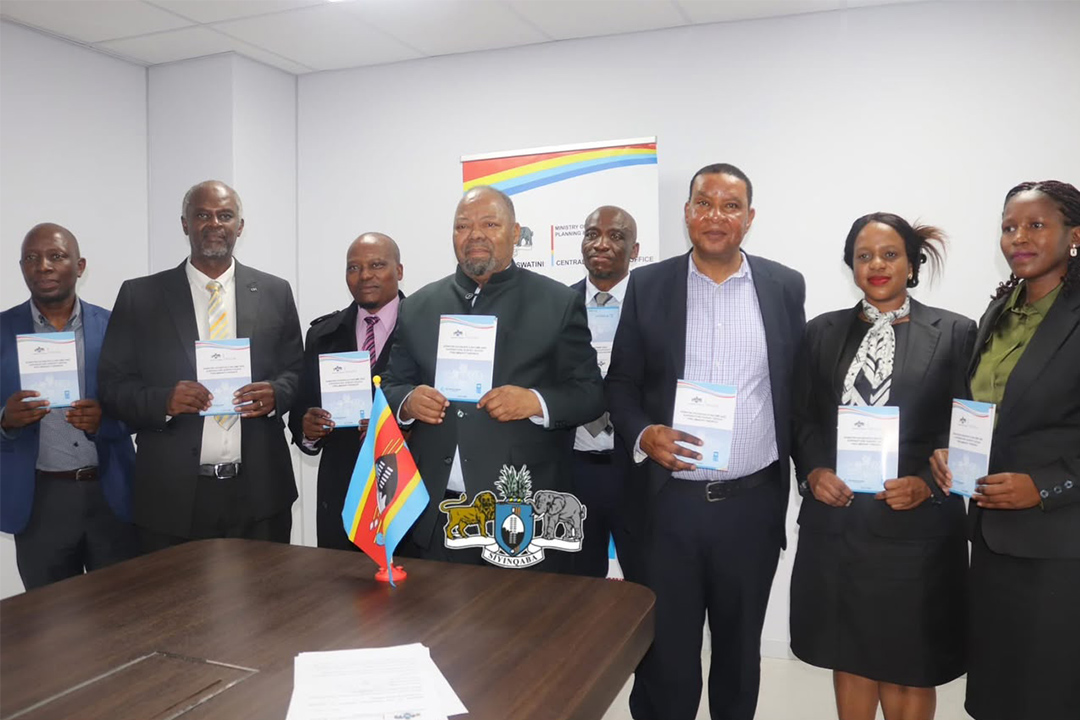
The findings were released during a media briefing hosted by the Ministry of Economic Planning and Development through the Central Statistical Office (CSO) on Thursday.

Minister of Economic Planning and Development Dr. Tambo Gina described the survey as one of the country’s most important planning tools, saying it provides Government with reliable and up-to-date information needed to design policies, allocate resources effectively and improve the quality of life of emaSwati.
He explained that the survey goes beyond measuring poverty, offering a detailed picture of how households earn their income, spend money, save, consume goods and services and respond to changing economic conditions.
According to the Minister, the EHIES remains Eswatini’s official benchmark for measuring poverty, inequality, household consumption, living standards and overall welfare, making it an essential guide for national planning and development.
“The Household Income and Expenditure Survey is our country’s official benchmark for measuring poverty, inequality, household consumption and welfare. It provides Government and stakeholders with credible evidence to guide policy formulation, resource allocation and programmes aimed at improving the lives of emaSwati,” said Dr. Gina.
The Minister said the reduction in poverty demonstrates that development efforts are beginning to yield positive results, while also highlighting the need to continue supporting vulnerable communities to ensure that economic growth benefits every citizen.
He acknowledged that although significant progress has been achieved, inequalities remain and require targeted interventions to accelerate poverty reduction across all regions of the country.
Dr. Gina emphasised that credible and timely statistics remain the backbone of effective governance because they enable policymakers to make informed decisions based on evidence rather than assumptions.
He said quality data strengthens public service delivery, improves accountability and ensures that Government programmes respond directly to the real needs of citizens.
The EHIES 2023/24 is one of the most comprehensive household surveys ever conducted in Eswatini. It provides updated information on household income, expenditure patterns, consumption behaviour, poverty levels, inequality, living conditions and several other socio-economic indicators that influence national development planning.
Officials said the preliminary findings will be followed by more detailed analytical reports that will provide deeper insights into the country’s socio-economic landscape, enabling Government, development partners, researchers, businesses and civil society organisations to design more effective programmes aimed at promoting inclusive economic growth and improving livelihoods.
The updated data is also expected to strengthen evidence-based policy making, ensuring that public resources are directed towards areas where they can deliver the greatest impact and contribute to achieving Eswatini’s long-term national development objectives.
The latest survey findings therefore not only highlight measurable progress in reducing poverty but also provide Government and its partners with a stronger foundation for planning future interventions that will create more opportunities, improve household incomes and raise living standards for emaSwati across the Kingdom.
(Courtesy Pic)