



BY GCWALISILE MHLABANE
MANZINI– For many local entrepreneurs, securing a government contract or winning a place in a major development can be the opportunity that transforms a small business into a thriving enterprise. Government is now seeking to create more space for Emaswati-owned businesses to access such opportunities through preferential procurement and the protection of selected economic sectors.
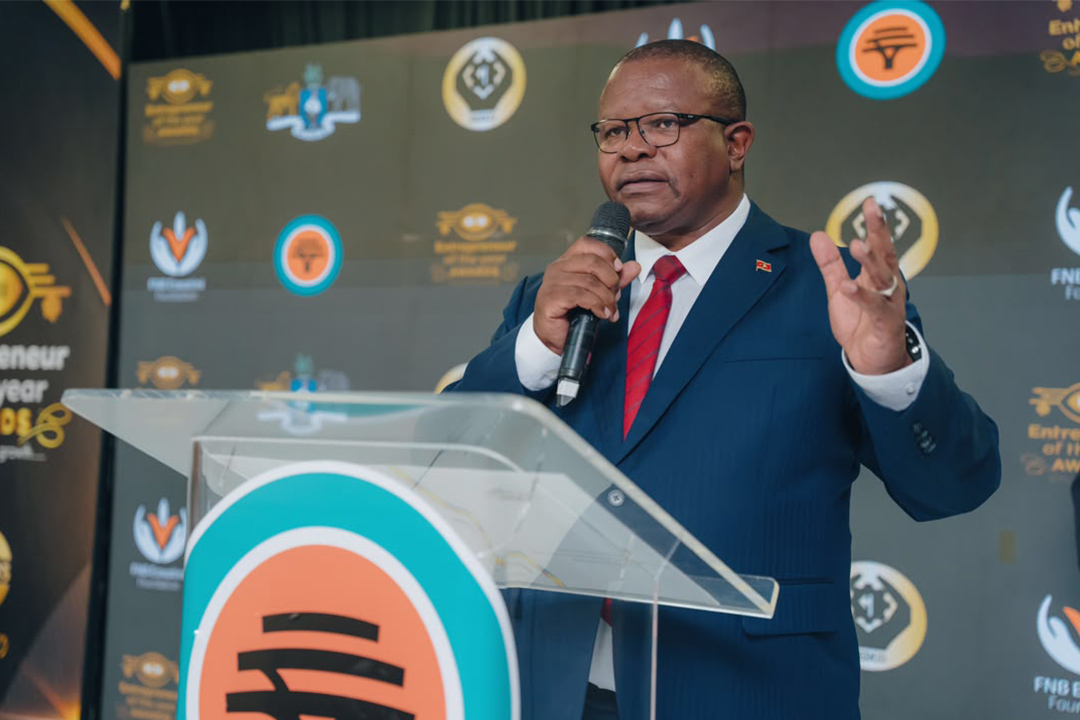
The plans were revealed by Minister of Commerce, Industry and Trade Manqoba Khumalo on Monday, 27 July 2026, during the Manzini Regional Entrepreneur of the Year Awards (EYA) held at The George Hotel.
Khumalo said the measures were being advanced through the Citizens Economic Empowerment Act and the National MSME Policy 2024–2029, with the aim of ensuring that local micro, small and medium enterprises (MSMEs) are better positioned to compete, grow and benefit from major economic opportunities.
He said government wanted preferential procurement to be embedded in legislation so that local MSMEs could benefit from major government projects, parastatal developments and private-sector projects that receive government incentives.

“Number one, we want to secure preferential procurement,” Khumalo said.
“Where there are big government projects, projects with parastatals and projects by the private sector that enjoy government incentives, we want embedded in legislation preferential procurement for MSMEs,” he said.
The Minister said the approach would help ensure that local businesses were not left behind when major economic opportunities became available.
Beyond procurement, Khumalo said government was also working to preserve certain locations and sectors of the economy for Emaswati-owned businesses, creating more room for local entrepreneurs to establish and expand their enterprises.
He said regulations aimed at protecting selected sectors had already passed through the Attorney General’s Office and were expected to be presented to Cabinet before being tabled in Parliament.
“The regulations have just passed through the Attorney General’s Office. I’m hoping to present these regulations this week to Cabinet, and if they pass next week, I want to table it in Parliament because we really want to make this a reality,” Khumalo said.
The Minister said the proposed legislation sought to address concerns about local businesses being crowded out by foreign-owned enterprises, while maintaining Eswatini’s openness to foreign investment and skills.
“We love foreigners as Emaswati, we love investors, but we want investors that will invest in things where we cannot invest,” he said.
“We love foreign skills, but we want foreigners that will bring skills that are not here. Because if we don’t do that, then we are our own worst enemies as Emaswati.”
Khumalo stressed that the approach was not intended to shut out foreign investors but to ensure that foreign investment complemented local enterprise development by bringing capital, expertise and skills that are not readily available in the country.
The proposed measures form part of government’s broader efforts to strengthen the MSME sector, which Khumalo described as a critical foundation of the national economy.
Through the Citizens Economic Empowerment Act and the National MSME Policy 2024–2029, government is seeking to improve access to opportunities and create a more enabling environment in which local enterprises can participate meaningfully in economic development.
The Minister’s remarks came as the Manzini Region recorded strong participation in the 2026 EYA, with 101 of the 362 applications received nationally coming from the region.
For MSMEs, the proposed preferential procurement framework could open doors to major contracts that have traditionally been dominated by larger companies. Protecting selected sectors and locations could also give Emaswati greater space to establish, operate and grow their businesses.
The Minister said the ultimate objective was to ensure that economic development translated into meaningful opportunities for citizens while maintaining a balance between local economic empowerment and foreign investment.
As government advances the Citizens Economic Empowerment Act and implements the National MSME Policy 2024–2029, the proposed reforms could mark an important step towards building a more inclusive business environment—one where local entrepreneurs are better positioned to participate in and benefit from Eswatini’s economic growth.
#MSMEGrowth #CitizensEconomicEmpowermentAct #PreferentialProcurement #EswatiniBusiness #LocalBusinesses #EconomicEmpowerment #WomenInBusiness #EYA2026 #ManziniRegion #Entrepreneurship #EconomicGrowth