


BY SIFISO NHLABATSI
MBABANE – Africa’s long-standing demand for permanent representation on the United Nations Security Council has received fresh backing from BRICS, with the bloc recognising the continent’s position as set out in the Ezulwini Consensus and Sirte Declaration.
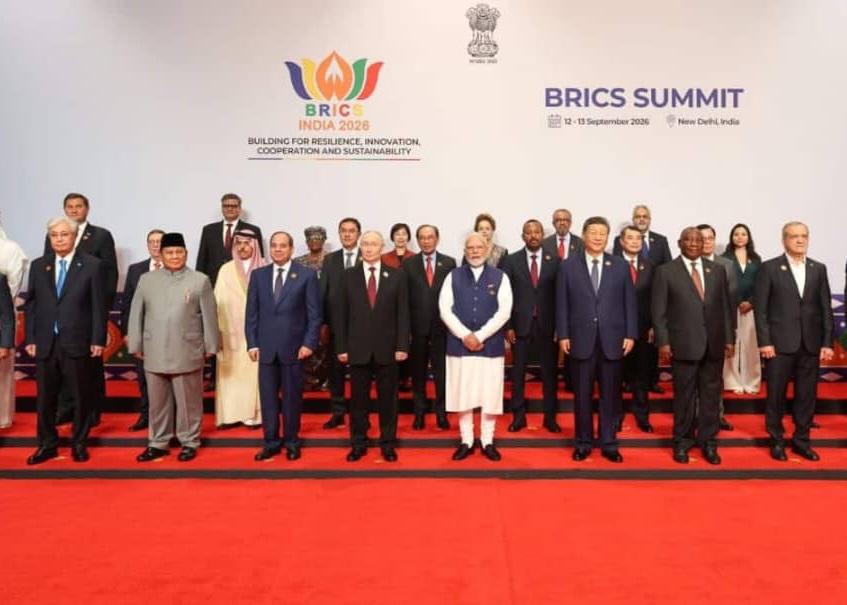
The development came during the 18th BRICS Summit held in New Delhi, India, from September 12 to 13, where leaders adopted the New Delhi Declaration, a 140-point document covering global governance, peace and security, trade, development, climate change, technology and other international issues.
According to the New Delhi Declaration, BRICS reaffirmed its support for comprehensive reform of the UN, including the Security Council, to make it more democratic, representative, effective and efficient.
The declaration specifically recognises the legitimate aspirations of African countries as reflected in the Ezulwini Consensus and Sirte Declaration.

It further states that Security Council reform should result in an amplified voice for the Global South.
For Africa, the position is significant because the Ezulwini Consensus calls for the continent to be allocated at least two permanent seats with full powers, including the right of veto, and five non-permanent seats on the Security Council.
The consensus was adopted by African countries in 2005 as the continent’s common position on reform of the United Nations.
According to the New Delhi Declaration, BRICS also called for greater representation of developing countries on the Security Council and supported the aspirations of countries from Africa, Asia and Latin America to play a greater role in international affairs.
The declaration further notes that Russia and China, which are permanent members of the Security Council, reaffirmed their support for the aspirations of Brazil and India to play a greater role in the UN, including on the Security Council.
The BRICS position resonates strongly with Eswatini’s long-standing campaign for implementation of the Ezulwini Consensus, which has repeatedly been championed by His Majesty King Mswati III on international platforms.
The King has consistently called for the reform of global institutions to give Africa a stronger voice in decisions affecting international peace and security.
In August 2025, speaking at the ninth Tokyo International Conference on African Development in Yokohama, Japan, His Majesty said implementation of the Ezulwini Consensus was vital for global peace and stability.
According to the King the reform would empower Africa to resolve conflicts peacefully, protect civilians and foster stability. He also called for reform of global institutions for peace and stability on the continent and across the world.
The United Nations in Eswatini has also previously noted that the Ezulwini Consensus has its roots in a 2005 African Union meeting held in Eswatini, making the issue particularly significant for the Kingdom.
His Majesty has also raised the issue directly at the UN. According to an official UN record of his statement, Eswatini has maintained its call for Africa’s voice to be heard in the Security Council, in line with the Ezulwini Consensus and Sirte Declaration.
In 2025, the King again used his address to the 80th UN General Assembly to call for restructuring of the Security Council to ensure inclusive and regionally balanced representation, a position aligned with the Ezulwini Consensus.
The latest BRICS declaration therefore places the African demand within a wider call by developing countries for changes to the structures of global governance.
The New Delhi Declaration also touches on an issue that has recently been raised by Eswatini’s Minister of Foreign Affairs and International Cooperation, Senator Pholile Shakantu which is the lack of female leadership at the highest level of the UN.
BRICS noted that, despite the ongoing selection process for the next UN Secretary-General, no woman has ever occupied the position.
The declaration further points out that only one national from Latin America and the Caribbean and only two nationals each from Africa and Asia have ever served as UN Secretary-General.
BRICS called for greater participation and representation of women, particularly from emerging markets and developing countries, at all levels of leadership and responsibility in international organisations.
This position echoes Shakantu’s call earlier this year for the UN to appoint its first female Secretary-General.
Speaking during the third Kingdom of Eswatini-European Union Partnership Dialogue at Hilton Garden Inn recently, Shakantu said she was concerned about the gender imbalance within the UN system.
“I am personally concerned about the gender imbalance within the UN system. I believe it is time for a female SG. There have been nine Secretary Generals, and all have been men,” she said.
The Minister said the UN should lead by example on gender equality when Secretary-General António Guterres’ term ends in December 2026.
The BRICS declaration places the Security Council issue within a broader campaign for greater representation of emerging markets and developing countries in international decision-making.
According to the declaration, BRICS wants greater and more meaningful participation of emerging markets and developing economies, as well as least developed countries, particularly from Africa, Asia and Latin America and the Caribbean.
It also calls for fair geographical representation within the UN Secretariat and other international organisations, including at senior and decision-making levels.
The 140-point New Delhi Declaration therefore gives fresh international prominence to Africa’s demand for permanent representation on the Security Council.
For Eswatini, the issue carries added significance because the African position was forged in the Kingdom and has subsequently been repeatedly championed by His Majesty King Mswati III on the continental and global stage.
With BRICS now explicitly recognising the aspirations contained in the Ezulwini Consensus and Sirte Declaration, the call for Africa to have a permanent seat at the UN’s most powerful decision-making body has gained renewed support from one of the world’s major emerging-power groupings.
(Courtesy Pic)
#Eswatini #BRICS #EzulwiniConsensus #UNSecurityCouncil #KingMswatiIII #Africa #GlobalSouth #PholileShakantu #UnitedNations #BRICSSummit #EswatiniPositiveNews