


BY SIBUSISEKILE NDLANGAMANDLA
MANZINI– A qualification may open the door, but what young people do once they walk through it could ultimately determine how far they go.
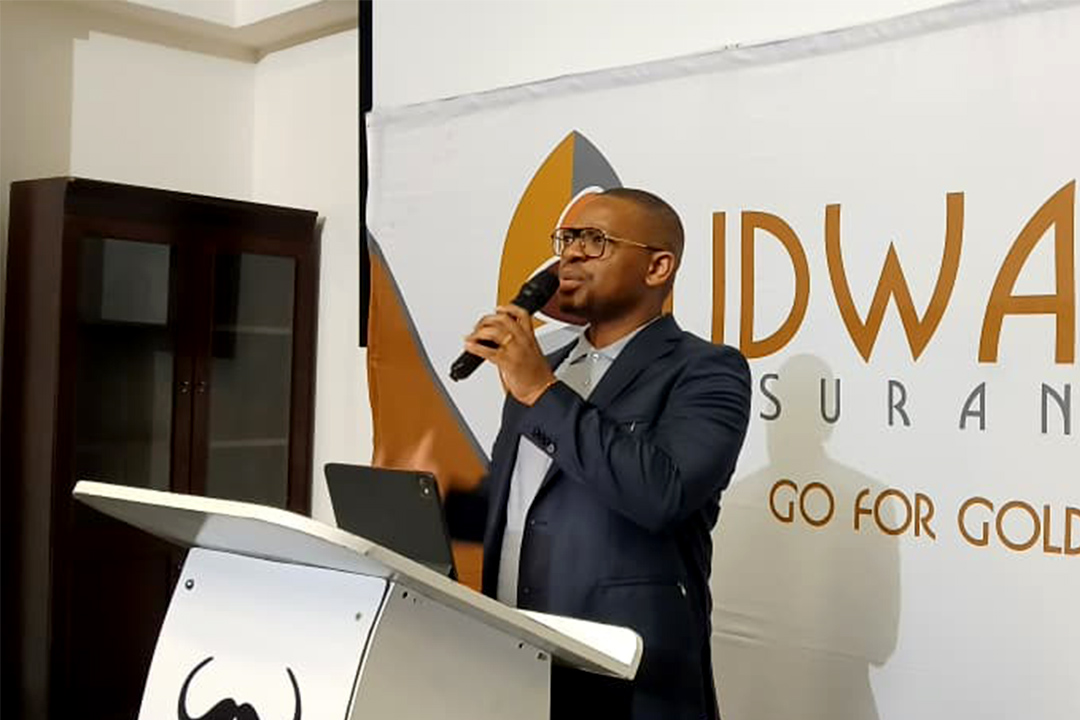
That was the powerful message from Lidwala Insurance Managing Director Dr Thokozani Nkambule, who has challenged emerging leaders to look beyond academic certificates, impressive titles and leadership positions and instead concentrate on the value they bring wherever they are placed.
Speaking during the Student Leadership Conference 2026 held at Inyatsi House in Manzini, Nkambule encouraged students to deliberately develop the soft skills, attitude and mindset required to become leaders who deliver meaningful results.
His message placed particular emphasis on a simple but important question every young person should ask when stepping into a new responsibility: What difference am I going to make?

Nkambule challenged the young leaders to imagine themselves being appointed to a new position and then consider what measurable value they would be able to create within their first 19 days.
“What value are you ready to create?” he asked.
The question, he explained, should force aspiring leaders to think beyond merely occupying an office or carrying a title. Leadership, he stressed, should be seen in what a person does, the results they produce and the positive influence they have on those around them.
Nkambule cautioned against the belief that obtaining a university degree or being elected into a student leadership structure automatically transforms someone into an effective leader.
Instead, he urged young people to understand that leadership carries the responsibility to act, communicate effectively, solve problems and create positive change.
Communication, in particular, emerged as one of the critical soft skills young leaders should develop. Nkambule said having a platform to speak on behalf of others was important, but the true value of such a platform was measured by what came out of it.
Student organisations, he noted, give young people valuable opportunities to participate in discussions, represent their peers and contribute ideas. However, those opportunities should ultimately translate into tangible results rather than becoming positions remembered only for the titles attached to them.
“Organisations promote results, not memories,” Nkambule said.
His message was also a warning against living on yesterday’s achievements.
Nkambule told the young leaders that succeeding once was not enough. A person who performed exceptionally well last year still had to prove their value this year and continue producing results in the future.
Leadership, therefore, requires consistency, adaptability, creativity and a willingness to embrace new ideas.
These qualities become even more important in organisations and environments that are constantly changing.
Nkambule observed that executive positions were rarely permanent. Organisations sometimes introduce new leadership because they require fresh thinking, different approaches and new perspectives.
For young leaders, he said, the lesson was clear: never become too comfortable.
A leader who stops learning, adapting and generating fresh ideas risks being overtaken by changing circumstances. In some cases, leadership changes may occur not because an individual has completely failed, but because an organisation requires a different perspective to move forward.
Nkambule’s message effectively placed soft skills at the centre of leadership development — the ability to communicate, adapt, think creatively, influence others positively and consistently create value.
For students preparing to enter workplaces, businesses and other leadership spaces, the challenge is therefore bigger than collecting qualifications.
It is about becoming the kind of person who can walk into a room, understand what needs to change and contribute towards making that change happen.
And for the next generation of leaders, that ability could be what takes them beyond their limits.