


BY LINDELWA MYENI
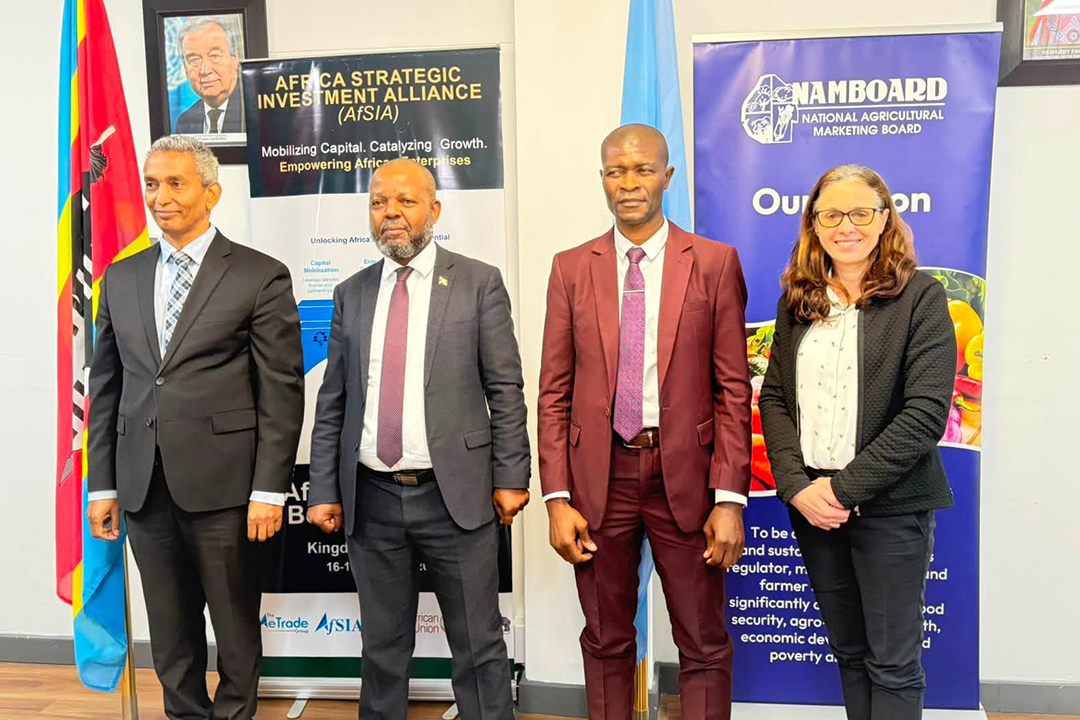
MBABANE – Eswatini is positioning agriculture as a key driver of export growth, with a new partnership between the National Agricultural Marketing Board (NAMBOARD) and AeTrade Group aimed at helping farmers and small businesses access markets, finance and technology.
AeTrade Group Chief Executive Officer Mulualem Syoum said the partnership could help transform Eswatini from a food-import-dependent country into a net food exporter in the coming years.
Speaking at a press conference at the UN House in Mbabane, Syoum said Eswatini had the natural resources needed to expand agricultural production, including land, water and suitable soils, but greater support was required to turn this potential into commercially successful businesses.
“Is it not possible for Eswatini to shift from being food-import-dependent to becoming a net food exporter in the next few years?” Syoum asked.

The partnership will focus on supporting farmers to transition from primary production into agribusinesses capable of supplying larger markets and eventually competing in regional and international markets.
Syoum said the initiative would go beyond increasing production by addressing some of the barriers that prevent businesses from reaching markets, including limited access to finance, inefficient payment systems and inadequate use of technology.
He said there was also an opportunity to diversify Eswatini’s agricultural exports beyond the country’s established sugar industry, allowing more products and small and medium enterprises (SMEs) to participate in regional and international trade.

Syoum pointed to AeTrade’s experience in countries such as Rwanda and Ethiopia, where agriculture has been identified as an important sector for investment, job creation and strengthening food security.
The programme will be supported through AeTrade’s Sokokuu Integrated Ecosystem, which is designed to connect businesses with business knowledge, markets, finance and other support services.
Syoum said this approach was particularly important given the financing challenges faced by African micro, small and medium enterprises (MSMEs). Research conducted by AeTrade with the OECD Development Centre and the African Union Commission in 2023 estimated Africa’s MSME financing gap at more than US$300 billion annually.
He said many businesses continued to depend on household savings and informal financing, while accessing formal funding could take months, making it difficult for entrepreneurs to invest when opportunities arise.
The initiative is therefore expected to bring together government, financial institutions and private-sector players to create a more coordinated support system for businesses.
AeTrade is expected to work with the Ministry of Commerce, Industry and Trade, Ministry of Finance, Central Bank of Eswatini, commercial banks, development finance institutions and cooperatives.
The establishment of AeTrade’s Southern Regional Headquarters in Eswatini is also expected to strengthen the country’s position as a base for the organisation’s expansion across Southern Africa.
Syoum said Eswatini would serve as a base for programmes in other countries in the region, while the local pilot would demonstrate how digital solutions, finance and market access can be combined to help MSMEs grow.
AeTrade will also showcase its solutions at the upcoming Eswatini International Trade Fair as implementation of the programme gets underway.
The partnership ultimately seeks to strengthen the agricultural value chain, create opportunities for small businesses and position Eswatini to capture a larger share of regional and international markets.
#Eswatini #Agriculture #NAMBOARD #AeTrade #Exports #FoodSecurity #MSMEs #Agribusiness #EconomicGrowth #Trade