


BY MFANUFIKILE KHATHWANE
MBABANE – Eswatini’s pig industry has recorded remarkable growth, with its value increasing from E72 million in 2020 to E131.8 million in 2025, as Government officially took over the Pig Industry Enhancement Project Phase II (PIEP II) from the Republic of China (Taiwan).
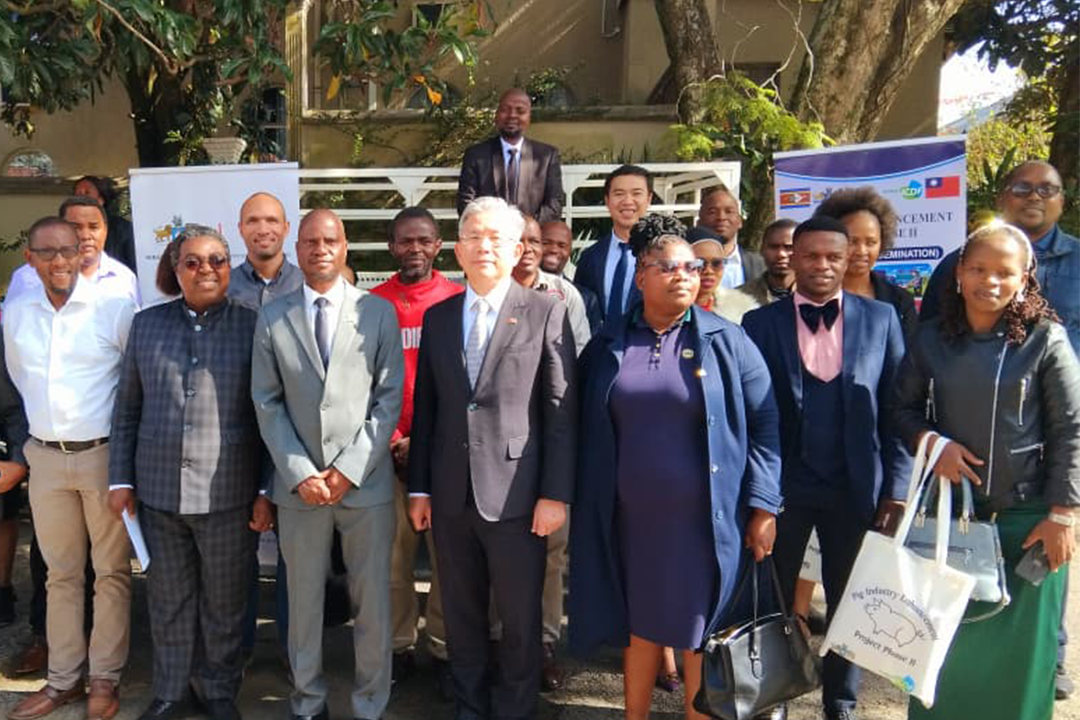
The official handover ceremony, held on Friday June 26,2026 at Mountain View Hotel, marked the successful completion of the five-year project, which has significantly strengthened the country’s pork value chain through improved genetics, farmer training, modern breeding technologies and enhanced production systems.
Speaking during the handover, Taiwan’s Ambassador to Eswatini, Jeremy Liang, described the project as a testament to the enduring partnership between Eswatini and Taiwan, saying it has transformed the country’s pig industry while contributing to food security, economic growth and improved rural livelihoods.
“The success of this project demonstrates what can be achieved when partners work together with a shared vision and a long-term commitment to development,” said Liang.

The project delivered impressive results, including the distribution of 2 463 crossbred gilts, 7 636 artificial insemination semen doses, the training of 1 977 farmers, the introduction of a national pig traceability system and improved slaughter hygiene practices.
These interventions helped increase local pork production from 1 903 metric tonnes in 2020 to 2 424 metric tonnes in 2025, enabling Eswatini to achieve self-sufficiency in fresh pork production. The country now imports mainly processed pork products such as bacon, ham and sausages that are not widely produced locally.
Liang said the project also established Eswatini’s pig artificial insemination centre and strengthened local technical capacity, ensuring that farmers and Government institutions have the skills and resources needed to sustain the industry’s growth beyond the project’s lifespan.
To ensure a smooth transition, about E9.85 million has been retained to support the continued operation of the Mpisi Pig Nucleus Farm, including genetic improvement, maintenance and other production activities as Government assumes full responsibility for the project.
While celebrating the achievements, stakeholders acknowledged that the pig industry continues to face challenges such as high feed costs, market volatility, seasonal overproduction and slaughter hygiene gaps.
A pig farmer who shared her testimony during the ceremony welcomed Government’s recent reduction in maize prices, saying it had helped lower feed costs. However, she appealed for continued support to address low producer prices, saying many farmers still struggle to make a profit despite increased production.
Although PIEP II has officially concluded, Liang reaffirmed Taiwan’s commitment to supporting Eswatini’s agricultural transformation through the ongoing Goat Industry Enhancement Project, which focuses on genetic improvement, technology transfer, capacity building and market development.
The successful handover marks a new chapter for Eswatini’s pig industry, with Government expected to build on the gains made under the project to further strengthen the livestock sector, create opportunities for farmers and contribute to the country’s economic development.
#EswatiniPositiveNews #PigIndustry #Agriculture #EconomicGrowth #FoodSecurity #Livestock #TaiwanEswatini #GovernmentWorks #RuralDevelopment #Eswatini