


BY SIFISO NHLABATSI
LOBAMBA – The proposed US$65 million (about E1.14 billion) World Bank financing for the Digital Eswatini Project is expected to support investment in digital skills and infrastructure as government seeks to open more employment opportunities for young people.
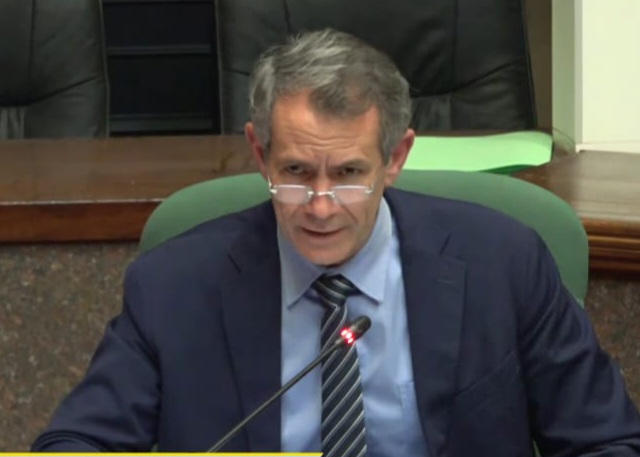
Finance Minister Neal Rijkenberg told Parliament that the investment in digital infrastructure should not only improve government services but also enable young Emaswati to access education, employment and income-generating opportunities online.
He was speaking during the Second Reading of the International Bank for Reconstruction and Development (Eswatini Post and Telecommunications Corporation) Loan Guarantee Bill, Bill No. 13 of 2026; the International Development Association (Digital Eswatini Project under the Inclusive Digitalization in Eastern and Southern Africa Multiphase Programmatic Approach Programme) Loan Bill, Bill No. 14 of 2026; and the International Bank for Reconstruction and Development (Digital Eswatini Project under the Inclusive Digitalization in Eastern and Southern Africa Multiphase Programmatic Approach Programme) Loan Bill, Bill No. 15 of 2026.
Rijkenberg said youth unemployment was approximately 46 per cent, making young people a key group that could benefit from investment in digital skills and connectivity.

He said the project would provide digital-skills training through accredited institutions and industry partnerships, with a target of training 200 000 citizens during the project period.
The World Bank has similarly identified digital transformation as an important opportunity for Eswatini to create jobs, improve productivity and strengthen economic resilience. Its 2025 Eswatini Economic Update said digitalisation could help address structural constraints while supporting job creation.
Rijkenberg told MPs that young people could use affordable internet access to study online, acquire skills and pursue employment beyond the traditional local labour market.
He specifically pointed to opportunities such as online employment and call-centre work that could become more accessible as the cost of internet connectivity falls.
The minister said the problem was not necessarily that Eswatini lacked mobile network coverage.
Instead, he argued that the cost of accessing data remained a major barrier.
He explained that much of the country’s internet access currently came through mobile data services, which could be more expensive than fixed-line connectivity.
The Digital Eswatini Project is intended to expand fibre infrastructure and last-mile broadband connectivity, including connections to Tinkhundla centres, health facilities and schools.
Rijkenberg said the expansion of fixed-line connectivity could significantly reduce the cost of accessing the internet.
The World Bank has previously reported that although Eswatini had achieved extensive 4G coverage, internet use remained substantially lower, with affordability identified as one of the barriers to wider adoption.
According to the World Bank, the Digital Eswatini Project has total financing of US$65 million and its development objective is to increase access to affordable broadband internet and improve government’s capacity to deliver digital public services.
The financing is divided among three arrangements.
The International Bank for Reconstruction and Development (Eswatini Posts and Telecommunications Corporation) Loan Guarantee Bill, Bill No. 13 of 2026, provides for a US$26 million loan to EPTC backed by a government guarantee.
The International Development Association (Digital Eswatini Project under the Inclusive Digitalization in Eastern and Southern Africa Multiphase Programmatic Approach Programme) Loan Bill, Bill No. 14 of 2026, provides for a US$19.7 million concessional credit to government.
The International Bank for Reconstruction and Development (Digital Eswatini Project under the Inclusive Digitalization in Eastern and Southern Africa Multiphase Programmatic Approach Programme) Loan Bill, Bill No. 15 of 2026, provides for a further US$19.3 million loan to government.
Rijkenberg said the project would also support the development of digital public infrastructure.
This includes a digital identity system, a government-wide electronic payment gateway, interoperable data-exchange platforms and cybersecurity infrastructure.
He said these systems would be important as more government services moved online.
The project also provides for the digitisation of priority services, including business registration, tax filing, health referrals, telemedicine, education enrolment and social-transfer verification.
For young people, the minister said, the combination of cheaper internet and improved digital skills could create opportunities to participate in the digital economy.
He said a young person would be able to use the internet not only for communication and entertainment, but also for education, employment and business.
Rijkenberg also linked the digital investment to efforts to improve tax administration.
He agreed with MPs who argued that greater digitalisation could help reduce tax fraud by making tax processes more transparent and reducing dependence on physical transactions.
He said extending reliable internet connectivity to rural areas would also make it easier for government to digitise tax services without citizens being able to cite lack of connectivity as a barrier.
The World Bank has recommended strengthening digital skills development and supporting entrepreneurship as part of efforts to unlock the benefits of digitalisation in Eswatini.
The Bank’s Digital Economy Diagnostic has also identified digital infrastructure, digital platforms, digital financial services, digital skills and digital entrepreneurship as key components of Eswatini’s digital economy.
Rijkenberg said the government therefore viewed the Digital Eswatini Project as an investment that went beyond internet infrastructure.
He said it would create the foundation for citizens to access services, acquire skills and participate in an increasingly digital economy.
#YouthEmployment #DigitalSkills #DigitalEswatini #Eswatini #WorldBank #DigitalEconomy #YouthEmpowerment #JobCreation