




BY SIFISO NHLABATSI
MBABANE – Eswatini has recorded a decline of more than 50 per cent in AIDS-related deaths across all age groups, marking a major milestone in the country’s long-running fight against HIV and AIDS.
The progress was highlighted during a presentation on the HIV epidemic in Eswatini at the quarterly Eswatini Editors’ Forum meeting convened by the National Emergency Response Council on HIV and AIDS (NERCHA) at Emafini Country Lodge today.
The presentation showed that while HIV remains a major public health concern, the country has made significant gains in ensuring that people living with HIV know their status, access treatment and achieve viral suppression.
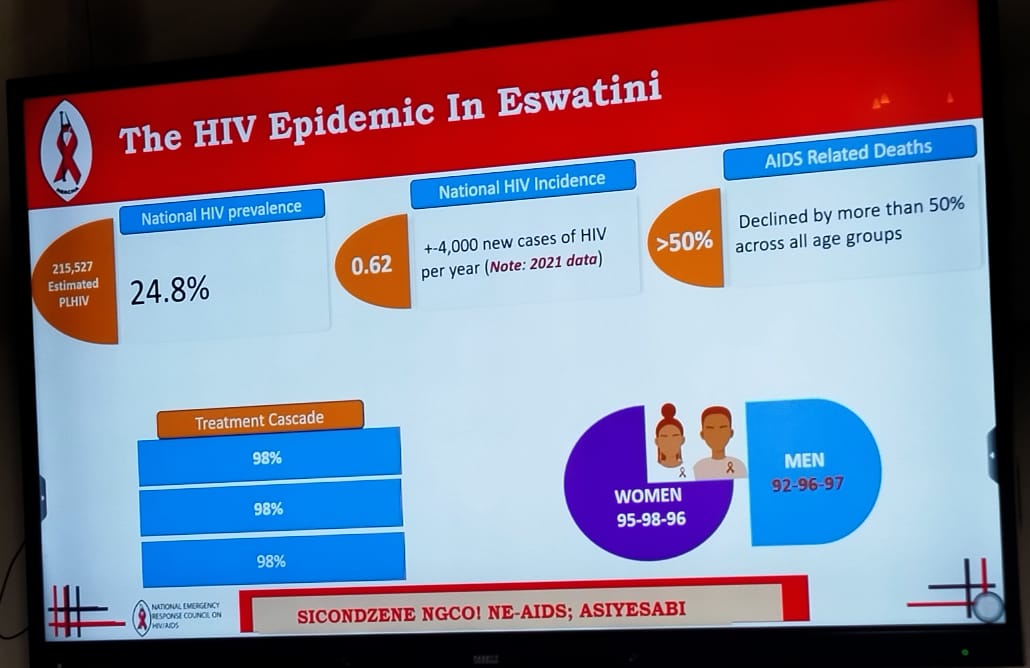
According to the figures presented by NERCHA’s Director HIV Response and Coordination Dr Bongani Masango, Eswatini has an estimated 215 527 people living with HIV, with national HIV prevalence standing at 24.8 per cent. Despite the high prevalence, the country has achieved a treatment cascade of 98-98-98, meaning that 98 per cent of people living with HIV know their status, 98 per cent of those diagnosed are on treatment, while 98 per cent of those on treatment have achieved viral suppression.

The figures presented further showed progress among both women and men, with women standing at 95-98-96 and men at 92-96-97 across the HIV testing, treatment and viral suppression targets.
The decline in AIDS-related deaths according to Dr Masango reflects the impact of Eswatini’s expanded HIV treatment programme and sustained efforts to ensure that people living with the virus access antiretroviral therapy and remain virally suppressed. Previous estimates projected AIDS-related deaths to continue declining as treatment coverage expands.
However, the gains come against the backdrop of continued new infections. The presentation indicated that the national HIV incidence stands at 0.62, with more than 4 000 new HIV cases recorded annually, based on 2021 data.
This means that while fewer people are dying from AIDS-related illnesses, the country still faces the challenge of preventing new infections and sustaining the progress made in treatment and care.
NERCHA’s current National HIV Strategic Framework for 2024-2028 is aimed at intensifying community-led and person-centred interventions as Eswatini works towards ending AIDS as a public health threat by 2030.
Globally, Eswatini remains recognised for its progress in the HIV response, having achieved the 95-95-95 treatment targets ahead of many countries. The latest results presented to editors suggest the country has continued to build on those gains, particularly in reducing deaths and improving viral suppression.
Dr Masango stated that the challenge now, however, will be to ensure that the decline in AIDS-related deaths is matched by a sharper reduction in new HIV infections through strengthened prevention efforts, community engagement and sustained access to treatment. He stated that they have noted reports of condoms running out in communities.
According to Dr Masango the reports of condoms running out when judging by the new infections do not necessarily mean they are all being used for protection. Speaking on findings from engagements in different communities, Dr Masango said it was discovered that some soccer players use condoms as makeshift elastic bands to keep their socks from falling down, while some elderly people reportedly use the oil from condoms to rub their knees, believing it has healing properties.
The Nation Magazine Editor Bheki Makhubu raised a concern that NERCHA was no longer robust as it used to be in spreading the message about HIV/AIDS. He stated that it would seem NERCHA has abandoned the traditional media as a key stakeholder in bringing across the message.
#HIVResponse #EndAIDS #HIVPrevention #AIDSRelatedDeaths #NERCHA #EswatiniHealth #HIVTreatment #ViralSuppression #PublicHealth #Eswatini