



BY SIFISO NHLABATSI
MBABANE– Eswatini has received international recognition for its move to digitalise applications for rooftop and embedded solar installations, placing the Kingdom among the first African countries to establish a dedicated digital solar application portal.
The recognition was shared by the New Energy Industry Association for Asia and the Pacific (NEIAAP) and SNEC PV & ES Expo, the world’s largest international photovoltaic (solar) and smart energy tradeshow, which highlighted Eswatini and Namibia for their latest digital initiatives aimed at making solar energy applications faster, more transparent and accessible.
According to NEIAAP and SNEC, Eswatini and Namibia have joined South Africa as African countries using dedicated digital platforms for solar applications.
Eswatini’s platform, developed by the Eswatini Energy Regulatory Authority (ESERA), accommodates applications for embedded generation projects of up to 2 megawatts (MW).

The platform brings together key processes, including licensing, installer registration and application processing, providing prospective electricity producers with a centralised digital route through which they can navigate the regulatory requirements for installing renewable energy systems.
NEIAAP and SNEC described the development as a significant step in Africa’s energy transition, noting that digitalisation is not only about improving efficiency but also strengthening transparency, grid security and opportunities within the green economy.
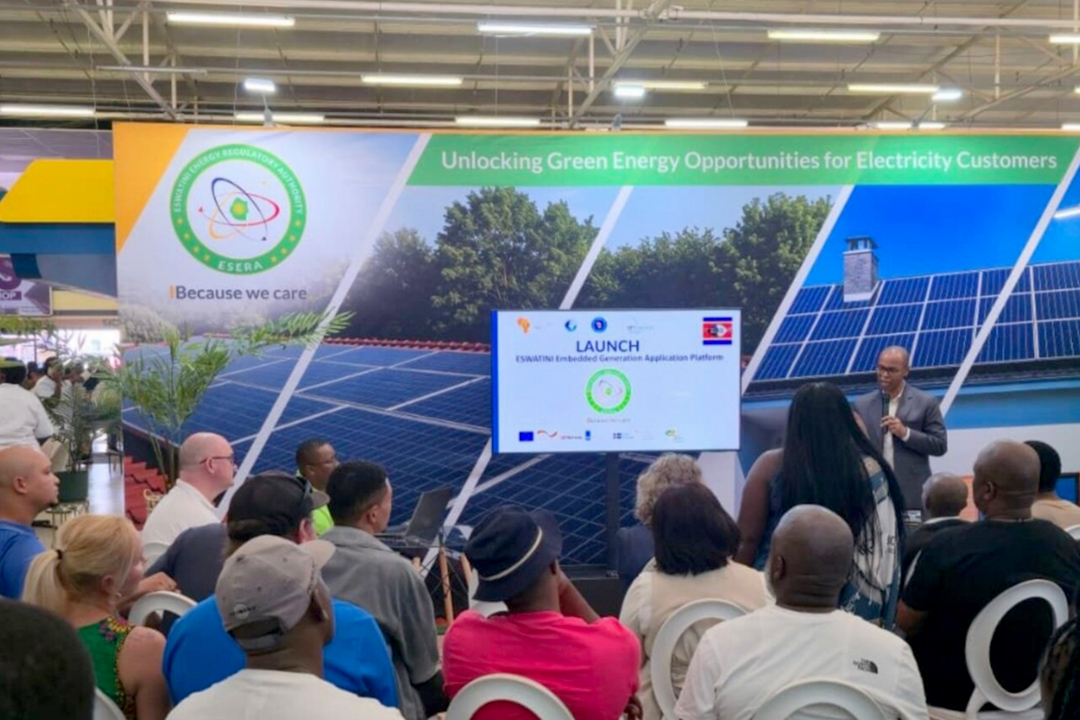
The recognition follows the launch of the ESERA platform at the Eswatini International Trade Fair (EITF) 2026.
At the launch, ESERA Chief Executive Officer Skhumbuzo Tsabedze said the initiative was intended to go beyond simply providing another online service.
“We are not simply launching a digital platform. We are launching an enabler of Eswatini’s energy transition,” Tsabedze said.
The platform was developed to simplify the Embedded Generation application process by bringing customers, installers, the utility and regulator into a shared digital environment.
It provides information on application requirements and procedures while allowing the regulatory process to become clearer for individuals and businesses seeking to generate their own electricity.
The development is particularly significant as Eswatini seeks to expand renewable energy participation among households, farmers and businesses.
According to figures shared by NEIAAP and SNEC, Eswatini currently has 30.1 MW of solar capacity operational, while a further 123.2 MW is under construction.
These figures underline the growing role of solar power in the country’s energy landscape and provide context to ESERA’s efforts to create a more efficient regulatory environment for embedded generation.
The regional recognition also places Eswatini alongside Namibia, whose Electricity Control Board (ECB) launched a digital platform covering installations of up to 500 kilowatts (kW).
Namibia’s platform allows applicants to apply, track their applications and progress towards connecting their systems, while South Africa has a dedicated digital solar application framework covering installations of up to 1 MW.
NEIAAP and SNEC said the digitalisation of solar application processes could help unlock wider participation in the green economy by making regulatory processes more transparent and easier to navigate.
For Eswatini, the recognition comes as the country seeks to position renewable energy and digitalisation as important components of its broader energy transition and sustainable economic development agenda.
#Eswatini #SolarEnergy #RenewableEnergy #EnergyTransition #GreenEconomy #ESERA #SolarPower #Digitalisation #CleanEnergy #EmbeddedGeneration #AfricaEnergy #SustainableDevelopment #NEIAAP #SNEC #EITF2026