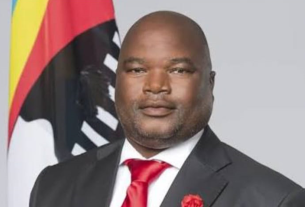
BY MBONO MDLULI
MBABANE– The Kingdom of Eswatini has secured a loan of approximately E800 million from the African Development Bank (AfDB) as part of its efforts to close the 2025/26 budget financing gap.
This development was confirmed by Minister of Finance Neal Rijkenberg, who said the loan would be used strictly for budget support, following up on his pronouncement during the 2025/26 National Budget Speech where he indicated that E1.8 billion was required in external financing.
In addition to the AfDB facility, Rijkenberg disclosed that the government was also finalising negotiations with the OPEC Fund for International Development (OFID) for another loan of around E900 million. The combined borrowing is expected to provide a significant boost to fiscal stability and service delivery, especially during a time of constrained revenue and rising public demands.
The minister assured that the loans would not derail the country’s fiscal trajectory. He stated that government assesses each loan in relation to Gross Domestic Product (GDP) to ensure sustainability. Currently, Eswatini’s GDP is at E69.97 billion (as at November 7, 2024), and the minister highlighted that it is growing at a healthy pace, which will make repayment feasible.

Despite public concerns about rising debt levels, Rijkenberg emphasised that Eswatini’s public debt-to-GDP ratio remains within safe thresholds, currently around 41%, which is still below the SADC macroeconomic convergence target of 60%. He said the country is committed to prudent debt management and maintaining long-term fiscal sustainability.
According to recent assessments by international financial institutions, Eswatini’s main fiscal risks include a high public wage bill, over-reliance on SACU receipts, and limited domestic revenue mobilisation. However, the government has embarked on several reforms, including enhancing tax collection efficiency, improving public financial management, and controlling non-essential expenditure.
The country has been able to reduce the wage bill from 42% to around 33% of the GDP. The country’s fiscal deficit decreased from 7.5 percent to 2% last year. The country’s GDP also improved by five percent last year, and this year, with some rebasing, improved by three percent. Next year, the GDP is projected to improve by 8.3 percent. Government wants economic growth to be at 12 percent at the end of this term.
With this new funding injection from the AfDB and expected support from OFID, government anticipates improved service delivery in key sectors such as health, education, and infrastructure, while keeping the overall macroeconomic environment stable.
Here’s a more detailed breakdown as at March 2025:
- Total Public Debt:5 billion, representing 40.7% of GDP.
- Public External Debt:1 billion, or 18.5% of GDP, reflecting a 1% increase due to ongoing project loan disbursements.
- Public Domestic Debt:4 billion, or 22.2% of GDP, driven by an additional E600 million advance from the Central Bank.
- Debt Portfolio:A mix of Treasury Bills (E3.5 billion), government bonds (E12 billion), and loans.
- Short-term securities:Dominated by the Central Bank and commercial banks.
- Longer-term instruments:Held by non-bank financial institutions.
The debt-to-GDP ratio, which compares a country’s government debt to its gross domestic product, reveals a nation’s ability to repay its debt and is a key indicator of financial health.
(Courtesy Pic)