
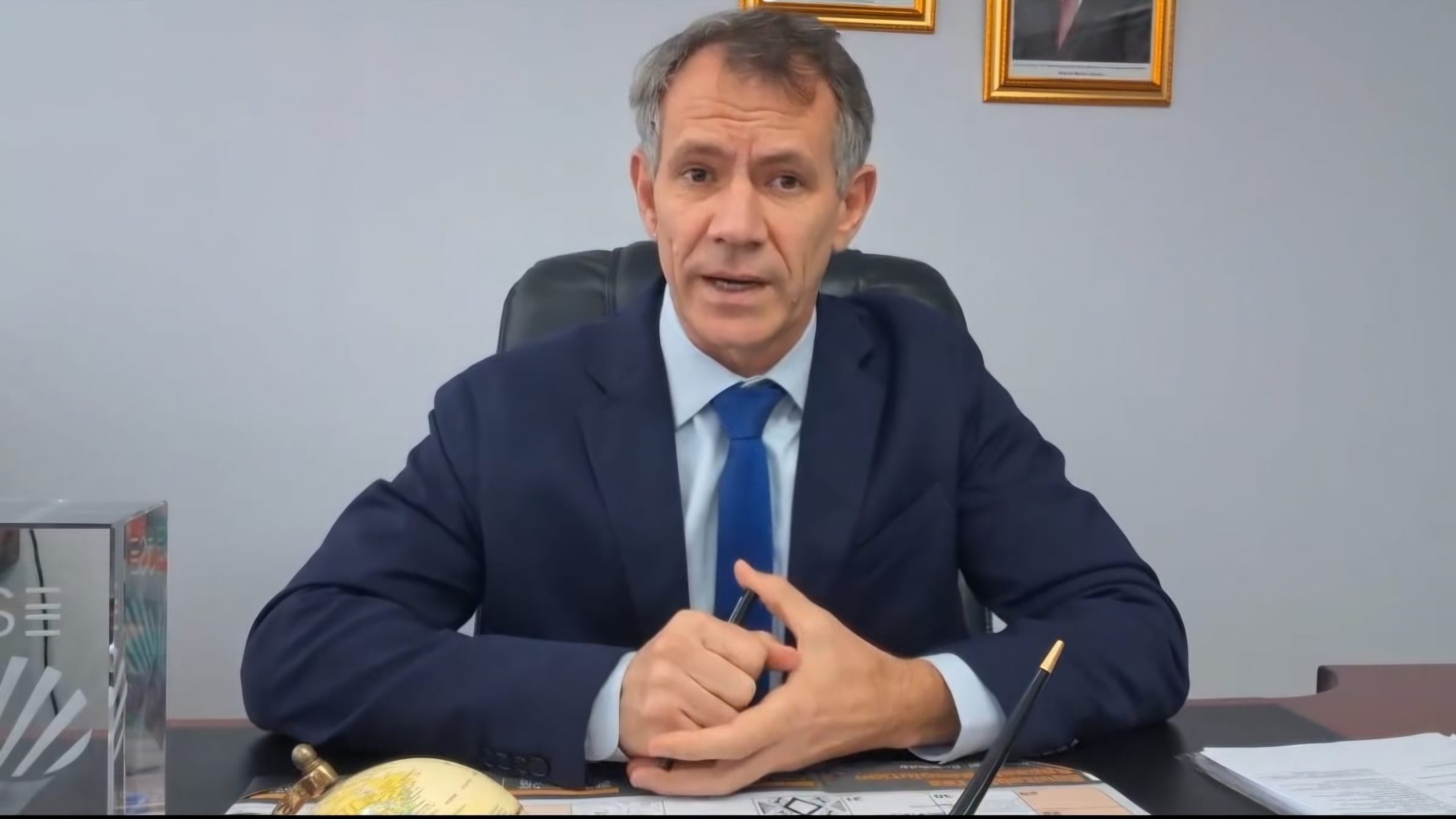




… Finance Minister explains why
national budget is not cash sitting in Government coffers
BY MBONGENI NDLELA
MBABANE – Eswatini’s E36.92 billion national budget should not be viewed as a giant pool of cash already sitting in Government coffers waiting to be spent, Finance Minister has explained, revealing that tax collections are currently about E900 million below projections while Government moves to secure E1.5 billion in financing already built into the budget.
In a detailed Finance in Focus briefing, the Minister sought to unpack one of the biggest questions surrounding Government finances: if Parliament approved a budget of nearly E37 billion, why does Government still need to borrow money and why can cash-flow pressures sometimes delay payments?
His explanation was straightforward, a national budget is essentially an annual financial plan based on money Government expects to collect and raise throughout the financial year. It does not mean the entire E36.92 billion is immediately available in cash from the first day of the financial year.
Government revenue comes progressively from sources including Southern African Customs Union receipts, domestic taxes and other financing arrangements.

This means the amount of money available to Government at any particular point during the year is influenced by how quickly anticipated revenue actually comes in.
The Minister said tax revenue, in particular, is based partly on projections and estimates prepared when the budget is formulated. While Government works to broaden the tax base and improve collections, actual revenue can sometimes perform differently from forecasts.
At present, he disclosed, Eswatini is approximately E900 million behind its year-to-date tax collection target.
“As we speak now for the year so far, we are about 900 million down on the tax collection year to date,” the Minister explained, describing the present period as challenging for tax collection.
The revelation provides important context to recent public debate over Government cash flow and borrowing.
The Minister stressed that fluctuations in revenue during a financial year can create temporary cash-flow constraints even where expenditure has already been approved in the national budget.
In simple terms, Government may have authority to spend money on a particular programme or project, but the cash required to make that payment still has to be collected or raised during the year.
E1.5 BILLION ALREADY PART OF BUDGET
The Minister also addressed questions surrounding Government’s efforts to raise an additional E1.5 billion.
He clarified that the money should not be interpreted as new spending being added on top of the E36.92 billion budget.
Instead, the E1.5 billion was already identified as part of the financing required to fully fund the approved national budget.
According to the Minister, Government knew when preparing the budget that it would have to raise the E1.5 billion during the financial year in order to meet expenditure already provided for.
He expressed confidence that Government would succeed in securing the financing.
“It looks like we will be successful raising E1.5 billion,” he said, adding that once secured, the money would be used to meet bills and obligations already identified within the national budget.
The explanation effectively distinguishes between the size of the national budget and the cash available to Government at any specific moment.
For ordinary emaSwati, the distinction is significant.
A budget sets out what Government intends and is authorised to spend during the entire year. Revenue, however, enters Government accounts at different stages of that year.
Where collections fall below projections, Government may therefore have to manage expenditure carefully, raise planned financing or deal with temporary cash-flow pressure.
ECONOMY GROWING, BUT FAMILIES WANT TO FEEL IT
The Minister also turned his attention to another question increasingly raised by households: if the economy is growing, why do some people still feel financially stretched?
He said Eswatini’s economy was growing at about five per cent, which represented an improvement compared with previous periods.
However, he acknowledged that many citizens argue that this growth is not immediately visible in their pockets.
“The money isn’t on the streets. The money isn’t being felt by the economy,” he said while describing the concerns often raised by members of the public.
The Minister encouraged emaSwati to also measure economic and social progress over longer periods rather than only through the amount of disposable cash they have at a particular moment.
He pointed to increased cellphone ownership, improved housing and greater access to electricity and clean running water as examples of changes that have taken place over the years.
According to the Minister, about 88 per cent of people now have electricity in their homes, which he presented as evidence of gradual improvements in living standards.
He argued that development can sometimes be difficult to notice because it takes place progressively rather than overnight.
The Minister compared national development to building a house — a process which may take years before the full result becomes visible.
He maintained that Eswatini was moving in a positive direction and that the country was gradually becoming better off over time.
‘LIVE WITHIN YOUR MEANS’
Beyond Government finances, the Minister used the briefing to deliver a direct personal-finance message to households.
He warned emaSwati against allowing social expectations, readily available credit and pressure to maintain certain lifestyles to push them into debt they cannot comfortably service.
Modern consumers, he observed, face pressure to own particular phones, wear certain clothes, live in particular types of homes or maintain lifestyles that may exceed what their incomes can sustainably support.
Because credit has become more accessible, people can sometimes obtain goods before they can genuinely afford them.
While this may create a better lifestyle in the short term, the Minister warned that excessive borrowing can eventually place severe pressure on household finances.
“Please try to live within your means,” he urged emaSwati. “The moment you live beyond your means, you are creating personal pressure for yourself.”
His central message was that households should first identify the most essential expenses they can afford, pay for those priorities and avoid unnecessary debt wherever possible.
NOT ALL DEBT IS THE SAME
The Minister, however, stopped short of describing all borrowing as harmful.
He distinguished between borrowing that helps create a long-term asset and borrowing used mainly for short-term consumption.
Debt used to acquire a home, for example, could be considered constructive because the borrower is building ownership of a significant capital asset.
He advised much greater caution where loans are being taken to purchase consumables or assets that rapidly lose value.
“Debt for something like a home is often quite positive, because you are building a big capital asset,” he explained.
“But when you’re taking on debt that is not an accruing capital asset, be very careful emaSwati.”
He further warned that serious financial pressure can spill over into people’s broader wellbeing, creating stress when households become trapped by monthly obligations they struggle to meet.
His appeal was therefore for emaSwati to become more deliberate about spending, borrowing and lifestyle choices.
BUDGET REMAINS A MOVING PROCESS
The latest Finance in Focus explanation paints a national budget as a continuously moving financial process rather than a once-off allocation of cash.
Government begins the financial year with projections of how much revenue it expects from taxation, customs receipts and other sources, while also identifying financing that will have to be secured during the year.
Those projections are then tested by actual economic conditions and revenue collections.
This year, the E900 million year-to-date tax shortfall illustrates how actual collections can differ from forecasts and why cash-flow management remains important even within an approved E36.92 billion budget.
At the same time, the planned E1.5 billion financing is expected to strengthen Government’s ability to meet obligations already contained in the spending programme.
For emaSwati, the Minister’s broader message combines cautious optimism with financial discipline: national development is continuing, but both Government and households must carefully manage the resources available to them.
And at household level, his advice was equally clear, progress should not be measured by how much debt people can access, but by how sustainably they can build their lives without creating tomorrow’s financial problems in pursuit of today’s lifestyle.
As Eswatini navigates the remainder of the financial year, the Minister’s explanation offers the public a clearer picture of the E36.92 billion budget: it is a plan to collect, raise and spend resources over an entire year, not E36.92 billion in cash sitting idle and immediately available for expenditure.
(Courtesy Pic)


