



BY LINDELWA MYENI
MBABANE – Artificial Intelligence is increasingly finding its way into the fight for stronger accountability and better management of public resources, with Supreme Audit Institutions (SAIs) across the region exploring how the technology can strengthen the speed, quality and impact of government audits.
The growing role of AI in public-sector auditing took centre stage during the Inter-SAI Engagement Programme hosted by the Office of the Auditor General (OAG) Eswatini, where Auditor Generals, senior officials and audit professionals from across the region gathered to share knowledge, experiences and practical solutions.
Beyond being a discussion about technology, the engagement highlighted a much broader question facing public institutions: how audit offices can remain effective as governments increasingly operate in more complex financial and digital environments.
Participants explored how innovation can be embraced while maintaining the independence, integrity and ethical standards expected of institutions entrusted with safeguarding public resources.

The week-long programme provided a platform for peer learning, technical exchanges and strategic discussions, with delegates examining ways of strengthening public-sector auditing and improving the effectiveness of oversight institutions.
Eswatini Auditor General Timothy Matsebula said cooperation among SAIs had become increasingly important as audit institutions confronted more complicated governance, financial and digital challenges.
He stressed that no audit institution could successfully respond to modern challenges in isolation.
“When one SAI grows stronger, the credibility of all SAIs grows. Our discussions this week were honest, practical, and forward-looking. We leave here not just with new knowledge, but with new friends and renewed commitment,” Matsebula said.
His remarks underscored the importance of regional cooperation at a time when audit institutions are expected not only to examine how public money is spent, but also to strengthen confidence in the systems through which governments manage public resources.
The engagement also strengthened professional relationships between participating institutions, opening the door for continued cooperation and the sharing of knowledge beyond the programme.
For ordinary citizens, stronger audit institutions can have a direct bearing on public confidence because they scrutinise the use of resources meant to finance services, infrastructure and national development.
The discussions therefore placed technology such as AI within a wider accountability framework — not simply as a modern innovation, but as part of efforts to make audit institutions more responsive, efficient and capable of dealing with increasingly complex information.
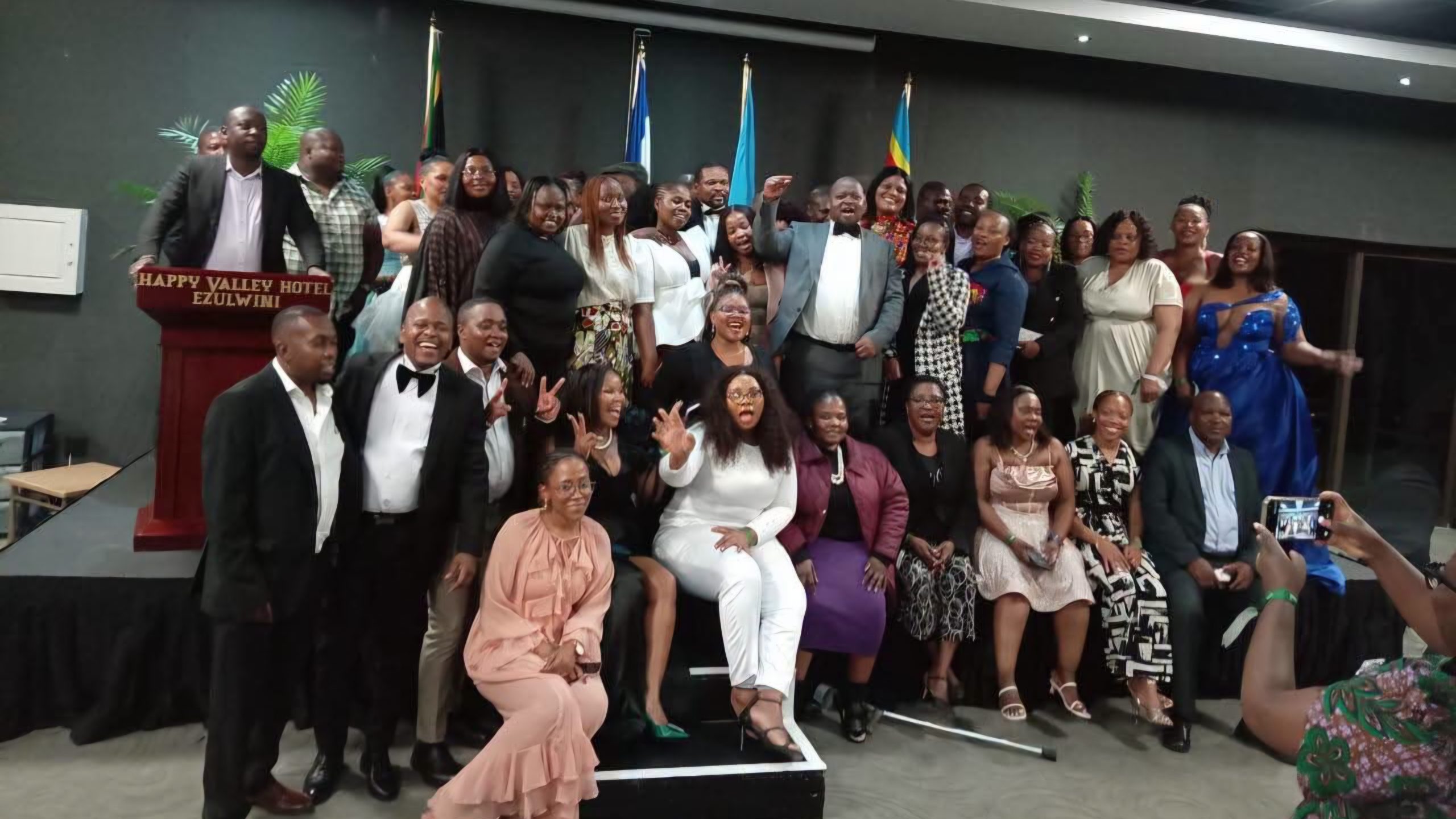
The programme concluded with a gala dinner at Happy Valley Hotel, where delegates reflected on lessons from the week and celebrated the professional relationships established during the engagement.
“Tonight we celebrate more than the end of a program. We celebrate a community of professionals bound by independence, integrity, and service to the public. Let us carry the spirit of this dinner of unity, respect, and collaboration back to our offices,” Matsebula said.
Guest of Honour and Deputy Speaker of Parliament Madala Mhlanga, who is also Chairperson of the Public Accounts Committee (PAC), praised the Office of the Auditor General for hosting the regional engagement.
He emphasised the importance of maintaining a strong, independent and adequately resourced audit institution capable of carrying out its constitutional and public accountability responsibilities.
“An effective SAI is the conscience of government. The work you do protects public resources and builds trust between citizens and the state,” Mhlanga said.
His remarks highlighted the close relationship between effective auditing and public trust, particularly because audit findings help Parliament and other oversight bodies understand how public resources are being managed.
The annual Inter-SAI Engagement Programme is hosted on a rotational basis among participating SAIs and gives institutions an opportunity to exchange experiences, learn from one another and develop practical approaches to strengthening public-sector auditing.
This year’s gathering in Eswatini also demonstrated the Kingdom’s role in facilitating regional professional cooperation on governance and accountability.
The closing dinner added a cultural dimension to the programme, with delegates experiencing African traditional music, dance and cuisine.
Auditor Generals also exchanged gifts as a gesture of partnership and appreciation, while visiting delegates expressed gratitude to SAI Eswatini for the hospitality extended to them during the programme.
By the end of the engagement, delegates left Eswatini with action plans, stronger professional networks and a shared commitment to using innovation and closer cooperation to strengthen accountability.
As Artificial Intelligence continues to reshape workplaces around the world, the discussions in Eswatini signalled that public auditing is also entering a new era — one in which technology could become an increasingly important partner in strengthening oversight, protecting public resources and supporting institutions that are more accountable and responsive to citizens.
( Courtesy Pic)