
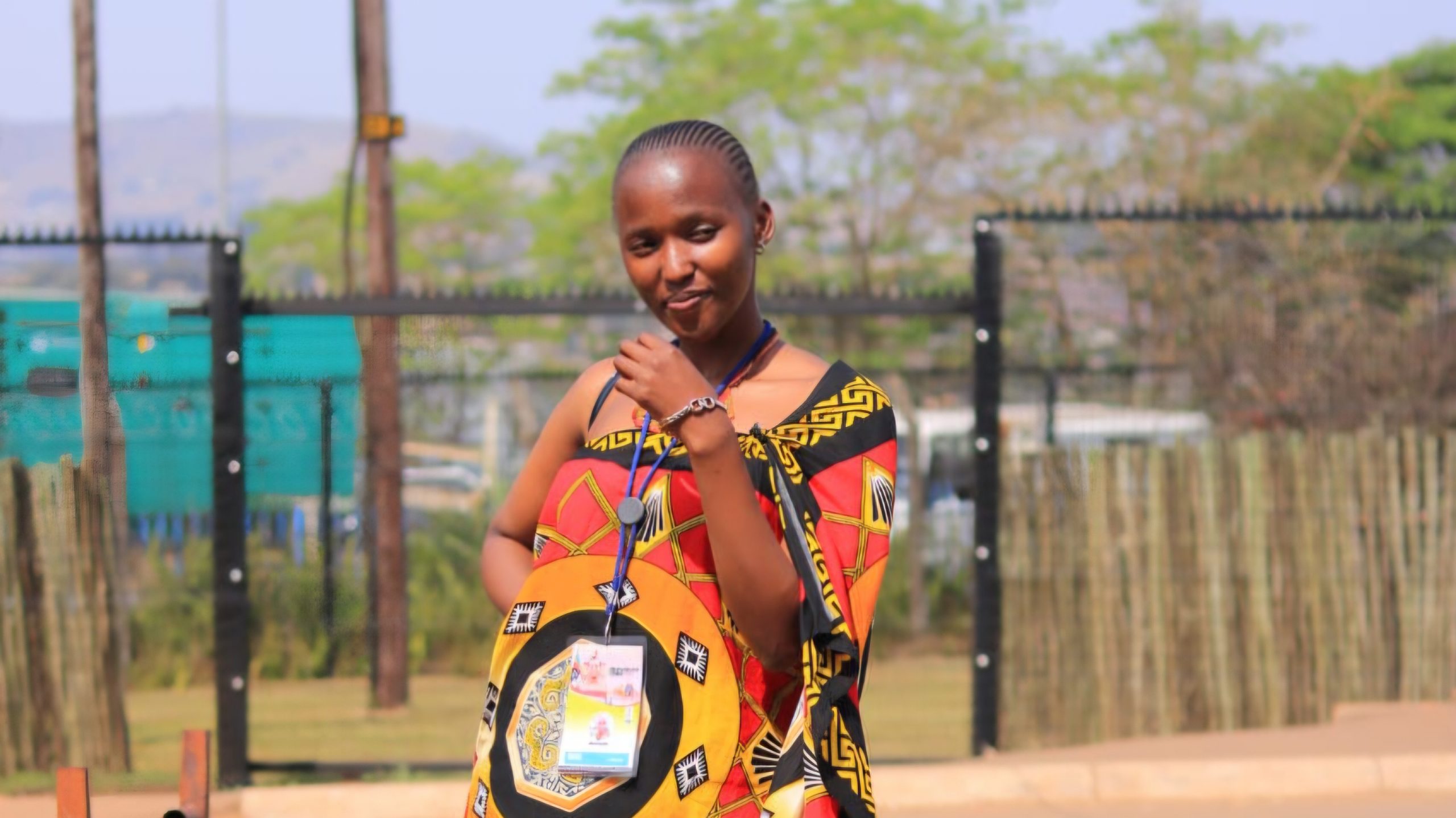

BY NOXOLO DLAMINI
PIGGS PEAK– For years, I had known Umhlanga largely through photographs, television broadcasts and social media posts—the colourful regalia, the powerful songs, the dancing maidens and the grand gathering before Their Majesties.
But Umhlanga 2026 gave me an opportunity to step beyond the screen.
For seven days, I followed Imbali through different stages of the ceremony, walking alongside them, witnessing the reed-cutting process, experiencing the exhaustion of Kushuca and eventually standing among thousands during Kugidza.
What I discovered was that Umhlanga is not simply about the final dance.

It is about the journey.
It is about endurance, community, identity and the passing of tradition from one generation to another.
THE JOURNEY BEGINS BEFORE THE DANCE
My experience started at Ludzidzini Royal Residence, where thousands of Imbali gathered.
The excitement was evident, but beneath the singing, conversations and colourful regalia was something else—a sense of responsibility. The maidens were not simply preparing for a performance. They were preparing to participate in a tradition that has become one of the most recognisable expressions of Eswatini’s cultural identity.
Following them from the beginning allowed me to see that the spectacle witnessed by thousands on the final day is actually the result of several days of preparation and movement.
The journey itself became part of the story.
WHEN THE ROAD BECAME PART OF THE CEREMONY
One of the experiences that stayed with me was Kushuca.
Walking alongside thousands of maidens gave me a completely different appreciation of the physical demands involved in Umhlanga. The roads became filled with songs, conversations and laughter, but the distance eventually began to take its toll.
My feet were tired. My back was aching. At times, the journey felt longer than expected.
Yet the energy among Imbali remained remarkable.
There was always a song, a conversation or a moment of laughter that seemed to make the journey lighter.
Then came an unexpected highlight—the arrival at Ngabezweni and the presentation of sneakers from His Majesty the King.
After spending hours walking and standing, receiving the sneakers felt particularly meaningful.
It was a practical gesture, but for me, it became a reminder that behind the grandeur of the ceremony are thousands of young women physically taking part in the journey.
Bayethe Wena Waphakathi.
MASUNDVWINI: WHERE I SAW THE WORK BEHIND THE SPECTACLE
Travelling to Masundvwini changed my understanding of reed cutting.
Away from the main stages and cameras, there were fields, reeds and maidens doing the work required to fulfil an important part of the ceremony.
We travelled to the reed-cutting area at Masundvwini Farm, where the atmosphere was filled with singing and dancing.
Her Royal Highness Princess Ntsandvweni was present, while Indvuna Yembali Mpilwende Fakudze led Imbali in walking dances and interacted with the maidens.
But beyond the colourful moments was the physical work.
The maidens had to walk to the fields, cut the reeds and eventually make the journey back.
For the first time, I fully understood that every bundle of reeds presented at Ludzidzini represents effort.
It represents a journey.
It represents hands that worked in the fields.
And it represents a tradition that continues because young people are willing to participate in it.
THE CULTURE YOU DON’T SEE ON TELEVISION
Being on the ground also made me notice details that are easily missed when watching Umhlanga through a screen.
The regalia, the headpieces, the songs, the dances and the different birth codes all carry meaning.
You begin to realise that Umhlanga is almost like a living classroom.
Nobody needs to stand before you and say, “Today we are learning about our culture.”
You learn simply by being present. You learn by watching older generations.
You learn through the songs.
You learn through participation.
And perhaps most importantly, you learn by becoming part of the journey yourself.
FROM THE FIELDS BACK TO LUDZIDZINI
When the reeds eventually returned to Ludzidzini for Kucitsa Umhlanga, I experienced the moment differently.I had seen where those reeds came from.
I had walked the roads with Imbali.
I had stood in the fields.
I had experienced the tiredness that comes with the journey.
So when the maidens paraded before Their Majesties, led by Her Royal Highness Princess Sakhizwe, Liphovela LaZuma and Indvuna Yembali Bongiwe ‘Vivane’ Hlatjwako, the presentation carried a deeper meaning for me.
I was no longer simply watching reeds being presented.
I was watching the conclusion of a journey I had personally followed.
THEN CAME THE MAIN DAY
After everything that had happened during the week, Kugidza felt different.
The moment the maidens entered the arena and the singing began, the atmosphere transformed.
Thousands of Imbali gathered together, creating an extraordinary display of colour, sound and movement before Their Majesties.
The songs also carried special significance, with numerous performances celebrating His Majesty the King’s 40 years on the throne and marking his 58th birthday.
And then came another historic moment—the sky was illuminated by fireworks, marking a first for Umhlanga and bringing the celebrations to a spectacular close.
Standing there, I found myself thinking about the road that had led to that moment.
The dancing was beautiful.
The singing was powerful.
The atmosphere was unforgettable.
But I knew that the real story had started days earlier.
UMHLANGA THROUGH MY EYES
My biggest takeaway from Umhlanga 2026 is that the Reed Dance cannot be fully understood by watching only the final performance.
You have to understand the journey.
You have to see the maidens gather.
You have to walk with them.
You have to see them in the fields.
You have to experience the tired feet and long distances.
You have to see the reeds being cut before they are presented.
Only then does the final dance begin to tell a bigger story.
For seven days, Umhlanga allowed me to move from being an observer to becoming part of the experience.
It reminded me that culture is not something preserved only in museums, books or photographs.
Culture lives when people practise it.
It lives when young people participate.
It lives when songs are passed down.
It lives when traditions are taught through experience.
And it lives when a new generation carries them forward.
Umhlanga 2026 was therefore more than a story I covered as a journalist.
It became a journey I experienced.
And after seven days, I walked away with a different understanding of the Reed Dance—not as a single spectacular day, but as a long cultural journey whose final dance is only the beginning of the story the world gets to see.
#Umhlanga2026 #UmhlangaReedDance #Eswatini #SwaziCulture #Imbali #Kugidza #KucitsaUmhlanga #Kushuca #Ludzidzini #Masundvwini #EswatiniNews #CultureAndTradition #SwaziHeritage #Siyinqaba


