



BY SIFISO NHLABATSI
MBABANE – Eswatini and India have identified significant potential to deepen cooperation in information and communication technology (ICT), with a focus on digital public infrastructure, digital payments, data exchange and digital healthcare.
This was disclosed during a ceremony where the Ministry of Information, Communication and Technology (MICT) celebrated learners who excelled during the 2026 National Science Month STEM Expo, while also highlighting Eswatini’s participation in India’s Mission ShaktiSAT programme
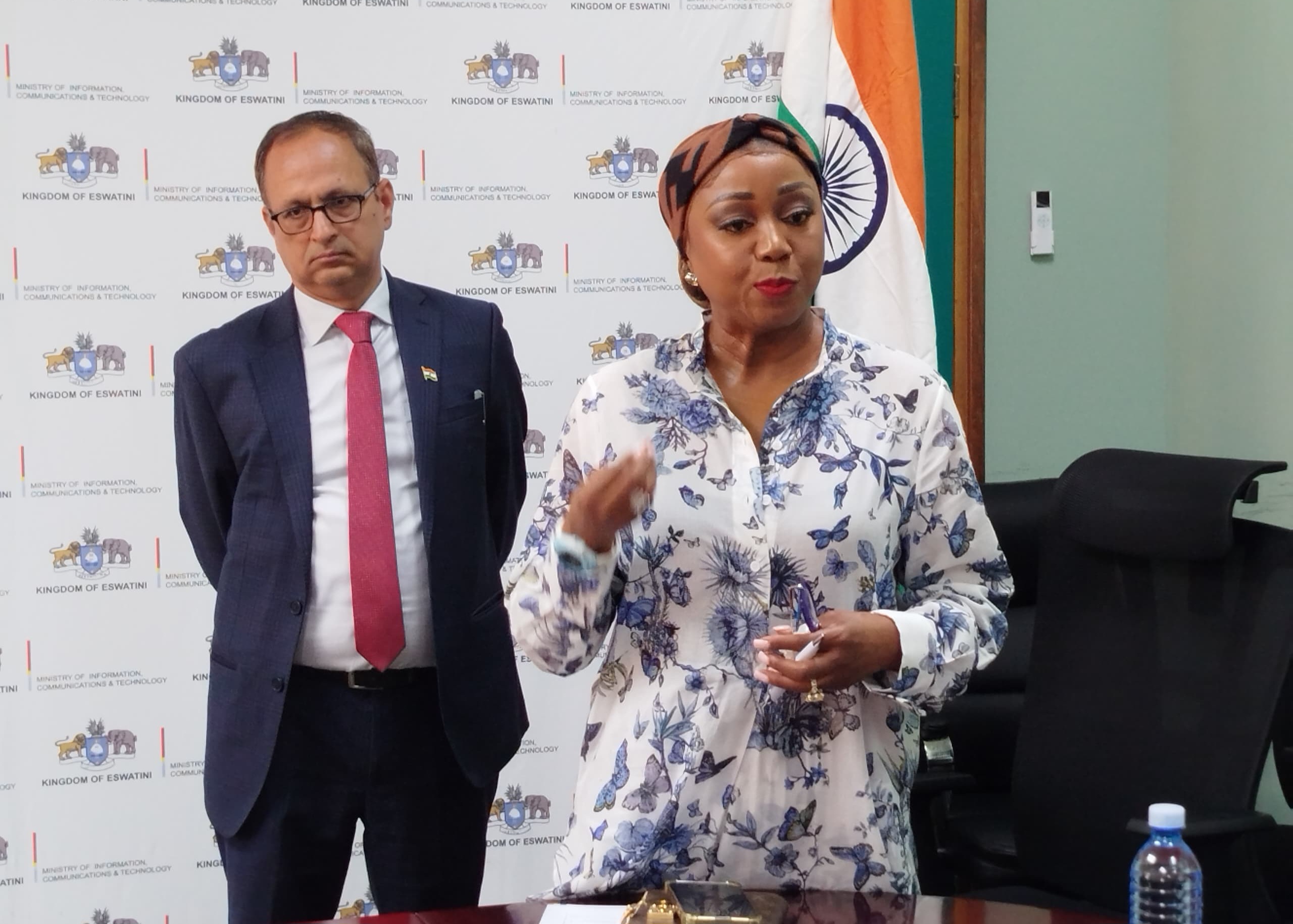
India’s Head of Chancery, Ajay Kumar Sharma, said India’s experience in developing digital systems could be adapted to Eswatini’s specific needs.
Sharma said India had developed globally recognised capabilities in areas including Digital Public Infrastructure, India Stack, digital payments, data exchange, DigiLocker, telemedicine and digital health records.
He said these technologies presented opportunities for the two countries to strengthen their existing cooperation in ICT and human-resource development.
“There is immense potential to strengthen cooperation in the field of ICT between India and Eswatini,” Sharma said.
He, however, emphasised that India’s experience should not simply be copied in Eswatini, but adapted to suit the country’s specific requirements.
“India’s experience could be adapted to Eswatini specific requirements rather than replicated as one size fits for all,” he said.
Sharma said India’s technological capabilities could complement the existing bilateral relationship between the two countries, which already includes cooperation in capacity building, education, ICT and human-resource development.
He said India’s International Technical and Economic Cooperation (ITEC) programme was among the initiatives through which the country had supported capacity building.
Sharma said the ShaktiSAT initiative had created an opportunity for young people, particularly girls, to gain exposure to satellite engineering and lunar space missions.
He said the programme brought together about 12 000 girls from more than 100 countries, reflecting its focus on empowering young women in STEM.
Eswatini was represented by Tiyandza Melokhule, who was commended for her technical aptitude and dedication.
Sharma said the initiative would help develop advanced skills among Eswatini’s young people in science, technology, engineering and mathematics.
He said the knowledge gained through the programme could be applied in areas such as telecommunications, Earth observation, environmental monitoring and aerospace engineering.
“Mission ShaktiSAT represents an important first step and launching pad for Eswatini’s emerging space aspirations,” Sharma said.
He said Eswatini’s participation also represented a new dimension of cooperation between the two countries.
According to Sharma, the initiative demonstrated India’s willingness to share knowledge and technological capabilities with its partners, while adding a forward-looking dimension to India-Eswatini bilateral relations.
He further pointed to India’s experience in digital public infrastructure as an area where cooperation could be expanded.
India Stack, digital payment systems, data exchange platforms, DigiLocker, telemedicine and digital health records, he said, were among the technologies that could provide lessons for Eswatini as it continues with its digital transformation agenda.
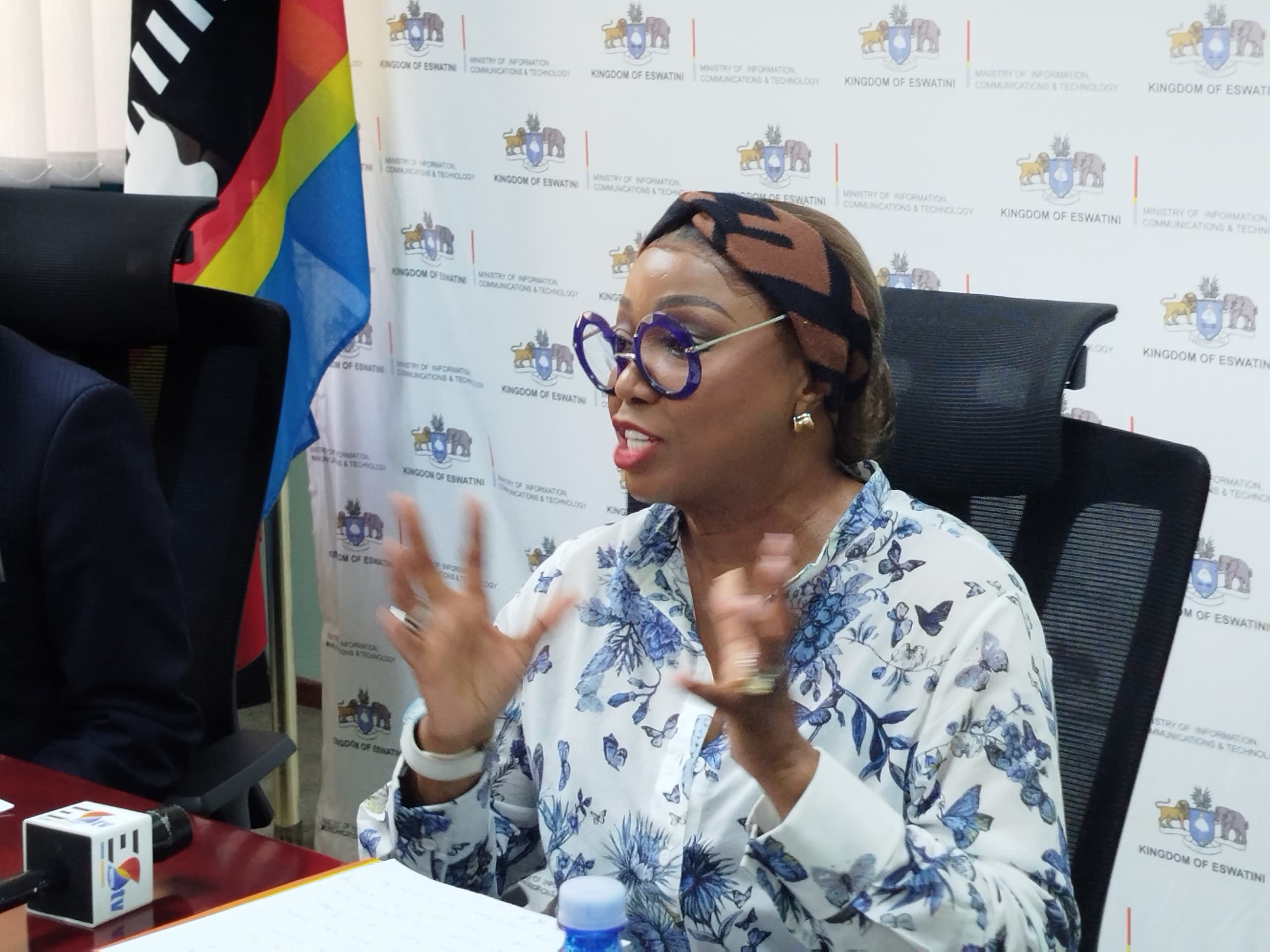
Meanwhile, Minister of ICT Savannah Maziya congratulated learners who emerged in first position during the National Science Month activities.
The minister said the achievements demonstrated the ability of emaSwati learners to compete in STEM and technology-related fields.
She said the ministry was rewarding the top-performing learners with computer tablets as part of efforts to encourage them to continue pursuing technology and STEM subjects.
The minister also welcomed back Tiyandza Ndlovu, who represented Eswatini in the ShaktiSAT programme in India.
Maziya said Ndlovu had distinguished herself by competing against young people from around the world and learning how to build a CubeSat, a type of miniature satellite.
She challenged the young STEM achiever to use the knowledge gained from the programme to empower other young people in Eswatini.
“Tiyandza, you learnt to build a satellite cube. You are now our trainer to empower other young people in Eswatini to reach for the stars,” Maziya said.
The minister said Ndlovu’s participation had raised Eswatini’s profile internationally.
“You are not only putting us on the map but also in orbit,” she said.
Maziya said the government and its partners were also investing in the future of young women by awarding five exceptional learners bursaries to study STEM and technology degrees at Botho University.
The bursaries cover 75 per cent of tuition fees.
She thanked the Indian Government, Botho University, InstaCash and Computronics for contributing towards the initiative.
The event also provided an opportunity for the Eswatini Science, Mathematics and Technology Association (ESMTA) to recognise the support provided by the MICT in the 2026 Schools STEM Expo.
STEM President Nkosikhona Nhlabatsi said the ministry’s mobilisation of resources had enabled top-performing learners from across the country to be recognised for their achievements.
Nhlabatsi said 178 schools participated across Eswatini’s four regions, with 1 899 learners taking part in the regional STEM expos.
A further 1 200 learners participated in the National Schools STEM Expo.
He said learners received tablets, certificates, trophies, medals and gift packs containing items such as earphones, stationery, mathematical instruments, string bags and water bottles.
“These awards not only recognise hard work but also inspire our young minds to leverage technology, stay curious, and pursue future careers in STEM fields,” Nhlabatsi said.
Teachers whose learners excelled were also recognised with T-shirts and mugs in appreciation of their contribution to nurturing the learners.
Nhlabatsi said the association also appreciated the ministry’s role in bringing the Minister of Science, Technology and Innovation of South Africa, Professor Blade Nzimande, to one of the regional STEM expos.
He said the participation of exhibitors, including those from South Africa, had exposed learners to STEM innovations beyond Eswatini.
The president said the regional expos held in Manzini, Hhohho, Shiselweni and Lubombo, followed by the national finale at the University of Eswatini, demonstrated the value of cooperation between government, educational institutions and teachers.
#Eswatini #India #ICT #Technology #STEM #DigitalTransformation #DigitalInnovation #IndiaEswatiniRelations #STEMEducation #YouthInSTEM #ScienceAndTechnology #ShaktiSAT #MICT #ESMTA