


BY LINDELWA MYENI
MBABANE – Eswatini Government, in partnership with the Food and Agriculture Organization of the United Nations (FAO), SADC Secretariat and the European Union (EU), has strengthened efforts to protect the country’s banana industry through specialised training on the surveillance and management of Fusarium Wilt.
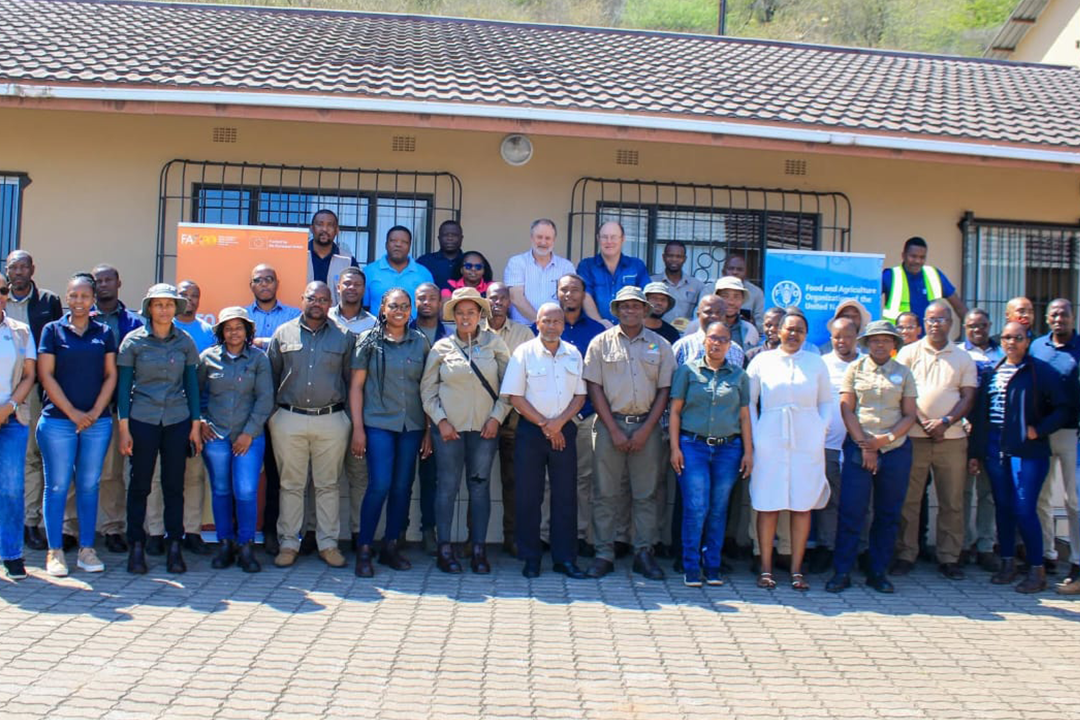
The training was held on 15 September 2026 and brought together the National Plant Protection Organisation (NPPO) and relevant stakeholders to strengthen their ability to detect, identify and manage the disease before it threatens local banana production.
The initiative is particularly important as Eswatini is the third-largest producer and exporter of bananas in the SADC region, according to NPPO for Eswatini Patrick Nzima.
Nzima said the importance of the banana value chain made disease surveillance a critical part of protecting the industry, adding that Fusarium Wilt had not yet been detected in Eswatini.

Although the disease has not been detected in the country, Government is taking preventive measures to reduce the risk of a potential outbreak through farmer training, awareness campaigns and enhanced surveillance.
The training, conducted with support from Prof. Altus Viljoen of Stellenbosch University, one of the STOSAR II Project’s Centres of Excellence, focused on improving the recognition and management of Fusarium Wilt.
Viljoen said the training was aimed at preparing the NPPO and smallholder farmers to identify and manage the disease early, particularly as Fusarium Wilt has affected parts of neighbouring countries.
“Fusarium Wilt has affected some parts of our neighbouring countries, and it is important that the NPPO and smallholders are trained on the surveillance of this disease,” said Viljoen.
He said the training focused on prevention, early detection and management to help prevent the spread of the disease.
The capacity-building programme also seeks to strengthen Eswatini’s national surveillance system to international standards, including improving the identification of Fusarium Wilt through molecular techniques.
The information generated through surveillance will support the development of national and regional control strategies, allowing available resources to be directed towards measures with the greatest impact.
The programme further promotes the use of microorganisms in combating the disease, while encouraging producers to adopt stronger biosecurity measures and agricultural practices focused on soil management and plant nutrition.
The FAO will continue supporting knowledge sharing and cooperation in the development and implementation of strategies to combat Fusarium Wilt, including efforts to mobilise resources and strengthen public-private partnerships for prevention.
#FusariumWilt #BananaProduction #Biosecurity #CapacityBuilding #Agriculture #Eswatini