


BY SIFISO NHLABATSI
MBABANE – The Municipal Council of Mbabane has closed the 2025/26 financial year with a E6.88 million surplus, alongside improved cash reserves, stronger rates collection and positive assessments in procurement and governance.
The results were presented during Council’s Annual General Meeting (AGM) held at Emafini Country Lodge on Friday.
The AGM brought together Council leadership, councillors, management, stakeholders and residents to review the municipality’s performance and financial stewardship for the financial year ended March 2026.
The presentation of the Annual Performance Report and Audited Financial Statements provided an account of the municipality’s financial position, procurement activities, governance performance and various service-delivery interventions undertaken during the year.

The headline financial result was the E6.88 million surplus, an improvement of 15 per cent from the E5.98 million recorded in the previous financial year.
Council generated total income of E176.02 million, compared to E167.08 million in 2025, representing growth of approximately five per cent.
Private rates remained the largest source of income, contributing E91.59 million, equivalent to 52 per cent of total income.
Government rates contributed another E67.90 million, while rates penalties and interest amounted to E5.41 million.
Other operating income contributed E11.12 million, including E4.41 million from refuse collection.
The financial position was further strengthened by an increase in cash and cash equivalents.
Council’s cash and cash equivalents increased from E65.64 million to E75.93 million, representing a 16 per cent increase over the previous financial year.
The municipality also generated E31.11 million in net operating cash inflows, compared to E35.24 million in 2025.
At the same time, Council reduced its finance costs from E3.46 million to E2.37 million, while finance income increased significantly from E6.82 million to E10.32 million.
The increase in finance income represented a 51 per cent improvement.
Council also ended the year with a stronger cash-cover position, improving from four months to five months.
The municipality’s current rates collection performance also improved from 82 per cent to 83 per cent.
During the year, Council recovered more than E67 million in outstanding rates, demonstrating increased efforts to improve revenue collection.
Government accounted for more than E54 million of the recovered arrears, while private ratepayers accounted for more than E13 million.
Council recorded 490 payment arrangements with ratepayers, with a 99 per cent compliance rate.
These arrangements covered approximately E19.8 million.
The municipality also resolved 33 disputed accounts amounting to E233 000.
To improve communication with ratepayers, Council sent more than 56 000 SMS reminders, while 4 612 e-statement accounts were recorded and 519 enquiries were resolved.
Despite the improvement in collection, the financial statements show that rates arrears remain an area requiring continued attention.
Outstanding rates stood at E110.74 million at the end of the financial year.
Private rates accounted for E59.37 million, while Government rates stood at E51.37 million.
Council reported that E28 million in outstanding rates had been handed over for legal collection after internal collection efforts had been exhausted, in accordance with the Rating Act.
On expenditure, operating costs increased from E164.46 million to E177.10 million.
Personnel costs amounted to E60.70 million, while depreciation was recorded at E16.04 million.
Other operating costs amounted to E100.36 million.
This included E21.90 million for road rehabilitation and drainage, E19.79 million for waste management, security, cemeteries and markets, and E12.31 million for utilities.
A further E7.15 million went towards town planning, community and public health programmes.
Council’s non-current assets remained relatively stable at E604.17 million, while financial assets increased by 10 per cent to E30.68 million.
The municipality also reduced its borrowing exposure, with borrowings as a percentage of assets declining from 3.4 per cent to 2.1 per cent.
The financial statements received an unqualified audit opinion.
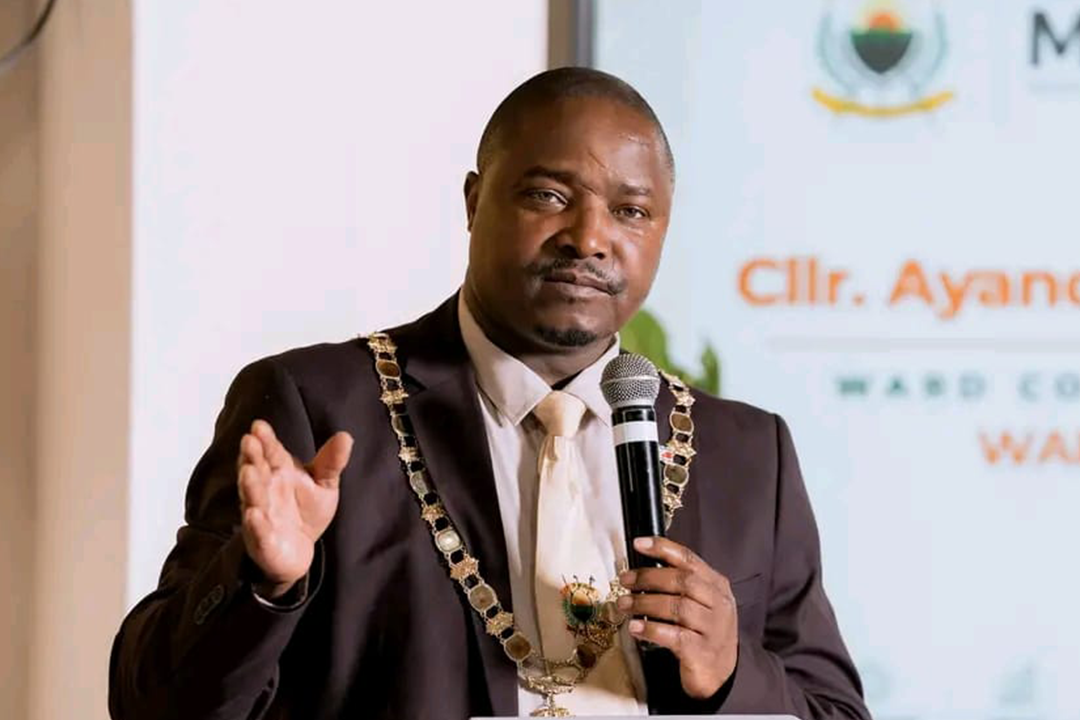
Mayor Thulani Mkhonto said the financial statements reflected Council’s commitment to sound financial management and regulatory compliance.
“I am especially honoured to announce that the audited financial statements we are presenting to you today have been officially reviewed and approved by the Minister for Housing and Urban Development,” Mkhonto said.
He said the milestone underscored Council’s commitment to “sound financial management, regulatory compliance, and good governance.”
Mkhonto said Council’s mission remained focused on sustainable development, improved municipal service delivery, transparency and accountability.
“As custodians of our beloved capital city, our primary mission remains steadfast: to drive sustainable development, enhance municipal service delivery, and uphold absolute transparency and accountability in all our operations,” he said.
PROCUREMENT PERFORMANCE HITS 91 PER CENT
Procurement emerged as another strong area of performance, with the Municipal Council of Mbabane recording a 91 per cent procurement performance during the financial year.
The figure was presented as part of Council’s Annual Performance Report, alongside details of the municipality’s procurement activities during the year.
Council had an approved annual procurement plan valued at E164 million.
During the financial year, the municipality processed 11 competitive tenders valued at E54 million.
It also processed 3 690 quotations worth more than E73 million.
In addition, Council paid 894 invoices totalling E96 million during the year.
The figures provide an indication of the scale of procurement activity undertaken by the municipality in support of its operations and service-delivery programmes.
Procurement formed part of a broader governance assessment in which Council recorded a 93 per cent governance performance assessment.
The governance assessment covered a number of areas, including effective political leadership, conflict management, relationship management and compliance with Council standing orders on conduct.
It also assessed procurement management, performance management systems, competency-based recruitment of Council management, as well as land and human settlements management.
The municipality recorded an 90 per cent organisational assessment, according to an independent organisational audit.
The procurement performance comes against a financial year in which Council spent significant amounts on infrastructure and municipal services.
Road rehabilitation and drainage accounted for E21.90 million under other operating costs.
Waste management, security, cemeteries and markets accounted for another E19.79 million, while utilities consumed E12.31 million.
Council also spent E7.15 million on town planning, community and public health programmes.
The procurement figures therefore form part of the municipality’s wider financial and operational activity during the year.
Council’s performance in this area is particularly significant given that the municipality’s approved procurement plan amounted to E164 million.
The 91 per cent performance indicates that the majority of the planned procurement activity was completed during the reporting period.
The AGM provided an opportunity for the municipality to account publicly for this expenditure and procurement activity.
The presentation also highlighted the municipality’s efforts to strengthen administrative processes and maintain compliance across its operations.
MUNICIPALITY RECORDS 93 PER CENT GOVERNANCE PERFORMANCE
Leadership and governance formed the third major pillar of Council’s performance presented at the AGM.
The municipality recorded a 93 per cent governance performance assessment, covering several aspects of its political and administrative leadership.
Among the areas assessed were effective political leadership, conflict management, relationship management and compliance with Council standing orders on conduct.
The assessment also considered procurement management, performance management systems, competency-based recruitment of Council management, and land and human settlements management.
Council’s 90 per cent organisational assessment, conducted through an independent organisational audit, provided another measure of its overall institutional performance.
Mayor Mkhonto used his AGM address to emphasise the importance of leadership in ensuring that Council remained accountable to residents and stakeholders.
He said the municipality’s responsibilities extended beyond financial management to sustainable development and service delivery.
“Today’s report reflects the culmination of our collective efforts, balancing our strategic objectives with fiscal prudence,” Mkhonto said.
He said the municipality continued to work towards building a resilient and thriving Mbabane through cooperation between Council, management, staff, residents and stakeholders.
“Through the dedicated efforts of our council, management, and staff, and the invaluable partnership of you, our residents and stakeholders, we continue to build a resilient, thriving Mbabane,” he said.
The municipality’s leadership and governance performance was also reflected in a number of operational initiatives undertaken during the year.
One of the notable developments was the installation of a 5G network and 60 security cameras in the Central Business District.
The cameras are linked to a nerve centre or control room equipped with what Council described as state-of-the-art equipment.
According to the municipality, the facility is manned by members of the Royal Eswatini Police Service, with reports generated daily.
The initiative represents an intersection between municipal administration, technology and public safety, with the system intended to strengthen surveillance within the city.
Another area highlighted was liquor regulation.
Council reported that there were 103 licensed liquor outlets across the city.
Of these, 41 were described as non-conforming because they were located within residential areas.
The disclosure forms part of Council’s wider responsibility for regulating activities within the municipality and managing issues affecting residents and communities.
Mkhonto said the meeting was an opportunity for Council to reflect on achievements, account for resources and look ahead to priorities that would shape the city’s development.
He said Council remained committed to its vision of “Mbabane – The Nation’s Smart Capital.”
The financial year therefore ended with Council reporting a E6.88 million surplus, increased cash reserves, improved rates collection, a 91 per cent procurement performance and positive assessments of its governance and organisational systems.
For the municipality, the AGM served as both a reporting platform and an opportunity to engage residents and stakeholders on the performance of the capital city.
The presentation by Council placed the financial results alongside procurement, governance, technology, revenue collection and service-delivery interventions, giving stakeholders a broader picture of Council’s performance during the year ended March 2026.
Mkhonto said the continued participation of residents and stakeholders remained important as Mbabane pursued its development agenda.
#Mbabane #NationSmartCapital #AGM2026 #Accountability #GoodGovernance #Procurement #MunicipalPerformance #Mbabane #EswatiniPositiveNews