


By NOXOLO DLAMINI
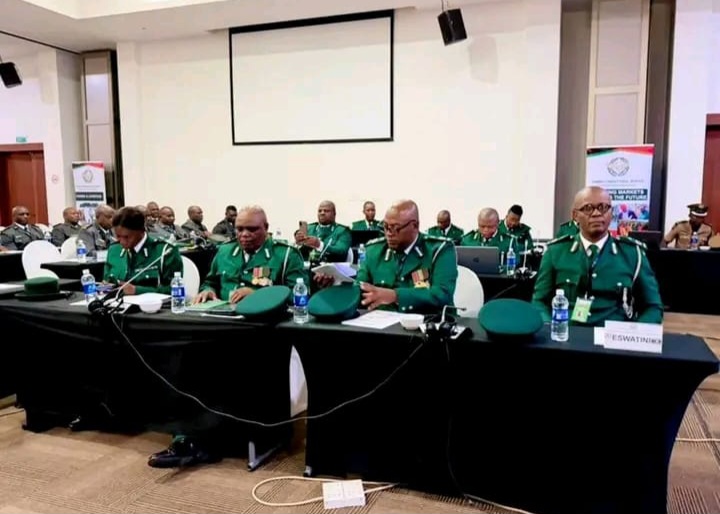
PIGG’S PEAK – Correctional services stakeholders from across the Southern African Development Community (SADC) region have converged in Zambia for a Peer-to-Peer Interaction Workshop aimed at strengthening correctional systems through the exchange of knowledge, experience and innovative practices.
Eswatini is participating in the regional workshop held under the theme, “Transforming Correctional Systems for Sustainable Development: Promoting Agriculture, Rehabilitation, Economic Empowerment and Community Resilience across the SADC Region.”The engagement provides an opportunity for participating countries to share practical approaches to correctional management while exploring ways of preparing offenders for productive lives beyond incarceration.
The workshop brings together correctional services stakeholders to examine how correctional institutions can move beyond the traditional function of confinement and play a broader role in rehabilitation, skills development, economic empowerment and community development.
A major focus of the engagement is the use of agriculture and skills development as tools for rehabilitation and empowerment. Participants are interrogating how correctional institutions can equip offenders with practical skills that can contribute to their livelihoods and improve their prospects of reintegration once they return to their communities.

The discussions also place emphasis on reintegration and community resilience, recognising that successful rehabilitation does not end when an offender leaves a correctional facility. Effective reintegration requires individuals to have the skills, support and opportunities necessary to rebuild their lives and contribute positively to their communities.
For Eswatini, participation in the workshop provides a platform to share its own experiences and practical lessons in correctional management while learning from the approaches being implemented by other SADC countries.
The peer-to-peer nature of the engagement allows participating countries to compare experiences, identify common challenges and explore solutions that can potentially be adapted to their respective correctional environments.
The workshop is therefore not limited to discussions, but seeks to develop actionable pathways for strengthening correctional systems across the region. Particular attention is being given to approaches that uphold human dignity while supporting rehabilitation and preparing offenders for meaningful participation in society.
The regional exchange also highlights the potential role of strategic partnerships with communities and other stakeholders in supporting rehabilitation. Stronger collaboration can help create opportunities for skills development, productive activities and reintegration, while also contributing to safer and more resilient communities.
The gathering in Zambia underscores the importance of regional cooperation in addressing challenges facing correctional services. While countries may have different correctional structures and experiences, the peer-learning approach creates an avenue for sharing practical lessons and identifying areas of common interest.
For Eswatini, the workshop is an opportunity to cross-pollinate ideas—contributing its experiences to the regional conversation while drawing lessons from neighbouring countries that could inform future correctional practices.
Ultimately, the engagement seeks to strengthen correctional systems that do more than confine offenders. It places rehabilitation, productivity, dignity, economic empowerment and successful reintegration at the centre of correctional transformation.
The workshop demonstrates the principle that correctional transformation can be strengthened when countries learn from one another, share practical experiences and work collectively towards sustainable solutions.
#Eswatini #SADC #CorrectionalServices #CorrectionalTransformation #Rehabilitation #Agriculture #SkillsDevelopment #EconomicEmpowerment #CommunityResilience #Reintegration #Zambia #SADCRegion