


BY MBONGENI NDLELA
NEW YORK, USA – His Majesty King Mswati III has challenged the international community to confront one of the longest-running questions in United Nations reform: how much longer Africa must remain without permanent representation on the UN Security Council.
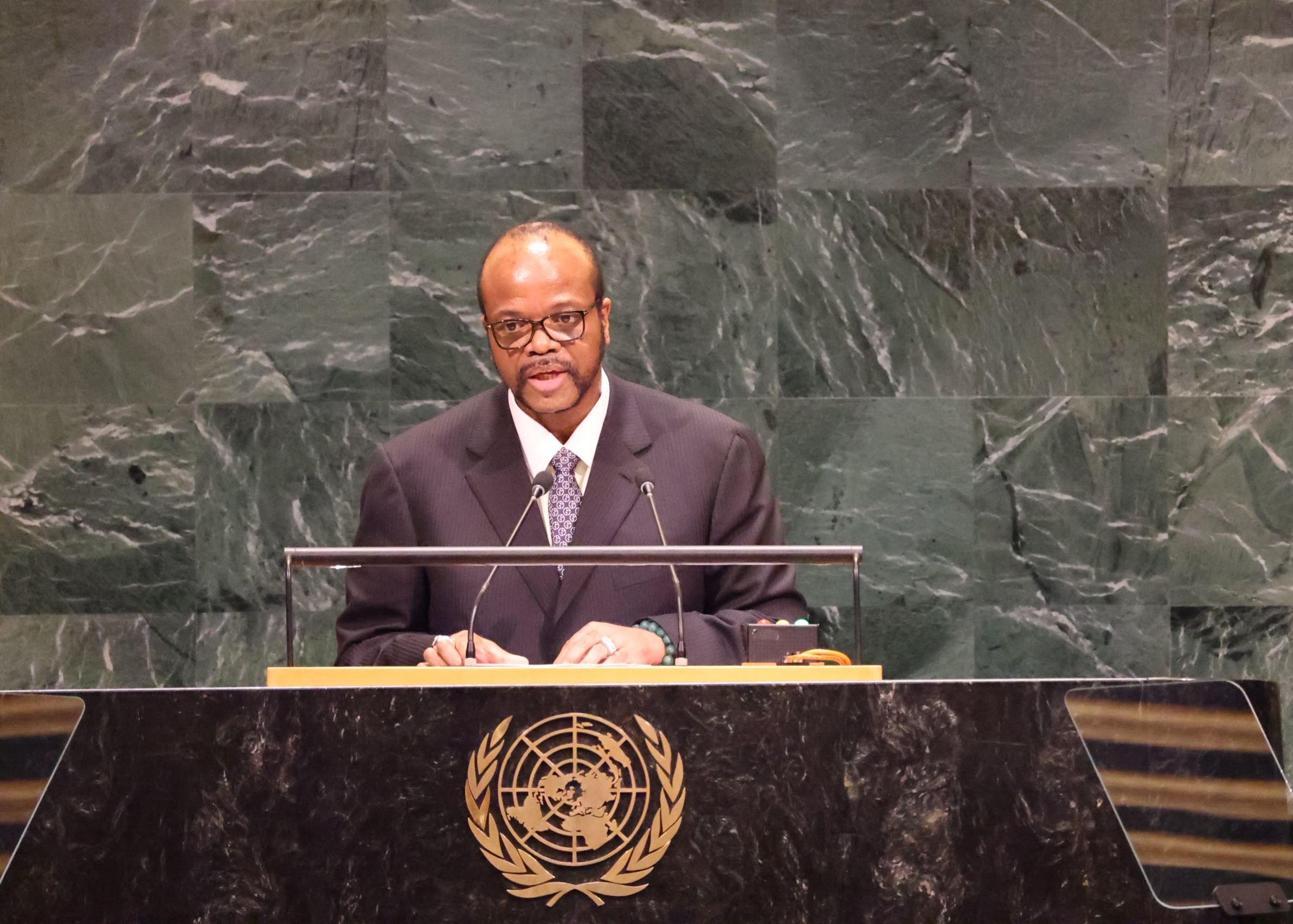
Addressing the 81st Session of the United Nations General Assembly in New York last night, the King tied Africa’s demand for a stronger voice in global security decisions to the wider question of whether the multilateral system can still command the trust of developing nations.
“The question is how many more years should African leaders travel to New York and stand before this Assembly to call for a fair representation in the UN Security Council?” His Majesty asked.
He said Africa remained a strategic global partner, yet the continent still had no permanent seat on the Security Council despite years of calls for reform.

“Mr. President, we are being deprived of the opportunity to contribute to global security issues,” the King said.
The intervention came as the General Assembly meets under the theme, “Restoring Trust, Managing Transformation: A United Nations That Delivers for All.”
His Majesty said the theme went to the heart of two questions facing the world: whether trust could be restored in collective institutions and whether major global transformations could be managed without leaving countries and people behind.
For the King, rebuilding trust would require more than fresh declarations from international platforms. It would require delivery on commitments already made.
“Restoring trust cannot be achieved through declarations alone. It requires that promises already made be honoured,” he said.
His Majesty said developing countries continued to face major financing challenges in their efforts to achieve the Sustainable Development Goals, while some governments were under heavy pressure from debt-servicing costs.
He also pointed to unfulfilled financing pledges as one of the factors weakening confidence in multilateral cooperation.
The King’s argument was that global institutions would be judged not only by what they promised, but by whether those promises changed the lives of ordinary people.
He said the real test of international cooperation was whether a child in a conflict-affected community could live without fear, whether a young person could secure decent employment, whether a family could afford food and whether a developing country could access finance to build its future.
That people-centred test, he suggested, should also guide the debate over institutional reform.
Africa’s representation, the King said, was not simply a matter of prestige. The continent was directly affected by conflict, humanitarian crises, climate shocks, economic pressures and security challenges, and therefore needed a meaningful role in decisions dealing with international peace and security.
His Majesty also warned that the cost of conflict extended far beyond the battlefield. Wars, he said, destroyed infrastructure, displaced communities, diverted resources from development, disrupted supply chains and contributed to higher energy and transport costs.
The King called for renewed faith in dialogue, diplomacy and international cooperation, while stressing that all member states, whether large or small, should have a voice.
“The United Nations must remain a house where every nation, large or small, has a voice and where the sovereignty and dignity of all member states are fully respected,” he said.
His Majesty concluded that Eswatini stood ready to work with other member states, the UN system, regional organisations and international partners to advance peace, dialogue, sustainable development and human dignity.
His message placed a direct question before the world body: if trust is to be restored, can a global institution built to represent nations continue postponing Africa’s demand for a permanent voice at the table where some of the world’s most consequential security decisions are made?