


BY GCWALISILE MHLABANE
MANZINI- Eswatini’s literacy rate has reached 90%, with increased access to education through government programmes such as Free Primary Education (FPE) and support for Orphans and Vulnerable Children (OVC) contributing to the country’s progress.
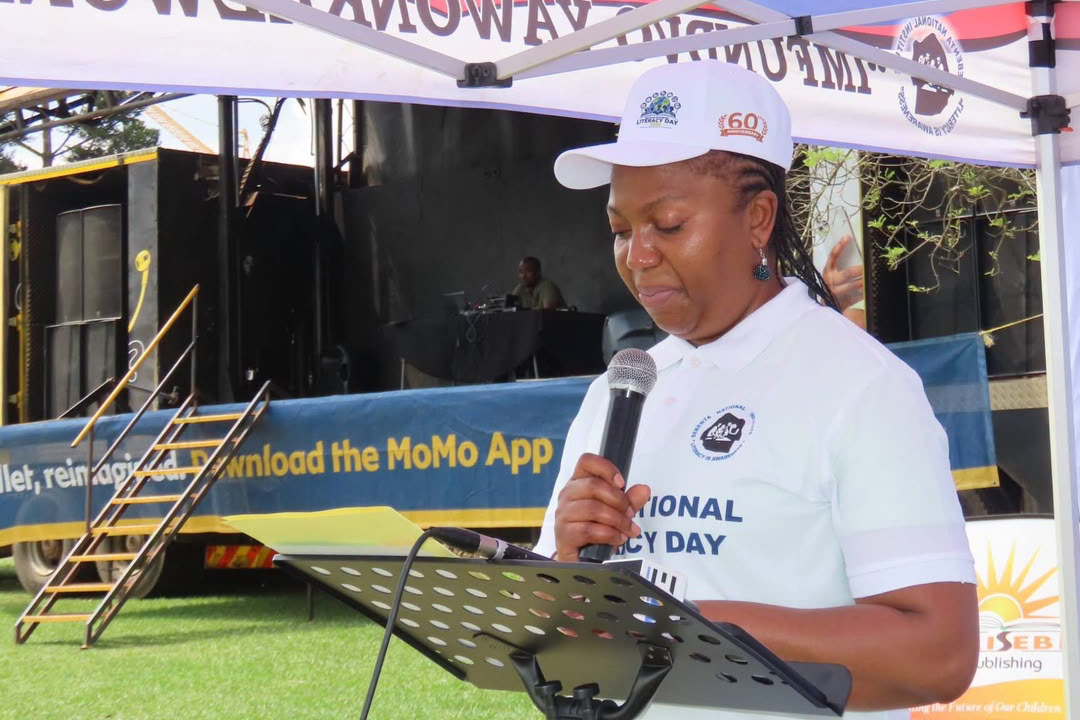
The achievement was highlighted during Eswatini’s International Literacy Day commemoration held at Millennium Park in Manzini on September 24, 2026, bringing together government officials, education stakeholders, development partners and other key players in the education sector.
The 2026 event marked the 60th global International Literacy Day, observed internationally on September 8. In Eswatini, literacy activities are held throughout September to engage practitioners, policymakers, partners and communities on the importance of literacy.
This year’s global theme is “Literacy for People, the Planet and Prosperity.”

Acting Principal Secretary in the Ministry of Education and Training Nanikie Mnisi said the country’s progress reflected sustained government investment in education.
“As a result, today our literacy rates stand at around 90%,” Mnisi said.
She identified Free Primary Education and OVC grants among the interventions that have expanded access to education and created opportunities for more Emaswati to acquire foundational skills.
Mnisi described literacy as more than the ability to read and write, saying it provides the foundation for acquiring knowledge, skills, values, attitudes and behaviours needed to participate fully in society.
“Literacy is not only a fundamental right for all but is an enabler for citizens to enjoy all the other human rights,” she said.
The ministry is also broadening its approach to literacy to respond to the demands of a rapidly changing world.
Mnisi said a literate individual should be able to function effectively in different environments, read with understanding, critically analyse simple numbers and data, and apply knowledge in practical situations.
The approach now incorporates digital, media, information, visual, critical and tool literacy, alongside traditional reading and writing skills.
The ministry continues to provide learning opportunities through formal education and training, as well as non-formal and continuing education and training programmes.
Mnisi also commended Sebenta National Institute for its contribution to non-formal and continuing education, as well as vocational skills training.
She said these programmes provide additional pathways for people to continue learning and develop practical skills beyond the formal education system.
Mnisi thanked partners and stakeholders for their continued contribution to education initiatives, stressing that collaboration remains important in sustaining progress.
The commemoration placed literacy within a broader development agenda, highlighting the role of education in opening opportunities, strengthening participation in society and equipping Emaswati with skills relevant to a changing world.
#InternationalLiteracyDay #Eswatini #Literacy #Education #FPE #OVC #EducationForAll
(Courtesy Pic)