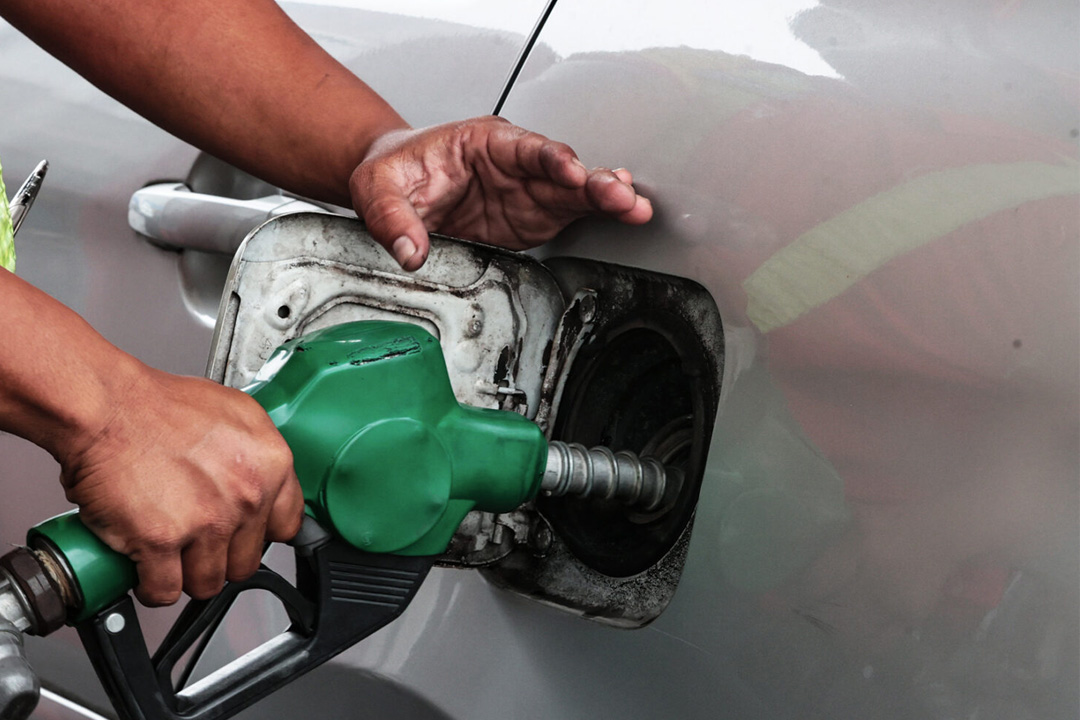



… Consumers face fresh transport, food and business cost pressure as petrol reaches E29.40 per litre
BY MBONGENI NDLELA
MBABANE– Emaswati will wake up to significantly higher fuel prices on Friday after Government announced one of the sharpest increases motorists and businesses have faced in recent months, with petrol and illuminating paraffin rising by E3.43 per litre.
The Ministry of Natural Resources and Energy announced on Wednesday that new fuel prices will take effect from midnight on Thursday, 1 October 2026, effectively applying from Friday, 2 October.
Under the adjustment, Unleaded Petrol 95 will climb from E25.97 to E29.40 per litre, while diesel will increase from E28.85 to E32.25 per litre. Illuminating paraffin will rise from E21.73 to E25.16 per litre.

For ordinary consumers, those figures are more than numbers displayed on a filling station pump. They potentially mean higher commuting costs, more expensive transport for goods and additional pressure on household budgets already stretched by food, electricity, rent and other necessities.
The Government’s explanation is that Eswatini is being hit by international forces largely beyond its control.
According to the ministry, international crude oil prices averaged US$102 per barrel in September, compared with US$89 per barrel in August — an increase of US$13 per barrel in just one month.
The ministry attributes the sharp rise to persistent geopolitical tensions that have restricted shipping through strategically important routes including the Strait of Hormuz and Bab al-Mandab Strait.
It also cited attacks on Russian refineries linked to the war in Ukraine, saying these developments have contributed to tighter global fuel supplies while pushing up security, transportation and insurance costs.
At the same time, the Lilangeni weakened marginally against the United States dollar. The exchange rate averaged E16.18 to the dollar in September, compared with E16.14 in August.
Because international petroleum products are largely priced in US dollars, even a weaker local currency can increase the amount required to purchase fuel internationally.
GLOBAL CRISIS NOW REACHES LOCAL POCKETS
Government’s explanation highlights an uncomfortable reality for Eswatini: although geopolitical conflicts may be happening thousands of kilometres away, their economic consequences can quickly arrive at a filling station in Mbabane, Manzini, Nhlangano or Pigg’s Peak.
That is precisely why the latest increase deserves discussion beyond simply announcing new pump prices.
A rise of E3.43 per litre for petrol means that filling a 50-litre tank will now cost about E171.50 more than before. A motorist buying 50 litres of petrol will pay around E1470, compared with approximately E1298.50 under the previous price.
For families who depend on private vehicles to travel to work, schools, hospitals or businesses, the additional expenditure could become considerable over the course of a month.
The consequences may be even wider for businesses.
Fuel is embedded throughout the economy. Farmers need diesel to operate machinery and transport produce. Retailers depend on trucks to move goods. Public transport operators rely heavily on fuel. Construction companies, delivery businesses and manufacturers all face transport or machinery costs that are influenced by petroleum prices.
When fuel becomes substantially more expensive, businesses are often confronted with a difficult choice: absorb the additional cost and reduce their margins, or pass some of it on to customers.
That is where the potential inflationary impact becomes important.
A fuel increase does not necessarily mean every commodity must immediately become more expensive. Businesses have different cost structures and pricing arrangements. However, prolonged high fuel prices can add pressure to transport and production expenses, eventually affecting the prices consumers pay.
GOVERNMENT’S CASE HAS MERIT — BUT PUBLIC NEEDS CLARITY
There is a strong economic argument behind Government’s decision to adjust fuel prices when international petroleum costs rise.
Artificially holding domestic fuel prices below their real import cost for extended periods would eventually require the difference to be financed somehow — whether through public resources, accumulated under-recoveries or future adjustments.
Regular price adjustments therefore allow domestic prices to reflect international market conditions.
But transparency becomes even more important when increases are this substantial.
There is, notably, an apparent discrepancy in the figures contained in the ministry’s press release.
The statement says Unleaded Petrol, Diesel 50ppm S and Illuminating Paraffin will all increase by E3.43 per litre.
The individual prices provided, however, show diesel moving from E28.85 to E32.25 per litre, which mathematically represents an increase of E3.40, not E3.43.
The petrol figures — E25.97 to E29.40 — reflect an E3.43 increase, while illuminating paraffin moving from E21.73 to E25.16 also represents E3.43.
The three-cent difference on diesel may appear small, but official fuel price announcements affect virtually every sector of the economy and should therefore leave no room for uncertainty. Clarification from the ministry on the diesel adjustment would help ensure motorists and fuel retailers work from the same figures.
EFFICIENCY NOW MORE IMPORTANT
The ministry has urged members of the public to use fuel efficiently, warning that both international oil markets and the Lilangeni-Dollar exchange rate remain volatile.
That message is increasingly important.
Motorists can reduce unnecessary trips, combine errands, maintain correct tyre pressure and keep vehicles properly serviced. Businesses dependent on transport may also have to review routes, fleet efficiency and fuel consumption more closely.
Yet efficiency alone cannot completely shield households from international price shocks.
The latest adjustment also strengthens the case for the country to continue examining measures that reduce its long-term vulnerability to imported energy shocks, including greater energy diversification and improved transport efficiency.
Eswatini cannot control the price of crude oil, determine the value of the US dollar or end conflicts affecting international shipping.
What it can control is how efficiently energy is consumed, how transparently fuel adjustments are communicated and how seriously the economy prepares for recurring international shocks.
For now, motorists have only hours to adjust.
From Friday, petrol will cost E29.40 per litre, diesel E32.25 per litre and illuminating paraffin E25.16 per litre.
The geopolitical crisis may be global, but from this week its impact will be counted locally — one litre, one trip and one household budget at a time.
(Courtesy Pic)