



BY SIFISO NHLABATSI
LOBAMBA – State-owned entities (SOEs) could access loans and short-term financial advances of up to E200 million at a time following the adoption of the State-Owned Entities Loan and Guarantee Special Fund Regulations, 2026, by the House of Assembly.
The regulations are intended to broaden the purpose of the Public Enterprises Loan Guarantee Fund to allow direct lending to eligible state-owned entities, provide advances and support capacity building within the Public Enterprises Unit (PEU).
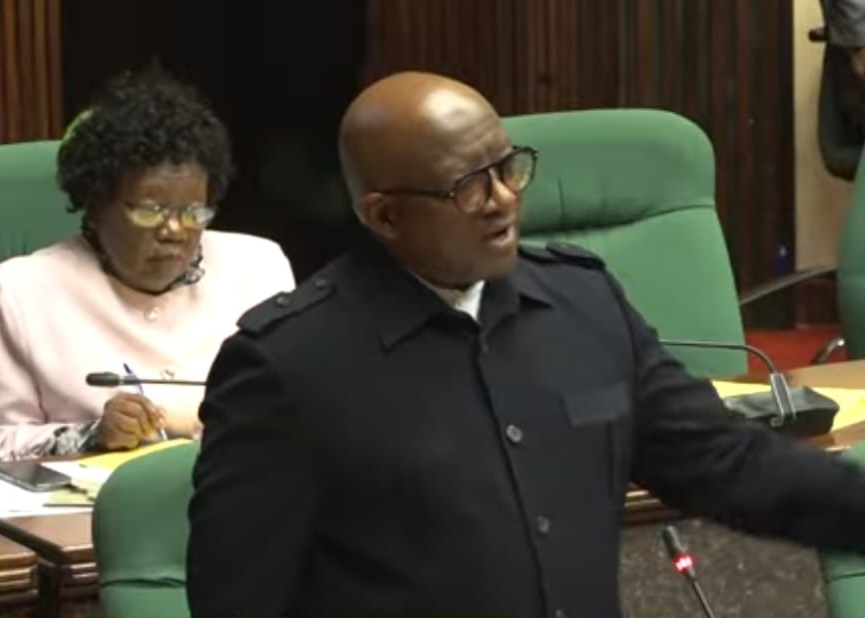
Presenting the Finance Committee report, Chairperson and Lobamba Lomdzala MP Marwick Khumalo explained that the E200 million threshold was a mandatory ceiling designed to ensure financial control over the issuance of public funds to state-owned entities.
He clarified that the amount represented the maximum an entity could receive at any one time, providing a safeguard against excessive financial exposure.

The regulations were tabled in the House on September 28, 2026, before being referred to the Finance Committee for scrutiny. The committee held a workshop on September 29, followed by a clause-by-clause review during which several amendments were proposed.
The report was adopted by the House of Assembly on Wednesday.
One of the major changes was the removal of grants as a form of financial assistance. The committee argued that government currently lacked the financial capacity to sustain grants from the fund.
It also raised concerns about the absence of transparent criteria for selecting grant beneficiaries, warning that this could create opportunities for arbitrary allocations and administrative abuse.
Instead, the committee recommended short-term advances that eligible entities would be required to repay within the same financial year.
The revised regulations also strengthen parliamentary oversight over the use of public funds. Loans, advances and guarantees recommended by the State-Owned Entities Special Fund Committee and authorised by Cabinet will require approval from the Finance Committee.
The committee will also report these transactions to the House, providing Parliament with an additional layer of scrutiny over government financial commitments.
Under the amended provisions, loans and advances may be used for capital investment, infrastructure development, working capital directly linked to an approved project and government-approved business restructuring.
However, the money may not be used to pay dividends, penalties, fines or speculative investments. Recurrent expenditure is also excluded unless expressly approved.
The regulations further provide for guarantees to be issued only where the borrower can service the debt, the transaction is financially viable and the resulting exposure falls within the fund’s approved limits.
The committee also recommended that the State-Owned Entities Special Fund Committee comprise statutory ex-officio representatives from the Ministry of Finance, the Office of the Attorney General and the Office of the Accountant General. This is intended to limit administrative costs and ensure that more resources remain available for supporting state-owned entities.
In addition, the fund may contribute towards technical assistance and staff training, subject to ministerial approval and an application by the relevant entity.
The Finance Committee recommended that the regulations be passed with the proposed amendments.
The House of Assembly subsequently adopted the report, paving the way for the revised framework intended to provide financial support to eligible state-owned entities while strengthening accountability in the management of public funds.
#EswatiniPositiveNews #SOEs #PublicFinance #Parliament