


BY GCWALISILE MHLABANE
KWALUSENI – Africa has been urged to urgently strengthen governance, policy and regulatory frameworks for artificial intelligence (AI) to ensure that the rapid rise of digital technologies drives inclusive development rather than deepening inequality across the continent.
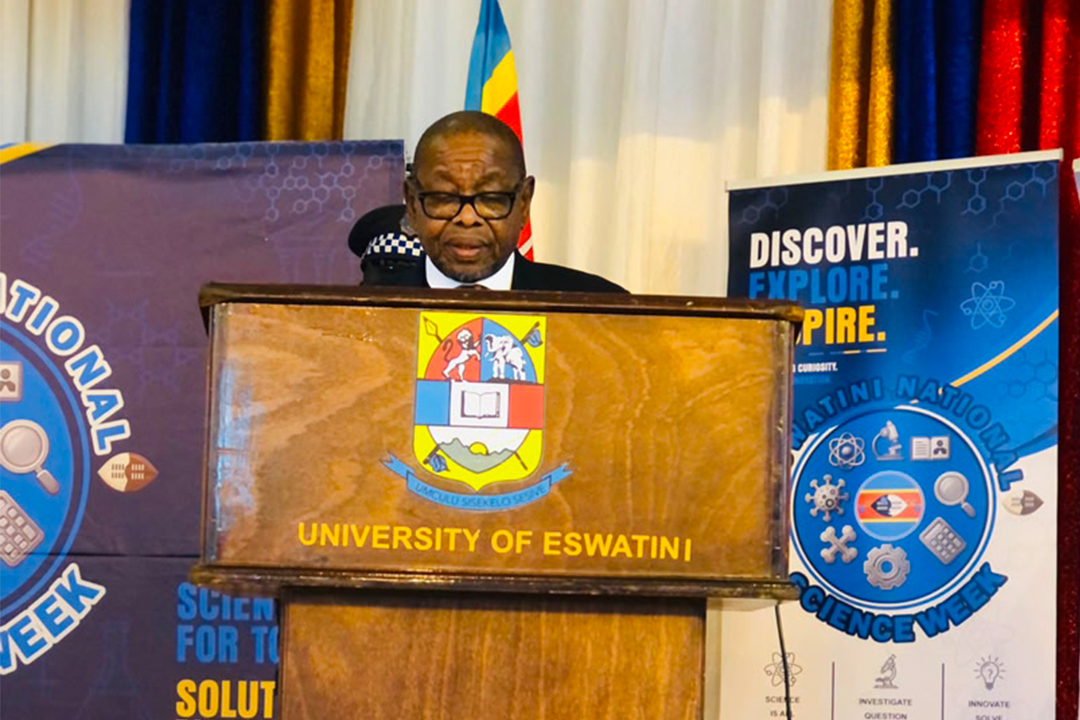
This warning was made by South Africa’s Minister of Science, Technology and Innovation, Professor Blade Nzimande, during the keynote address at the launch of Eswatini Science Month 2026, held at The University of Eswatini in Kwaluseni on 8 June.
He said the accelerating pace of digital transformation, driven by AI, automation and other emerging technologies, is reshaping economies, labour markets and governance systems globally, requiring urgent and coordinated policy responses from African governments.
Prof Nzimande cautioned that while these technologies present major opportunities for innovation, productivity and economic growth, they also carry serious risks if not properly governed, particularly through the widening global digital divide.

“We are living in an era in which digitalisation, automation and transformative technologies such as artificial intelligence are reshaping economies and societies in ways that would have been difficult to imagine just a few decades ago,” he said.
He stressed that African countries must move with urgency to develop strong policy, legal and institutional frameworks to guide the ethical development and deployment of AI. Such frameworks, he said, are essential to ensure that technological progress serves the public good, protects human rights and promotes inclusive development.
Prof Nzimande warned that without deliberate intervention, large segments of society—particularly young people—risk being excluded from the benefits of the digital economy due to unequal access to connectivity, infrastructure and digital skills.
However, he noted that Africa has a significant opportunity to turn the digital revolution into a powerful driver of development, provided governments invest strategically in skills development, research capacity and digital infrastructure.
He emphasised that the continent must not remain a passive consumer of imported technologies, but should actively strengthen its capacity to develop, produce and govern its own AI-driven solutions through robust innovation ecosystems.
As part of ongoing reforms, Prof Nzimande highlighted initiatives such as AI Fluency training programmes for public servants, designed to equip government officials with the skills to use artificial intelligence ethically, effectively and responsibly in improving public service delivery.
He said these efforts form part of broader government strategies to modernise governance systems, strengthen cybersecurity readiness and improve data governance across institutions.
Prof Nzimande further called for strengthened African cooperation in science, technology and innovation, saying the continent must work collectively to build a sovereign, inclusive and development-oriented digital future.
Despite the challenges posed by rapid technological change, he expressed confidence that with the right policy direction and investment, Africa can fully harness AI to drive economic transformation, improve public services and create new opportunities for future generations.
#EswatiniScienceWeek #AI #ArtificialIntelligence #DigitalTransformation #AfricaRising #STEM #Innovation #ScienceAndTechnology #DigitalEconomy #FutureOfWork #FourthIndustrialRevolution #TechPolicy #Cybersecurity #YouthEmpowerment #InclusiveGrowth #SADC #STISA2034 #PublicServiceInnovation #DataGovernance #SmartAfrica