


BY SIFISO NHLABATSI
EZULWINI – Africa will need at least 10 times the force used to achieve political independence if the continent is to gain genuine economic independence, according to Ghanaian leadership expert Professor Delanyo Adadevoh.
Adadevoh said political independence had been achieved through significant sacrifice and hard work, but warned that taking ownership of Africa’s natural resources and building economies capable of competing globally would require an even greater effort.
“We fought for political independence. It was a lot of hard work, a lot of sacrifices, but I want to tell you that when it comes to ownership of our natural resources, when it comes to economic independence, it would take at least ten times the force with which we fought for political independence to gain our economic independence,” he said.
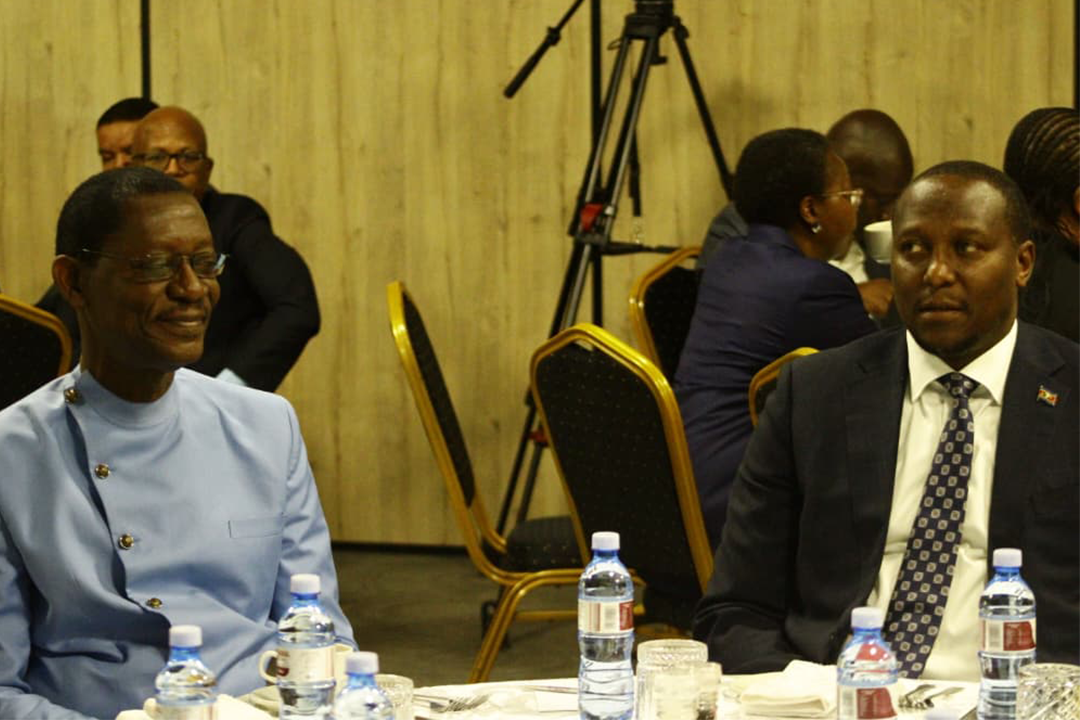
He was speaking during the Kingdom Leadership and National Transformation Seminar attended by the Prime Minister Russell Mmiso Dlamini, Cabinet Ministers, Members of Parliament, Principal Secretaries and senior government officials.

Adadevoh said economic independence would be difficult because gaining greater control over natural resources would challenge interests that benefit from Africa exporting raw materials.
“At least ten times the force because when you are gaining your economic independence somebody else must sacrifice,” he said.
He argued that an industrialised Africa would fundamentally change the global economic relationship with the continent, particularly because African countries would increasingly process their own resources instead of exporting raw materials.
“An industrialised Africa is not good news to the world because it will mean that the prices of raw material will shoot up,” he said.
His argument was that African countries must therefore think beyond political sovereignty and deliberately pursue economic systems that allow them to create greater value from their own resources.
Turning specifically to national transformation, Adadevoh said countries seeking new futures should not limit their ambitions to short-term strategic plans.
He recommended that Eswatini develop a generational plan covering the major areas required to transform the country, with shorter strategic plans being used to implement the long-term vision.
“When you are looking at the transformation of a nation, you have to think generationally. And so you have to develop a generational plan,” he said.
He distinguished such a plan from an ordinary strategic plan, which could cover three to five years.
According to Adadevoh, a generational plan should cover economic development, science and technology and, critically, the development of the people themselves.
He warned that countries could achieve economic and technological progress without necessarily creating societies where citizens experience a strong sense of meaning and satisfaction.
“A vision for a new Eswatini must include a vision for a new Emaswati. You cannot have a new Eswatini without a new Emaswati,” he said.
Adadevoh said national transformation ultimately depended on transforming the people who would operate the institutions and systems of the future.
“Because a new people will build new institutions and systems for a new nation. When the people are not renewed, development cannot be sustained,” he said.
He argued that development should therefore not be measured only through economic growth or technological advancement.
Using the experience of developed countries as an example, he said some nations had achieved significant economic and technological progress while still experiencing social problems.
He used the metaphor of climbing a ladder only to discover that it had been leaning against the wrong wall, saying development without a moral direction could leave societies with a sense of emptiness.
“That is what happens when you develop without a moral vision,” he said.
Adadevoh said Eswatini needed a clearly articulated moral vision that could guide government, business and the education sector.
He said such a vision should be based on carefully selected moral values which, when embraced and practised over time, would shape the culture and character of the nation.
“There must be a very clear, well-articulated moral vision for Eswatini that is known by everyone in business, in government, in the educational sector,” he said.
He recommended God-centredness as one of the foundational values, arguing that values require an absolute reference point rather than being entirely subjective.
Another value he highlighted was excellence, calling for Eswatini to demand high standards in infrastructure and public services.
He criticised the acceptance of lower standards in African infrastructure, particularly roads, and urged leaders to demand first-class infrastructure and services.
Referring to the Ghanaian scholar Dr Kwame Nkrumah, Adadevoh cited the principle that “only the best is good enough for Africa” and adapted it to Eswatini.
“You must say, ‘Only the best is good enough for emaSwati.’ No second-class infrastructure, no second-class services for our people. Only the best,” he said.
ABOUT PROFESSOR ADADEVOH
Professor Delanyo “Dela” Adadevoh is a Ghanaian leadership-development expert and the founder and president of the International Leadership Foundation, established in 2003 to develop leaders of integrity for societal transformation. ILF says he has spent decades working with students, professionals, church leaders, executives, diplomats and heads of state.
He also serves as Senior Vice President of Global Leadership at Campus Crusade for Christ/Cru. He joined the organisation in 1980 and has held several leadership positions within the movement.
Adadevoh holds a BSc in Chemistry from Kwame Nkrumah University of Science and Technology, a master’s degree in Social Science with an emphasis on Leadership from Azusa Pacific University and a PhD in Interpretation Theories from the University of Leeds.
His message to the seminar was that Eswatini’s transformation must therefore go beyond economic targets, with a long-term national vision anchored in the development of its people, moral values and high standards.
#KingdomLeadership #NationalTransformation #DelanyoAdadevoh #EconomicIndependence #Africa #Eswatini #Leadership #MoralVision #NationalDevelopment #EconomicTransformation #AfricanDevelopment #Excellence