


BY MBONGENI NDLELA
MBABANE – As Eswatini prepares for the 2026/27 National Budget Speech scheduled for Friday, 27 February 2026, attention is once again turning to the country’s fiscal direction and the development momentum built over the past year.
Last year, Minister of Finance Neal Rijkenberg delivered a E32.6 billion national budget that strongly prioritised human capital development, infrastructure expansion and social protection. As the nation awaits his next address, the key question is not only how much will be allocated — but how effectively previous investments are translating into tangible outcomes for emaSwati.
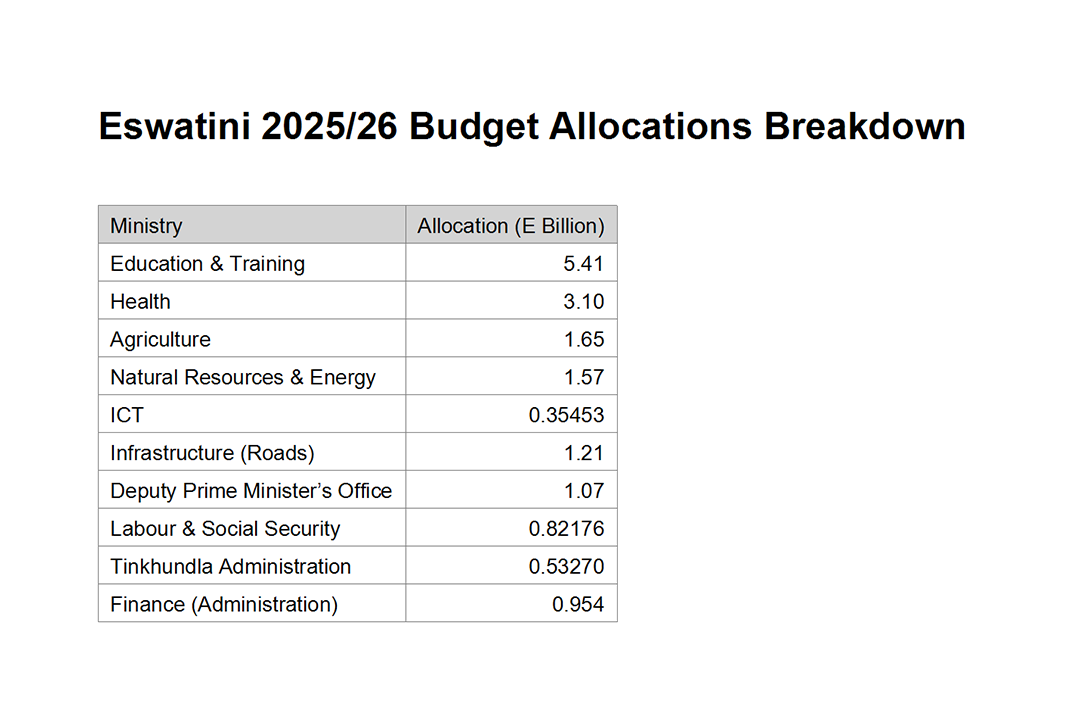
In the 2025/26 financial year, education received the largest share of the national budget at E5.41 billion. The allocation supported teacher employment, scholarship funding, infrastructure expansion and the continued rollout of A-Level streams. As the new budget approaches, analysts will be watching whether government deepens investment in early childhood education, STEM subjects and technical training to better align with labour market demands. With youth unemployment remaining a pressing concern, strategic funding in skills development could be a defining theme in Friday’s address.
The Ministry of Health received E3.1 billion in the 2025/26 budget, aimed at improving referral systems, upgrading facilities and strengthening pharmaceutical supply chains. The upcoming speech is expected to reflect on service delivery improvements, including medicine availability and infrastructure upgrades. Sustained domestic investment will be crucial to maintaining stability and resilience in the health sector.

Infrastructure spending exceeded E1.2 billion for roads in 2025/26, alongside significant allocations to water and energy projects. These investments were positioned not merely as construction initiatives, but as economic multipliers intended to stimulate private sector growth, improve connectivity and create employment. With major projects underway, the new budget may indicate whether capital expenditure will be expanded further to accelerate inclusive growth.
Social protection remained a key pillar, with over E1 billion allocated to the Deputy Prime Minister’s Office, enabling increased elderly grants and broader social support coverage. In a period marked by global economic uncertainty, social transfers have played a stabilising role for vulnerable households. The forthcoming budget will likely signal whether social protection programmes will continue to expand in response to cost-of-living pressures.
A central theme in recent budgets has been fiscal discipline and improved revenue mobilisation. Strengthening domestic resource collection while maintaining investor confidence has been critical to sustaining development expenditure. Attention will focus on revenue performance, public debt management, SACU receipts outlook and spending efficiency.
As 27 February approaches, several policy signals may shape the address: youth employment and entrepreneurship incentives, enhanced agricultural productivity funding, deeper digital transformation initiatives, climate-resilient infrastructure financing and expanded public-private partnerships.
The coming budget speech represents more than a financial statement; it will serve as a roadmap defining how Eswatini navigates regional economic shifts while strengthening domestic resilience. There is cautious optimism that the 2026/27 fiscal plan will consolidate gains in education, health, infrastructure and social welfare while opening new pathways for inclusive and sustainable growth.
Friday’s speech will set the tone not only for the upcoming financial year, but for the broader trajectory of national development in the years ahead.